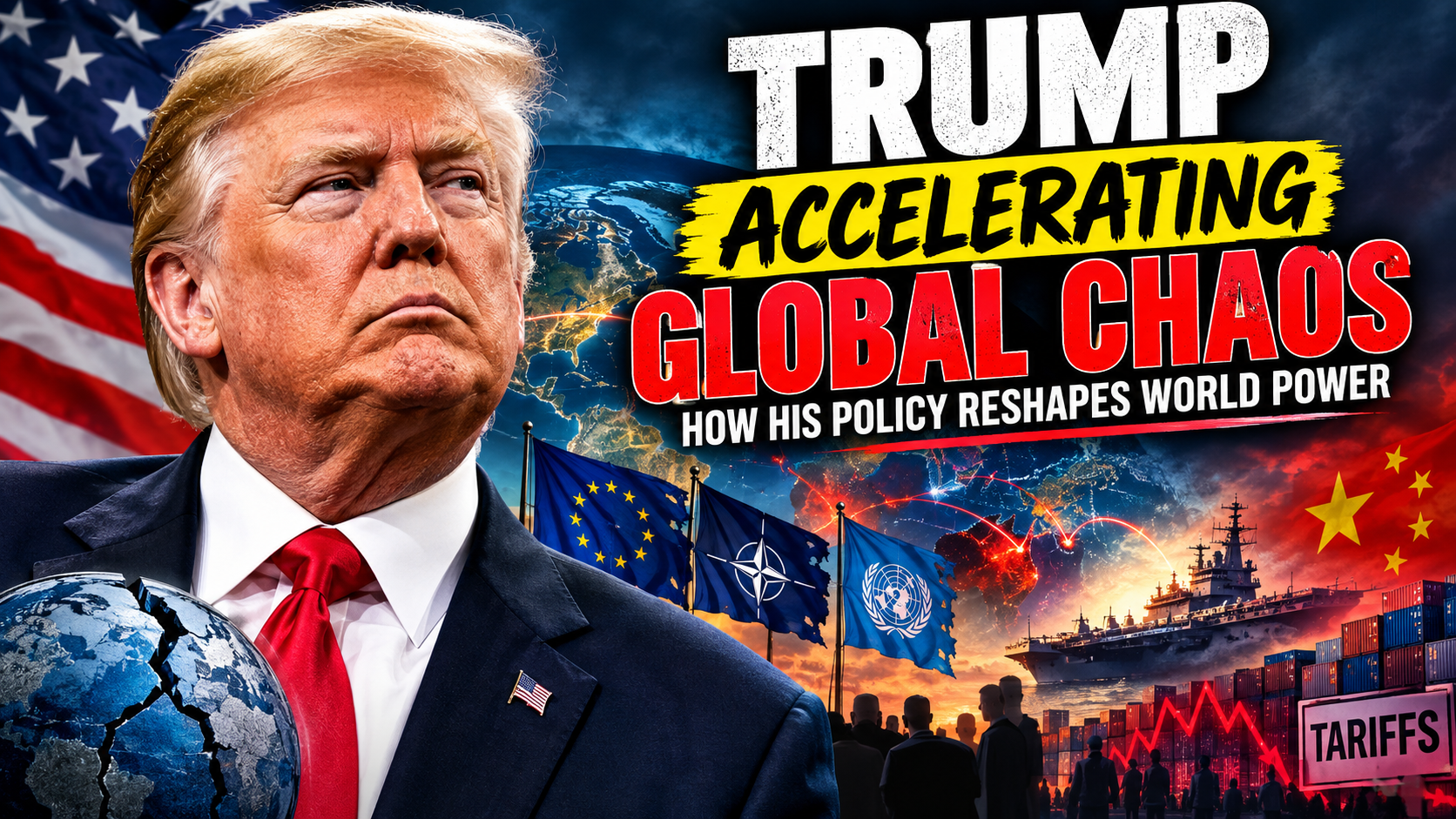
Trump Accelerating Global Chaos: How His Policy Reshapes World Power
World politics looks nothing like it did a decade ago. Old agreements are falling apart, long-standing security alliances feel shaky, and international trade policies can change overnight with a single statement. Donald Trump sits right at the center of this massive shakeup. His approach to governing ignores traditional diplomacy and multi-nation treaties. Instead, he relies on direct pressure, quick deal-making, and total unpredictability. Many foreign policy experts now argue that Trump accelerating global chaos isn’t an accidental side effect—it is the central strategy. By throwing out the old playbook, this leadership style forces foreign capitals to rethink how they protect their borders, secure their supply chains, and deal with their neighbors.
Understanding where the world is headed requires looking closely at how this mix of economic protectionism, personal negotiation, and strategic unpredictability breaks down global power structures.
Also Read:
Navigating the Pivot: The Federal Reserve’s Rate Hike to 4% and Its Impact on Markets
1. A New Playbook: The Shift to Transactional Foreign Policy
For over sixty years, American foreign policy followed a predictable path. Washington promised to protect its friends, keep a heavy military presence across Europe and Asia, and champion open global markets. That entire model took a back seat to one straightforward question: What is America getting out of this relationship right now?
Instead of viewing alliances as permanent moral commitments, foreign relations suddenly started looking like corporate negotiations.
Paying for Protection: Nations that relied on American troops faced immediate pressure to step up their own defense spending. When they hesitated, Washington made it clear that military backing wasn’t unconditional.
Bypassing Standard Diplomacy: Traditional channels through embassy officials and career diplomats were frequently bypassed. High-stakes conversations happened directly between top leaders, catching foreign ministries off guard.
Short-Term Leverage: Treaties were no longer treated as permanent fixtures. If an agreement failed to deliver fast, measurable wins for domestic workers, Washington threatened to pull out or rewrite the terms.
Keeping allies and rivals guessing about America’s next move created a whole new atmosphere. Foreign leaders realized they could no longer rely on decades-old guarantees, forcing them to build independent contingency plans.
2. Tariff Battles and the End of Frictionless Trade
The economic impact of this shift hit just as hard. Decades of consensus around global free trade vanished almost overnight, replaced by aggressive tariffs and trade wars. The idea that goods should flow across borders with minimal interference lost ground to a tougher reality: trade used as a direct weapon.
| Old Free-Trade Framework | New Economic Nationalism |
| Multi-nation trade deals (like the WTO) | One-on-one bilateral negotiations |
| Offshoring factories for cheap labor | Bringing manufacturing back home |
| Open trade policies among partners | Tariffs slapped on friends and rivals alike |
| Stable, predictable international pricing | Sudden market swings and supply chain delays |
Heavy tariffs hit traditional allies and geopolitical rivals with equal force. As a result, multinational corporations had to dismantle complex international supply chains and rebuild them at massive expense. Businesses can no longer assume that international trade routes will stay open. That uncertainty has triggered price increases, market volatility, and fragmented trade corridors across the globe.
3. Cracks in Western Security and Global Institutions
International bodies like NATO, the United Nations, and the World Trade Organization were created to resolve disputes through rules and dialogue. When the world’s primary superpower openly questions those groups, their authority drops fast.
Rethinking NATO’s Security Guarantee
Public criticisms of NATO’s core promise—that an attack on one member is an attack on all—sent shockwaves through European capitals. Leaders across the continent suddenly had to face an uncomfortable scenario: What if American military support doesn’t show up in a crisis? That fear sparked a massive surge in defense spending across Europe, as nations scrambled to rebuild their own militaries for the first time in decades.
Stepping Back from International Agreements
Walking away from global climate pacts or international human rights councils sent a clear message. When Washington steps back from enforcing international rules, those institutions lose their teeth. That leaves a massive opening for aggressive regional powers to push their own agendas without fearing a unified response.
4. Filling the Vacuum: The Rise of a Multipolar World
When a leading superpower pulls back from its traditional global role, peace doesn’t automatically fill the space. A power vacuum opens up instead, and rival nations rush in to claim it.
                   [ U.S. Pulls Back Globally ]
                                |
         +----------------------+----------------------+
         |                                             |
         v                                             v
[ China Expands Influence ]               [ Regional Powers Act Independently ]
(Loans, Trade & Infrastructure)           (Turkey, Saudi Arabia, India)
         |                                             |
         +----------------------+----------------------+
                                |
                                v
                [ A Chaotic, Multipolar World ]
China Steps In: Beijing wasted no time. Seeing Washington turn inward, China expanded its trade links across Africa, Latin America, and Southeast Asia, positioning itself as a reliable economic alternative.
Middle Powers Act Independently: Nations like India, Saudi Arabia, and Turkey stopped choosing sides between major powers. Instead, they adopted a flexible approach, working with Washington, Beijing, or Moscow depending on what suits their immediate national interests.
Power is no longer concentrated in one or two capitals. It is spread across multiple regional hubs, making global politics far more unpredictable and harder to manage.
5. The Spread of Populist Politics Across Borders
This shakeup goes deeper than military spending or trade statistics. The political style itself—rooted in loud nationalism and deep skepticism toward established media and political elites—has spread worldwide.
Political movements in Latin America, Europe, and Asia took notes from this strategy. Leaders across different continents began using the exact same playbook: attacking election systems, dismissing international organizations, pushing protectionist economic policies, and using sharp political rhetoric to mobilize their supporters. This global trend has put heavy strain on democratic systems worldwide, leading to a sharp drop in public trust toward traditional political institutions.
Navigating an Unpredictable World
The international order hasn’t just experienced a brief disturbance; it has permanently shifted. Strategic alliances are no longer guaranteed, global trade operates under constant threat of tariffs, and traditional diplomacy has taken a back seat to hard-nosed negotiation. Whether viewed as a long-overdue challenge to globalism or a risky gamble with international stability, one reality is clear: the rules of global engagement have been completely rewritten. Surviving in this new landscape means adapting to a world defined by volatility, national self-interest, and constant political friction.
Frequently Asked Questions (FAQs)
What does transactional foreign policy mean in simple terms?
Transactional foreign policy means treating international relationships like business deals. Instead of supporting allies based on shared history or values, decisions depend on what immediate, measurable benefit a country receives from the arrangement.
How do tariffs cause friction in international trade?
Tariffs act as extra taxes on imported goods. When one nation imposes tariffs, foreign products become more expensive for local buyers. Affected countries usually retaliate with their own tariffs, leading to trade wars, higher consumer prices, and disrupted supply chains.
Why are European nations suddenly spending more on defense?
European nations are ramping up defense budgets because they worry that U.S. military backing may not be guaranteed in future conflicts. To protect their borders, they are investing heavily in their own military capabilities.
How does domestic political conflict affect a nation’s foreign policy?
When a country experiences deep internal political divisions, its foreign policy becomes erratic. Foreign allies find it hard to make long-term plans when a change in leadership can suddenly cancel previous treaties and flip diplomatic strategies upside down.
Disclaimer
This article is an analytical commentary intended solely for informational, educational, and journalistic purposes. It synthesizes open-source geopolitical analysis, news reporting, and political theory to examine global policy trends. The views expressed do not represent official diplomatic positions or policy endorsements.