Federal Reserve Rate Hike: Market Impact, Bond Yields, and Earnings
Introduction: A New Monetary Era
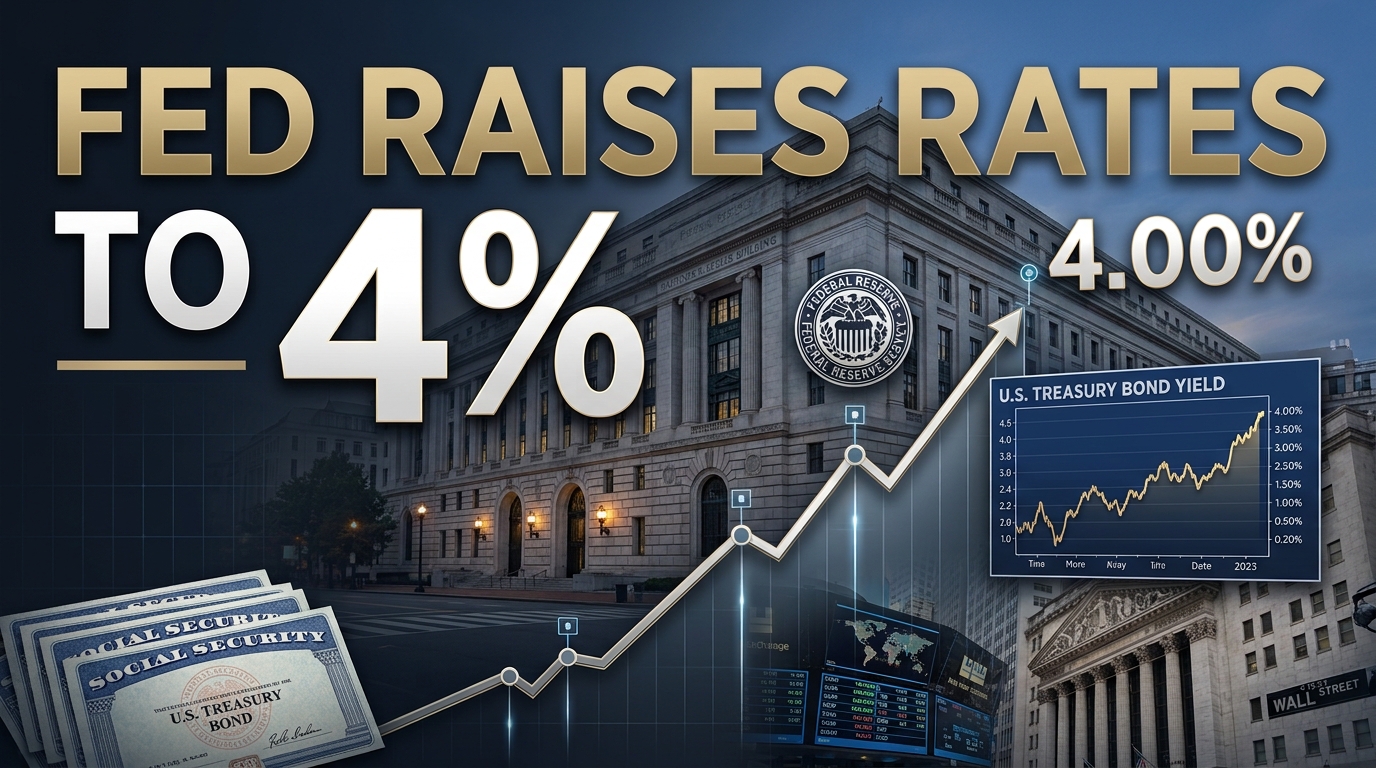
In a decisive move that shifted global economic momentum, the Federal Reserve rate hike of 0.25% lifted the benchmark federal funds rate to a target range of 3.75% to 4.00%. Marking the first rate hike since the aggressive post-pandemic tightening cycle of 2023, this pivot underscores the central bank’s steadfast commitment to subduing stubborn inflation. With consumer price indexes hovering above the Fed’s 2% objective and geopolitical tensions compounding energy volatility, market participants are forced to recalibrate expectations for borrowing, equities, and fixed-income portfolios.
Also read:
August Jobs Report 2026: U.S. Adds 162,000 Jobs as Unemployment Holds at 4.1%
Bond Yields, Geopolitics, and Equity Dispersions
The immediate aftermath of the Federal Reserve rate hike announcement rippled through asset classes, exposing distinct sector-specific sensitivities:
Fixed Income Pressures: Long-term Treasury yields remain heavily elevated, with the 10-year Treasury yield hovering near 4.75%. This sustained level reflects structural concerns over federal debt issuance and persistent term premiums.
Energy Costs and Geopolitics: Rising oil prices, driven by ongoing international supply chain bottlenecks and geopolitical flashpoints, continue to act as a stealth tax on consumers and corporations alike.
Stock Market Dispersion: Unlike the broad-based rallies of previous quarters, equity markets are exhibiting caution. While mega-cap technology and defensive sectors have shown relative resilience, cyclical segments face headwinds from tighter credit conditions and higher debt-servicing costs.
Corporate Earnings Resilience vs. Macro Headwinds
Despite the friction introduced by a tightening monetary backdrop following the Federal Reserve rate hike, major equity indices—including the S&P 500 and the Nasdaq—have managed to sustain solid year-to-date gains. This resilience is fundamentally anchored by robust corporate earnings reports.
Companies across various sectors have successfully optimized operational efficiency, protected profit margins through strategic pricing power, and maintained healthy balance sheets. However, analysts warn that if borrowing costs remain elevated for longer, sustaining these earnings multiples will become increasingly challenging for companies reliant on floating-rate debt or consumer discretionary spending.
Navigating Portfolio Strategies in a 4% Rate Environment
As investors digest the strategic implications of the recent Federal Reserve rate hike, portfolio management requires a sharp focus on quality and cash flow generation. High-debt companies are feeling the pinch as maturing bonds roll over into higher interest rate environments, making balance sheet strength a primary screening metric for stock pickers. Conversely, cash-rich enterprises are capitalizing on higher yields by optimizing their short-term treasury allocations. Fixed-income investors are also discovering newfound value in high-grade corporate bonds and government securities, which finally offer meaningful real yields after years of ultra-low monetary policies.
Frequently Asked Questions (FAQs)
1. Why did the Federal Reserve raise interest rates now? The Federal Reserve rate hike was enacted to combat persistent inflation that continues to run above its 2% target, reinforced by a resilient labor market and fluctuating energy costs.
2. How does a 3.75%–4% federal funds range impact everyday consumers? Higher benchmark rates resulting from the Federal Reserve rate hike translate directly to increased borrowing costs for mortgages, auto loans, and credit cards, while simultaneously offering better yields for cash savers utilizing high-yield savings accounts and certificates of deposit (CDs).
3. Are further rate hikes expected this year? Economic projections and recent FOMC dot plots indicate that policymakers are keeping the door open for at least one additional quarter-point adjustment if inflation data fails to cool decisively.
Conclusion
The Federal Reserve rate hike back toward a restrictive monetary posture marks a critical turning point for the financial markets. While strong corporate earnings continue to provide a solid baseline for equity indices like the S&P 500, the combination of elevated bond yields, persistent inflation, and tightening credit requires investors to navigate with enhanced caution. Staying agile and monitoring forward-looking macroeconomic data will be paramount as the market digests the full impact of a 4% rate environment.