
The FBI crime database hacked story is one of the most serious cybersecurity incidents to hit American law enforcement in years. Hackers broke into the Federal Bureau of Investigation’s National Crime Information Center, known as NCIC, the nationwide system that police departments across the United States rely on every day to share warrant information and run background checks. The intrusion, reported by CNN on November 20 and 21, 2026, is the second breach of an FBI system in recent months, and it has raised urgent questions about whether the information officers depend on in the field can still be trusted.
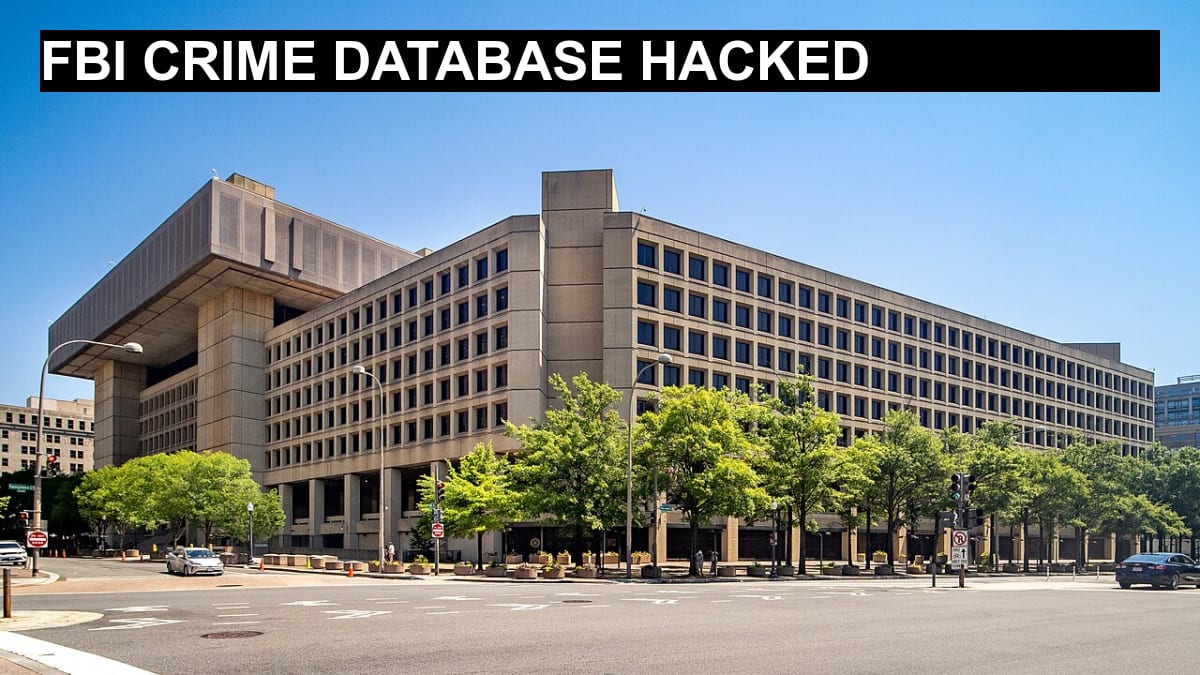
Photo: The FBI headquarters, the J. Edgar Hoover Building in Washington, DC. (ajay_suresh via Wikimedia Commons, CC BY 2.0)
The FBI has confirmed that it is investigating the breach. Two people briefed on the issue confirmed the intrusion to CNN, although many details remain unclear, including how the hackers got in, how long they had access, and whether any records were changed, copied or deleted. What is clear is that the target was not a peripheral website or a public-facing portal. It was the central database at the heart of American policing.
FBI crime database hacked: What happened to the NCIC system
NCIC is not a system most Americans ever see, but almost every police encounter in the country touches it in some way. When an officer pulls over a driver, checks a name during an arrest, or verifies whether a person is wanted in another state, the query often runs through NCIC. The database holds records on wanted persons, missing persons, stolen property, criminal histories and other information shared between federal, state and local agencies. It is, in effect, the common language of American law enforcement.
That is why a breach of NCIC is different from a breach of an ordinary government website. A former FBI official who spoke about the incident warned that the central concern is not only whether hackers were able to look at sensitive records, but whether they could compromise the accuracy of the information itself. If officers cannot be sure that a warrant record is genuine, that a background check is complete, or that a name flagged in the system belongs to the right person, the consequences could reach far beyond Washington.
A corrupted record could lead to a wrongful arrest, a missed warning about a dangerous suspect, or a background check that fails to flag someone who should not pass it.
So far, officials have not said publicly that records were altered. The FBI is investigating, and the full scope of the intrusion is still being assessed. But the fact that hackers were able to reach the system at all has already shaken confidence in one of the most sensitive databases in the federal government, and it has put the bureau’s cybersecurity defences under fresh scrutiny.
What is NCIC and why it matters to every police officer
To understand the scale of the problem, it helps to understand what NCIC does. Created decades ago and expanded over time, the National Crime Information Center is a computerised index of criminal justice information maintained by the FBI. Law enforcement agencies in all 50 states contribute to it and query it, often thousands of times a day.
A single traffic stop can generate several NCIC checks in a matter of seconds, and the answers officers receive shape decisions made in real time, sometimes in dangerous circumstances.
The system works only because the agencies that use it trust it. A police department in Texas trusts a warrant entered by a court in Ohio. A border officer trusts a record entered by a sheriff’s office in Arizona. That trust is built on the assumption that the database is secure, that entries are made only by authorised users, and that the information has not been tampered with. A successful hack challenges every one of those assumptions at once.
The FBI crime database hacked incident tests that trust directly.
Cybersecurity specialists say that even a brief intrusion into a system like NCIC can be difficult to fully unwind. Investigators must determine which accounts were used, which records were viewed, and whether any data was modified in a way that is hard to detect. That work takes time, and while it is under way, the agencies that rely on the database are left with uncertainty about the tool they use most.
What Trump said — and what he pivoted to
President Donald Trump addressed the breach in a phone interview with Fox News on Saturday, November 21, and his response drew attention as much for what he chose to talk about next as for what he said about the hack itself.
He then pivoted away from the cybersecurity failure and toward his long-running grievances about the FBI’s investigation into Russian interference in the 2016 election. Asked about the intrusion, Trump said, “it’s not good — I don’t like that.”
In that moment, the FBI crime database hacked story was secondary to the president’s older grievances.
Trump suggested that the breach might reveal information about “Russia, Russia, Russia,” as well as about voter fraud and his 2019 phone call with Ukrainian President Volodymyr Zelenskyy, the call that led to his first impeachment. The remarks did not address how the hackers entered the NCIC system, what data they may have reached, or what the administration planned to do to secure it. Instead, they framed the breach through the lens of the president’s longstanding argument that the FBI has been used against him.
The response stands in contrast to the way presidents and senior officials have usually spoken about breaches of sensitive government systems, where the focus tends to be on the investigation, the damage assessment and the steps being taken to prevent a repeat. In this case, the president’s comments left the central questions about the hack unanswered, at least in public, and shifted the conversation to the politics surrounding the bureau rather than the security of the database itself.
A second breach in recent months: the pattern behind the FBI’s cyber problems
The FBI crime database hacked case is the second breach of an FBI system in recent months, and it follows a pattern that has become increasingly hard to ignore. In September 2026, the hacking group ShinyHunters targeted an FBI jobs website, an attack that exposed the bureau’s public-facing systems to compromise. In 2023, a separate breach hit a system used by an FBI field office in New York in child exploitation investigations, a reminder that even the bureau’s most sensitive investigative work is not immune.
Taken together, the incidents suggest a persistent vulnerability rather than a single lapse. The FBI is both a law enforcement agency and a frequent target for hackers, including criminal groups and foreign actors who see its systems as high-value prizes. Each breach, even when it affects a different part of the organisation, adds to the picture of an agency struggling to defend a sprawling set of networks, databases and public websites against determined attackers.
Security experts also note that the bureau’s problems are not unique. Across the United States government, agencies have repeatedly been caught out by attacks on systems that were assumed to be secure, and the pace of those attacks has not slowed. The difference in the FBI crime database hacked case is the direct link to front-line policing: this was not a jobs portal or an administrative system, but the database that officers use to make decisions about arrests, warrants and public safety.
A wider wave of outages: banks, the NSA and air traffic control
The breach has also arrived in the middle of a string of high-profile outages and disruptions affecting other critical American systems. Banks, the National Security Agency and the Federal Aviation Administration’s air traffic control system have all been affected by outages in recent weeks, creating a sense that the country’s digital infrastructure is under strain from several directions at once.
Officials have not said that these incidents are connected, and they may well have different causes. But the coincidence has added to public anxiety and to the political pressure on the agencies responsible for keeping those systems running. When a bank’s services go down, customers notice immediately. When air traffic control is disrupted, flights are delayed and safety margins narrow. When the FBI’s crime database is breached, the effects are less visible but potentially more serious, because they touch the information that underpins law enforcement itself.
The wider context matters because it shapes how the FBI crime database hacked story is understood. It is not an isolated technical failure, but part of a broader moment in which the systems Americans rely on — for money, for travel, for national security and for policing — have all shown signs of fragility. That fragility is now a central question for the agencies charged with protecting them.
What happens next
On Thursday, November 19, FBI Director Kash Patel appeared on Fox News to talk up the bureau’s cybersecurity work, including Operation Winter Shield, an initiative presented as part of the FBI’s effort to strengthen its defences. The timing of that appearance, just days before the NCIC breach was reported, is likely to draw attention in the days ahead, as lawmakers and the public ask what the operation has achieved and whether it was focused on the right systems.
For now, the investigation into the FBI crime database hacked incident will determine the most important facts: how the hackers got in, what they did once inside, and whether any records were changed. Those answers will shape the response, from notifying affected agencies to rebuilding trust in the database. They will also shape the political debate, as the administration, Congress and the bureau itself confront the question of how a system this important was breached — and how to make sure it does not happen again.
Until those answers emerge, the episode stands as a warning. The FBI crime database hacked incident shows that even the systems at the centre of American law enforcement can be reached by hackers, and that the consequences of such a breach are measured not only in stolen data, but in the confidence of every officer who relies on the database to do their job safely.
That confidence, once shaken, will take more than a statement to restore. It will take a clear account of what happened, a credible plan to fix it, and evidence that the system officers depend on is once again worthy of their trust.
Related reading: World Reach Daily reported on another recent US security incident in Secret Service Arrests Armed Man Near White House in Second Recent Security Threat. For the original reporting on this breach, see CNN’s coverage: FBI hacked again, target crime database (CNN, November 21, 2026).