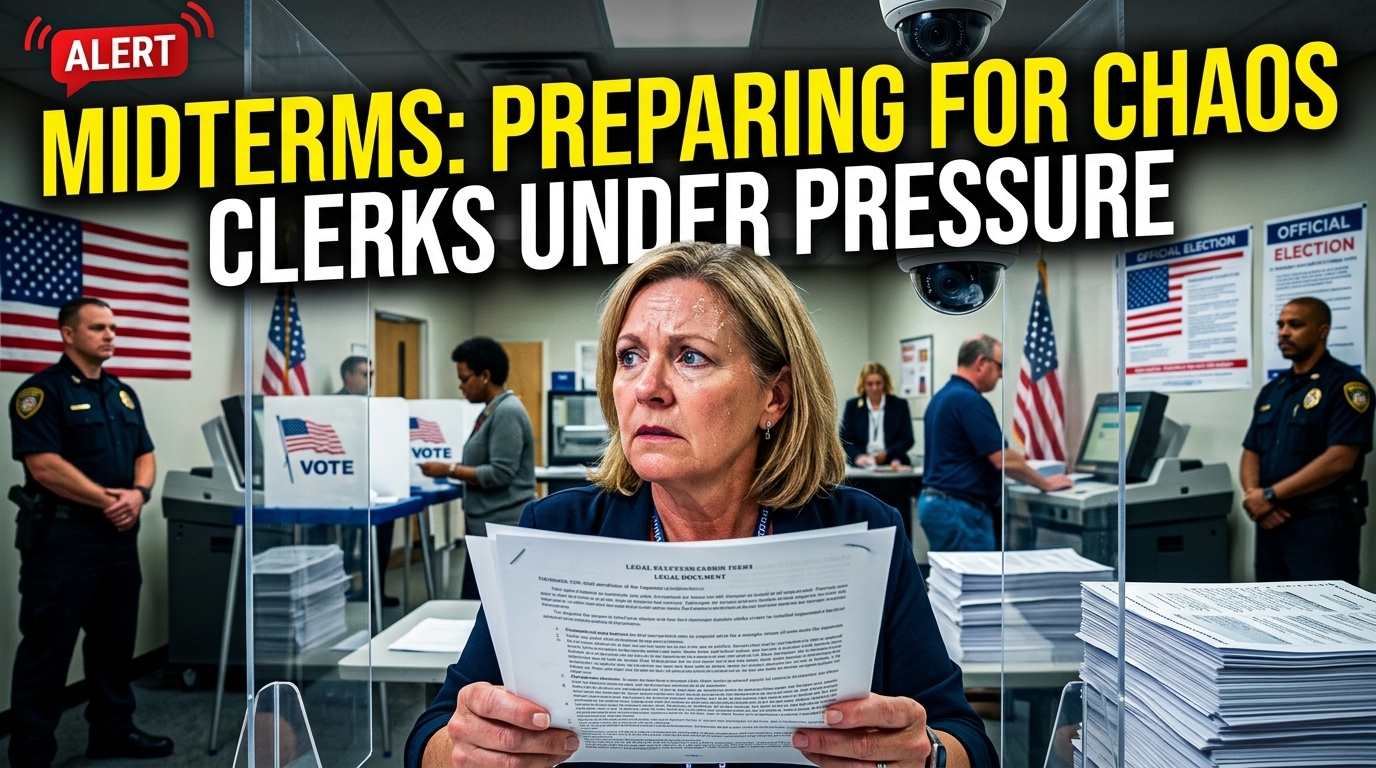
Election Officials Prepare for Midterm Chaos as Pressure Mounts on Local Clerks
Across the United States, election officials prepare for midterm chaos by revamping site security, hiring specialized attorneys, and tightening ballot handling procedures. Running an American election used to be a fairly quiet, administrative job handled mostly by municipal clerks, civic volunteers, and retired community members. But over the last few years, that reality has completely flipped.
Today, county election directors and local precinct managers spend just as much time dealing with legal threats, security worries, and public friction as they do checking voting hardware. With balance-of-power races deciding control of Congress, local clerks are leaving nothing to chance. They are re-engineering how polling places operate to keep voting calm, clear, and secure.
Also Read:
AI Risk vs Congress Data Centers: The Policy Disconnect
Why Election Work Feels Like Crisis Management
In the past, precinct supervisors spent the weeks leading up to Election Day ordering paper supplies, testing voting tablets, and training temporary poll workers. While those basic tasks are still necessary, local workers now face a completely different operational environment.
When election officials prepare for midterm chaos, they have to plan for problems that rarely existed a decade ago:
Sudden Legal Demands: Local boards face frequent lawsuits over mail ballot rules, voter registration lists, signature checks, and machine inspection access.
Physical Safety and Worker Retention: Intimidation aimed at local poll workers has made hiring harder, forcing towns to invest in physical barriers and security guards.
AI-Generated Rumors: Deepfake audio clips, misleading text blasts, and altered images can spread online within minutes, confusing voters about where to vote or what IDs are needed.
Conflicting State Rules: Frequent last-minute changes to state voting laws leave local workers scrambling to retrain staff right before polls open.
Real-World Changes Inside Local Election Offices
To handle these hurdles, county offices are making big adjustments on the ground. Instead of running things the way they always have, clerks are putting defensive measures in place long before the first voter steps up to a ballot box.
Here is a side-by-side look at how standard voting site operations compare to the updated security steps being used today:
| Administrative Focus | Standard Way of Doing Things | Current Midterm Security Setup |
| Legal Support | Calling town attorneys only when a specific legal dispute pops up | Retaining specialized election lawyers ready for instant court filings |
| Building Security | Basic open counter setup with routine police check-ins | Bulletproof glass, panic buttons, security cameras, and dedicated security guards |
| Vote Tabulation | Standard machine counts with routine post-election checks | Voter-verifiable paper ballots, dual-worker locks, and live-streamed counting rooms |
| Voter Communication | Basic flyers and local newspaper notices for precinct locations | Active social media teams and text alert channels to correct false rumors fast |
| Equipment Safety | Basic physical locks on storage rooms | Tamper-evident seals, serial number tracking, and air-gapped systems off the internet |
Four Practical Ways Clerks Are Protecting the Vote
As election officials prepare for midterm chaos, their strategy boils down to four main steps designed to shield precinct workers and keep ballot counting transparent.
1. Line Up Legal Help Early
County clerks are not waiting for court fights to break out on election night. Many jurisdictions are holding mock legal drills with municipal attorneys to map out answers to emergency injunctions, unexpected subpoena requests, or demands to hand over voting hardware. Having clear answers ready saves valuable time when tensions run high.
2. Upgrade Physical Safety for Staff and Voters
Workplace safety has become a top priority for local election directors. Many county buildings have installed protective acrylic shields at front counters, added emergency badges for staff, and set up direct phone lines to local sheriff departments. Making workers feel safe keeps precincts fully staffed and prevents sudden site closures on voting day.
3. Stick to Paper Ballots and Audits
The most effective way to address doubts about computer hardware is to keep a physical paper trail. Over 95% of votes in the upcoming midterms will rely on voter-verifiable paper ballots. After polls close, officials run hand audits on randomly selected precincts to confirm that computer totals match the actual paper slips inside the ballot boxes.
4. Beat Misinformation to the Punch
When false claims about broken machines or altered polling hours start circulating on social media, waiting hours to respond causes unnecessary panic. Election offices now post live updates directly to official websites and local channels, giving citizens quick access to accurate voting info.
What Is Happening in Key Swing States
Pressure is highest in battleground states where election outcomes are settled by tiny margins. In places like Arizona, Georgia, Wisconsin, and Pennsylvania, county workers operate under constant observation from party monitors, media crews, and activist groups.
In many counties, clerks have set up glass observation windows and live video feeds so the public can watch ballot scanning in real time. Workers undergo extra training on state custody laws to ensure every box of paper ballots is logged, signed for, and locked away safely.
By building these clear steps ahead of time, local teams hope to keep the process moving smoothly no matter what happens outside the polling place.
Frequently Asked Questions
Q1: Why are election officials preparing for midterm chaos right now?
Officials are taking extra precautions to handle potential legal disputes, security risks, workforce shortages, and online fake news that could disrupt voting centers.
Q2: How do clerks prove that voting machines are working accurately?
Clerks test machines before election day using test ballot sets, keep equipment completely disconnected from the internet, and conduct post-election hand audits comparing machine numbers to real paper ballots.
Q3: What keeps paper ballots safe after voters drop them off?
Paper ballots are stored in locked containers secured with numbered tamper-evident seals. Two election workers of different political parties must sign off whenever ballot boxes are moved or opened.
Disclaimer
This article is for general informational and educational purposes only. It outlines common security practices, administrative procedures, and public policy discussions surrounding election management using publicly available reports.