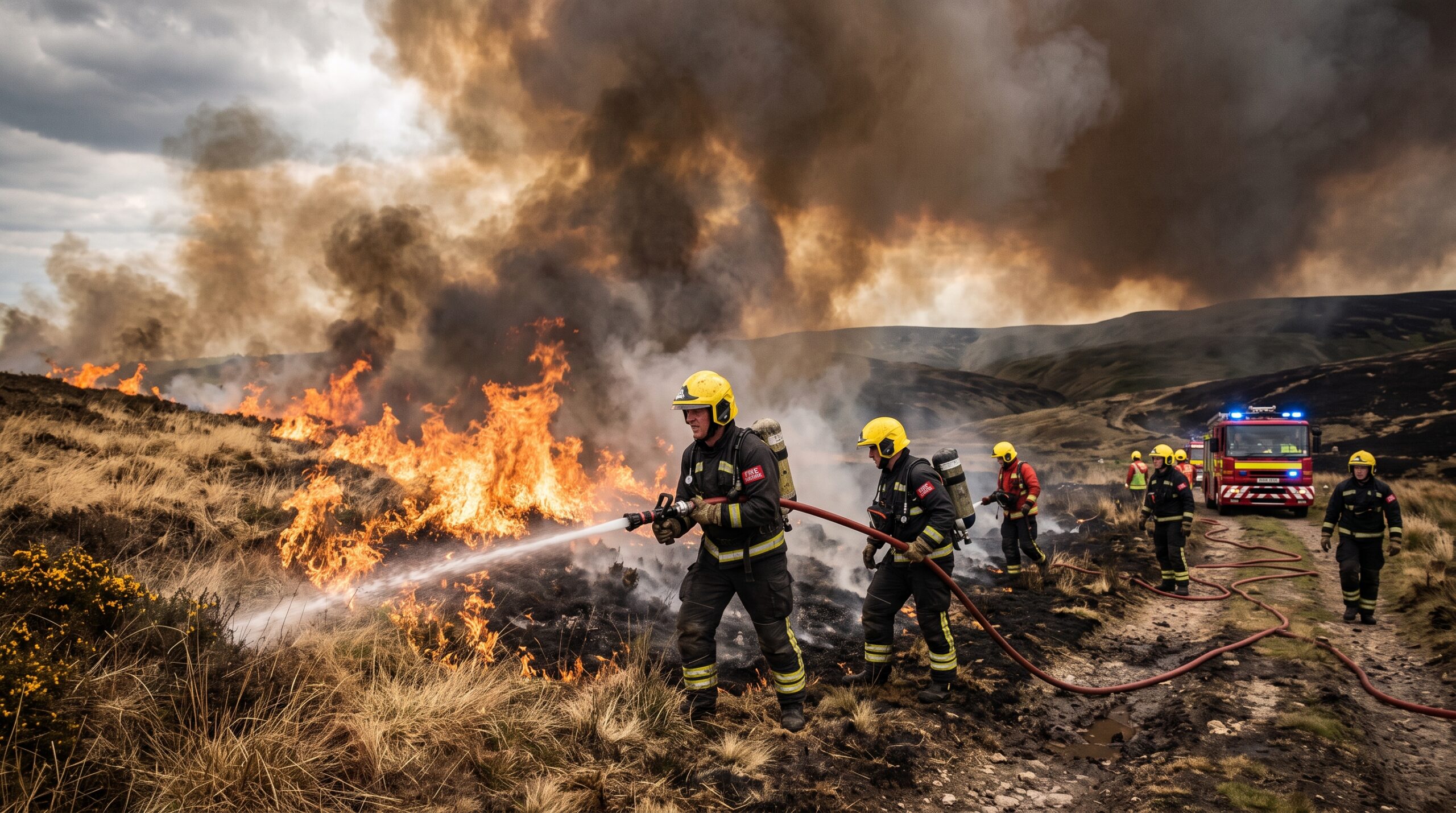
Wildfire warning as weather increases risk
The scorching summer weather gripping the United Kingdom has triggered an urgent public safety crisis. Following confirmation from the Environment Agency that regions such as Kent and East Sussex have officially entered a period of prolonged dry weather, emergency services have sounded alarm bells. With parched woodlands, heathlands, and grasslands acting as a tinderbox, authorities have issued a stark Wildfire warning as weather increases risk to local communities, natural habitats, and critical infrastructure.
Recent incidents, including a massive blaze that scorched a 600m by 200m section of ancient woodland at Abbot’s Wood, highlight how quickly small sparks can escalate into catastrophic environmental emergencies.
Also Read:
Government raises concerns over council finances
The Anatomy of the South East Fire Crisis
July has proven to be an exceptionally prolific month for destructive wildfires. Weeks of uninterrupted sunshine, high temperatures, and negligible rainfall have stripped moisture from the soil and vegetation. According to data compiled by the National Fire Chiefs Council (NFCC), hundreds of wildfire incidents have required rapid deployment across England and Wales, putting immense pressure on regional brigades.
Official News Links & Trusted References
Fire and rescue services across Sussex, Surrey, and Kent have been stretched responding to recurrent outbreaks. High-profile incidents have affected sensitive ecological zones, including parts of Ashdown Forest—the famous literary backdrop for Winnie-the-Pooh stories—alongside major grass fires across the South Downs, Sittingbourne, Faversham, and Maidstone.
Vulnerable Ecosystems: Parched gorse, dry bracken, and brittle leaf litter create instantaneous fuel sources that allow fires to travel rapidly under minimal wind.
Strain on Resources: Controlling large-scale woodland fires requires dozens of firefighters, specialized off-road vehicles, and crucial assistance from local agricultural workers damping down perimeters.
Unpredictable Ignition Points: Officials stress that wildfires can erupt unexpectedly in remote areas, making prevention far more critical than containment.
Expert Insights: Protecting Communities and Wildlife
Addressing the escalating threat requires active public participation. Matt Gamblen, West Sussex Fire and Rescue Service’s (WSFRS) wildfires tactical advisor, emphasized the importance of everyday vigilance during this climate crunch.
“By taking a few simple precautions, residents can help protect their communities, local wildlife and our firefighters.” — Matt Gamblen, WSFRS Wildfires Tactical Advisor
Fire authorities have outlined mandatory behavioral guidelines for anyone visiting rural spaces, parks, or countryside trails during peak heatwave conditions:
Ban Disposable Barbecues: Never use disposable barbecues or campfires in open countryside, parks, or wooded areas, as radiant heat easily ignites dry peat and roots.
Dispose of Smoking Materials Properly: Ensure cigarettes and matches are completely extinguished and never tossed out of vehicle windows or onto dry grass.
Take Litter Home: Glass bottles and discarded reflective packaging can focus sunlight like a magnifying glass, focusing intense heat beams onto dry vegetation.
Careful Vehicle Parking: Avoid parking cars over long grass, as hot catalytic converters can easily spark dry ground within minutes.
Frequently Asked Questions (FAQs)
Why have emergency services issued a Wildfire warning as weather increases risk?
The warning follows official confirmation of prolonged dry weather by the Environment Agency, paired with a surge in destructive woodland and grassland fires across Kent, Surrey, and East Sussex.
Which areas in the UK South East have been affected recently?
Notable blazes have broken out at Abbot’s Wood near Polegate, Ashdown Forest, the South Downs near Eastbourne, and multiple locations across Kent.
What are the primary causes of summer wildfires?
Most incidents are triggered by human negligence—such as discarded glass, unextinguished cigarettes, or the use of disposable barbecues in vulnerable open spaces.
How can residents help prevent these fires?
Citizens can help by avoiding open flames in rural areas, taking all litter home, parking away from dry grass, and reporting smoke or unattended fires immediately.
Conclusion
The alarming frequency of blazes across the UK’s countryside serves as a sobering reminder of how vulnerable local ecosystems are to extreme weather patterns. When a Wildfire warning as weather increases risk is active, public accountability becomes the first line of defense. By practicing extreme caution, discarding habits that cause accidental sparks, and heeding advice from fire authorities, communities can safeguard their natural landscapes, protect wildlife, and ease the heavy burden placed on frontline emergency services.
1 thought on “Wildfire warning as weather increases risk across the UK South East”