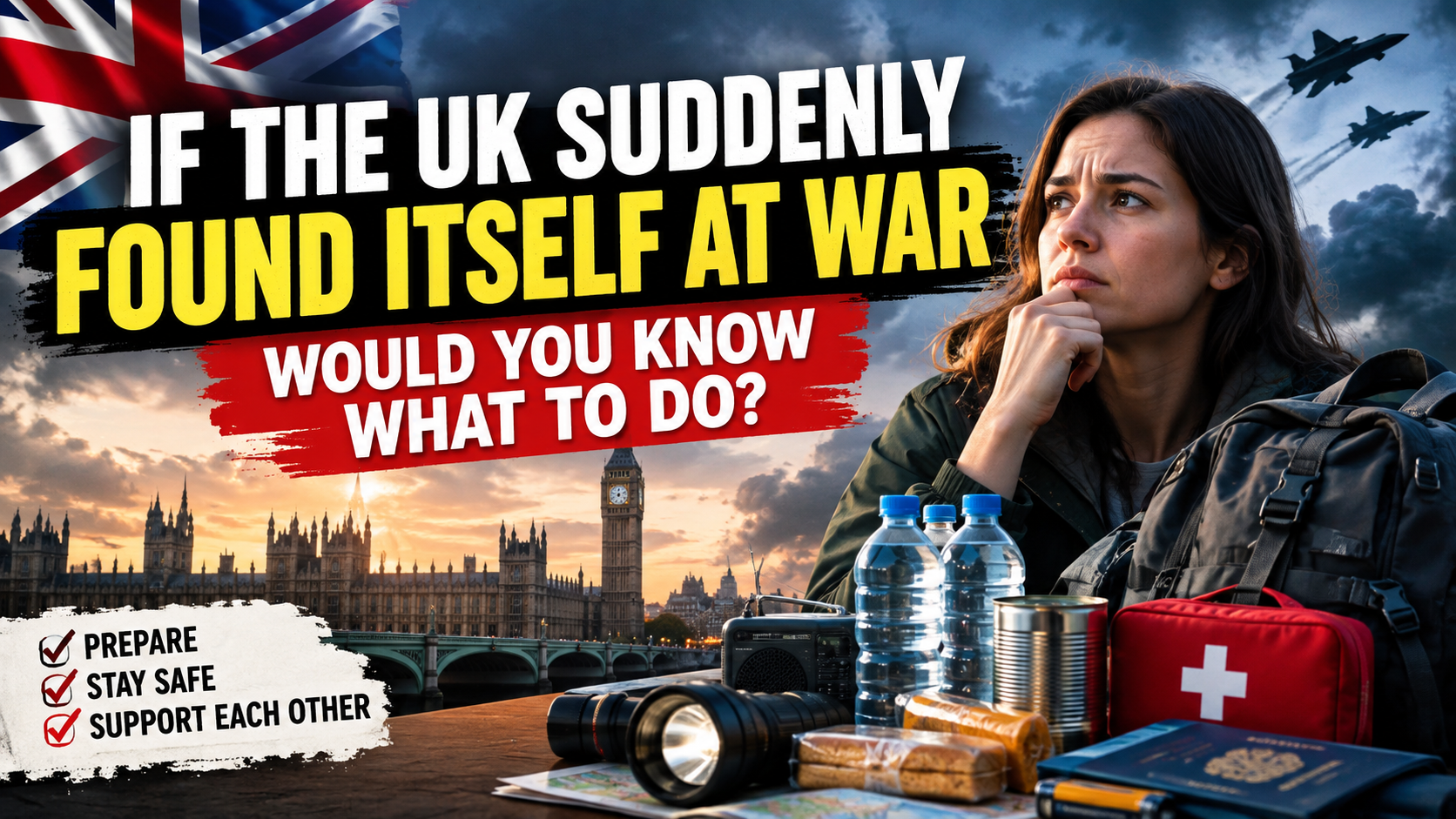
UK War Preparedness: If the UK Suddenly Found Itself at War, Would You Know What to Do?
UK war preparedness is a critical topic that few want to think about, but in an era defined by geopolitical volatility, cyber warfare, and escalating international tensions, the unthinkable is a question modern societies can no longer entirely dismiss. If the United Kingdom were to suddenly find itself plunged into a major interstate conflict or total war, the immediate shock would ripple far beyond the front lines. But for the average citizen sitting at home, the more pressing and unsettling question remains: Would you know what to do? And do you truly know what would be expected of you?
Also read:
Global Trade Policies and International Sanctions: Economic Impacts & Outlook
For decades following the Cold War, total national mobilization and home-front civil defense faded from public consciousness. However, with modern updates to national resilience frameworks and government-backed preparedness campaigns highlighting growing state-based threats, understanding your role in a national crisis is more critical than ever.
The Modern Reality of Home-Front Defense
Gone are the days when a declaration of war instantly meant standing in local air-raid shelters or rushing to hastily constructed neighborhood committees. Modern warfare has evolved into a complex matrix of cyber attacks, critical infrastructure disruption, disinformation campaigns, and economic strain.
Under the UK’s Civil Contingencies Act, emergency planning is carefully structured across local and national tiers. While “Category 1 responders”—such as the police, NHS trusts, and local authorities—bear the brunt of immediate operational duties, the government’s broader resilience strategy relies heavily on a “whole-of-society” approach. This means national security is no longer just the domain of the Armed Forces; civilian endurance forms the vital backbone of state defense.
What Would Be Expected of You?
If a major national security crisis or war broke out, the public’s primary duty would transition from routine daily life to civil resilience and self-sufficiency.
1. Embracing Individual Resilience
The government’s Prepare UK guidelines strongly advocate for households to be self-reliant for at least three days during a severe disruption. In a wartime scenario where supply chains, energy grids, or digital communications are targeted, expecting immediate government intervention is unrealistic. You would be expected to:
Shelter in place or manage localized disruptions independently using stored resources.
Conserve critical resources such as water, electricity, and fuel as directed by emergency broadcasts.
Avoid panic-buying, which destabilizes local infrastructure and harms vulnerable neighbors.
2. Supporting Community Networks
During a crisis, local resilience forums coordinate neighborhood support, but grassroots community cohesion is vital. You would be expected to look after elderly or vulnerable neighbors, share accurate safety information, and prevent the spread of hostile disinformation or panic-inducing rumors.
3. Maintaining Essential Services
If you work in critical sectors—such as healthcare, utilities, transport, or telecommunications—you would be expected to follow your employer’s Business Continuity Plan. Keeping critical infrastructure functioning while under threat is a patriotic duty of the highest order.
How to Prepare Today: The Emergency Toolkit
Preparation is the ultimate antidote to panic. Building a basic household emergency kit ensures you can weather initial shocks without straining emergency services. Official recommendations include:
Water: A minimum of 2.5 to 3 litres of drinking water per person per day (plus extra for basic hygiene).
Non-Perishable Food: Tinned meats, vegetables, and ready-to-eat items that require no cooking.
Power & Communication: A wind-up or battery-powered torch and radio, alongside a fully charged portable power bank for mobile devices.
First Aid & Medication: Essential medical supplies, basic first-aid gear, and a rolling supply of vital prescription medications.
The “Grab Bag”: A compact bag containing hard copies of emergency contacts, important documents, identification, and warm clothing in case evacuation becomes necessary.
Frequently Asked Questions (FAQs)
1. Is there an active military draft or conscription in the UK?
No. The UK military is currently an all-volunteer professional force. While historic legislation provided for conscription during world wars, there is no active draft, and any extreme shift in national policy would require extensive parliamentary legislation.
2. Would civilian homes be targeted or evacuated?
Modern military doctrine rarely involves mass strategic bombing of civilian populations in the traditional sense, but hybrid warfare heavily targets digital and physical infrastructure. Evacuations would only occur on a localized, highly managed basis dictated by specific localized threats (such as unexploded ordnance or major infrastructure failure).
3. Where can I find official, verified emergency advice?
Always rely on verified government portals like GOV.UK or official broadcasts from the BBC for instructions during a national emergency. Avoid unverified social media channels where panic and misinformation spread quickly.
4. What is a Local Resilience Forum (LRF)?
LRFs are multi-agency partnerships made up of local authorities, emergency services, and health bodies that plan and prepare for localized and national emergencies across the UK.
Conclusion
Finding yourself contemplating the UK at war is uncomfortable, but willful ignorance is a dangerous strategy in a volatile world. Knowing what to do doesn’t mean living in fear; it means possessing the practical foresight to protect your family, support your community, and ease the burden on frontline defenders. By taking small, sensible steps toward household preparedness today, you ensure that the UK remains resilient, stable, and unbreakable no matter what tomorrow brings.