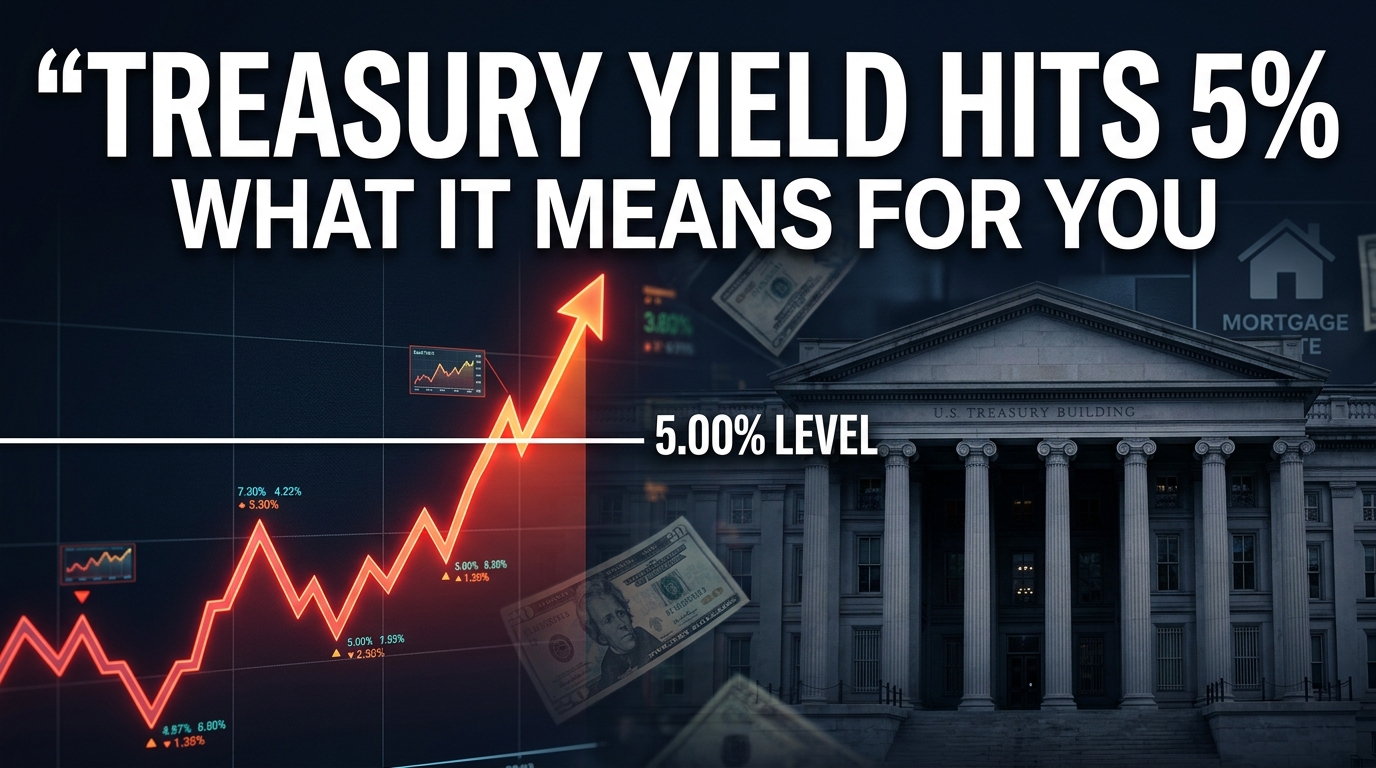
Navigating 5%: What the Latest Treasury Yield Surge Means for Your Portfolio and Loans
The financial markets have reached a critical juncture. The benchmark 10-year U.S. Treasury yield has hovered near and briefly pierced the psychologically vital 5% threshold—a level not sustained consistently since the global financial crisis of 2007. Driven by mounting inflation expectations, surging crude oil prices, and heavy federal borrowing demands, this spike is sending shockwaves through traditional asset classes and borrowing rates.
Also read:
UK War Preparedness: What Citizens Must Do if Conflict Arises
For everyday investors, homeowners, and borrowers, understanding this environment is essential. Here is a comprehensive breakdown of what the 5% Treasury yield surge means for your wealth, your debt, and your overall financial strategy.
Why Are Treasury Yields Surging?
To understand how a bond yield impacts your daily financial life, it helps to look at the macro drivers. The 10-year Treasury note acts as the foundational baseline for global borrowing costs. When its yield climbs, it signals that investors demand higher compensation to lend money to the U.S. government over a decade.
Several key pressures have conspired to push yields to these multi-year highs:
Inflation Resurgence: Geopolitical tensions and energy supply disruptions have sent oil prices soaring, reigniting fears of persistent inflation.
Heavy Government Debt Supply: The sheer volume of federal debt issuance forces the Treasury to flood the market with paper, intensifying competition for capital.
Shifting Federal Reserve Expectations: With sticky inflation data, central bank policy discussions have tilted toward keeping interest rates restrictive for a longer duration, altering trader calculus.
Impact on Your Investment Portfolio
A 5% risk-free rate fundamentally alters the calculus of asset allocation. When cash and government bonds pay 5%, the “TINA” (There Is No Alternative) argument for piling blindly into equities loses steam.
1. Fixed Income and Bonds
The Opportunity: For conservative investors and retirees, a 5% yield on government-backed paper represents an attractive entry point. You can lock in solid, risk-free returns without stepping into high-risk corporate credit.
The Catch: Bond prices move inversely to yields. Existing bondholders who bought lower-yielding notes have experienced capital depreciation as market values adjusted downward.
2. Equities and Growth Stocks
Valuation Compression: Higher yields mean the future cash flows of companies—especially high-flying tech and growth sectors—are discounted more steeply. This often leads to equity market volatility or multiple contraction as capital rotates away from risk assets toward fixed income.
Impact on Loans and Borrowing Costs
Because the 10-year Treasury yield dictates the pricing of long-term debt, the 5% surge directly filters down into consumer and commercial loans:
Mortgages: Fixed-rate mortgages track closely with long-term bond yields. As yields cement themselves near 5%, prospective home buyers face elevated borrowing costs, which dampens housing affordability and slows real estate velocity.
Auto and Personal Loans: Securing financing for major purchases has grown more expensive, tightening household cash flow.
Corporate Borrowing: Businesses looking to expand, fund capital expenditures, or refinance existing debt face higher interest expenses, which can weigh on corporate profit margins.
Actionable Strategy: How to Position Your Finances
Navigating a 5% yield environment requires a proactive, disciplined approach rather than a reactive panic. Consider this structured framework:
Lock in Yields for Cash Reserves: Evaluate your short- to medium-term cash needs. Shifting excess cash into high-yield savings accounts, Treasury bills, or certificates of deposit (CDs) lets you capitalize on elevated short-end yields.
Audit Your Debt Structure: Prioritize paying down variable-rate debt (such as credit cards or adjustable-rate loans) where interest spikes hit your budget immediately. If you hold fixed low-rate debt from previous years, maintain it carefully.
Rebalance with Discipline: Review your equity-to-fixed-income ratio. If your asset allocation drifted during equity rallies, use current fixed-income yields to re-establish a balanced portfolio posture matching your risk tolerance.
Important Note: The financial landscape shifts rapidly based on incoming macroeconomic data. Ensure your strategy aligns with your personal timeline, tax bracket, and liquidity requirements.
Frequently Asked Questions (FAQs)
What does a 5% Treasury yield mean in simple terms?
It means the U.S. government is paying investors an annualized return of roughly 5% to borrow their money for 10 years. Because this is considered virtually risk-free, it sets the baseline benchmark for almost all other borrowing costs in the economy, including mortgages and corporate loans.
Are U.S. Treasury bonds a safe investment right now?
From a credit perspective, U.S. Treasuries remain backed by the full faith and credit of the U.S. government, meaning default risk is exceptionally low. However, if you buy a long-term bond and need to sell it before maturity while market yields continue to rise, you could face capital losses on the secondary market.
How does this impact the housing market?
Higher Treasury yields directly push up long-term mortgage rates. This reduces purchasing power for home buyers, driving up monthly payments and typically slowing down real estate market activity.
Conclusion
The climb of the benchmark Treasury yield toward 5% marks the end of an era of ultra-cheap money, forcing a return to historical norms of capital pricing. While it introduces headwinds for equity valuations and borrowing affordability, it simultaneously rewards savers and fixed-income investors with genuine yield. By understanding these dynamics and adjusting your portfolio and debt management accordingly, you can turn a volatile market environment into a stable foundation for long-term financial health.