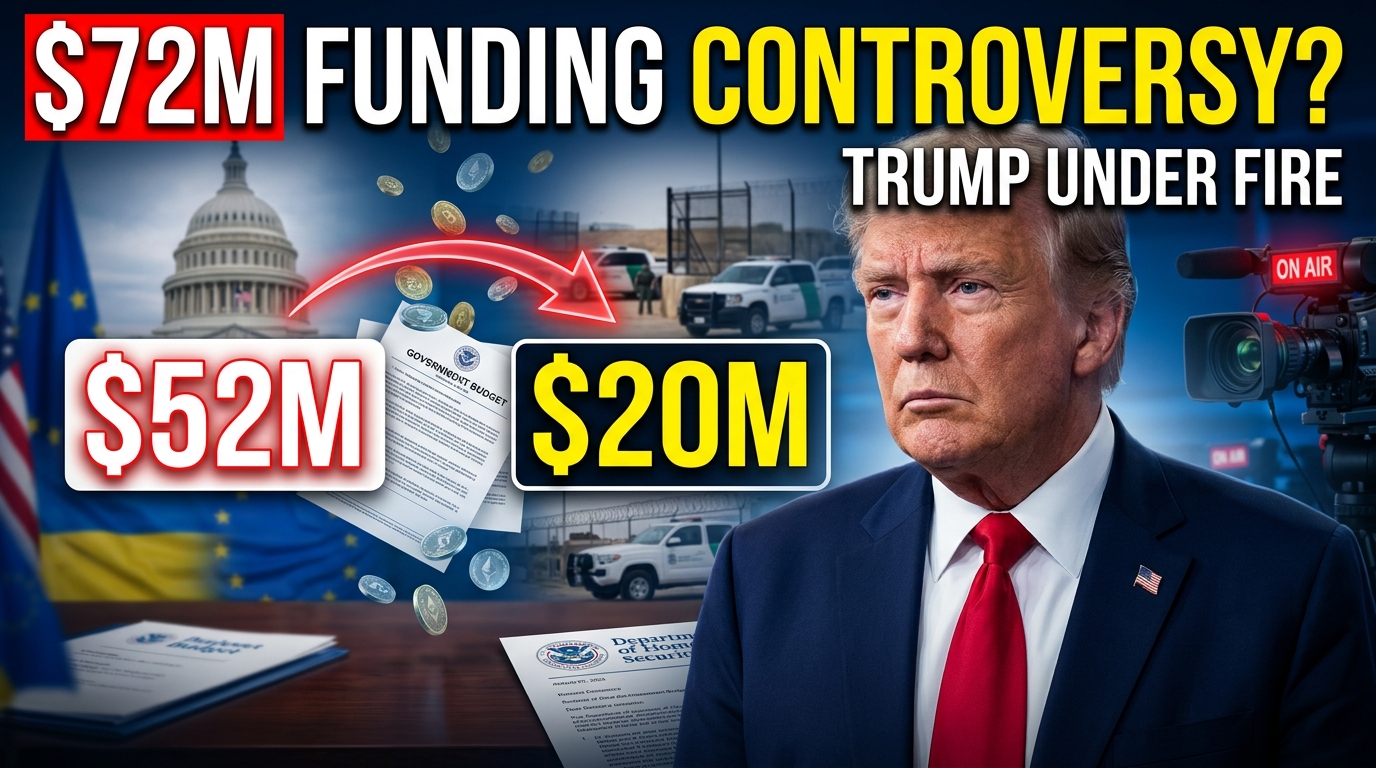
Trump Administration Funding Controversies: Latin America Aid Diversion and DHS Ad Scrutiny Explained
The Trump administration is currently navigating two major financial storms that have lawmakers and international allies demanding immediate answers. On one front, the White House has pulled $52 million in military aid away from Europe and the Middle East, abruptly redirecting it to Latin American governments. At the exact same time, a massive domestic scandal is brewing over $20 million in Department of Homeland Security (DHS) border security funds being funneled into a national television ad campaign starring the President himself, just weeks before the midterms.
Also read:
Hero Pilot Capt Smit Machchhar Saves Flydubai Flight FZ1073
The $52 Million Pivot to Latin America
Taking money meant for European defense—specifically as Ukraine continues to rely on Western support—and shifting it to the Western Hemisphere is a massive geopolitical gamble. In mid-September 2026, the administration quietly initiated a reprogramming of $52 million in Foreign Military Finance (FMF) funds. Instead of bolstering NATO allies or Middle Eastern partners as Congress originally intended, the State Department targeted this cash toward US-aligned governments in Latin America.
The White House argues this move is strictly about securing America’s backyard. By funding counter-narcotics programs and border enforcement in countries like Colombia and Panama, they believe the US gets a better return on investment than propping up European defense budgets. But taking this money from an active conflict zone sends a nerve-wracking signal to Brussels and Kyiv. European leaders are openly worrying that American financial commitments are conditional and can disappear overnight depending on executive moods.
Taking $20 Million from Border Security for TV Ads
While the foreign aid shift makes international waves, the domestic use of taxpayer dollars is generating even louder outrage. Late last year, Congress passed the “One Big Beautiful Bill” Act, which included funding specifically designated for Customs and Border Protection (CBP).
Records from the Office of Management and Budget show that on September 19, $20 million of that border security money was suddenly shifted into an account earmarked for “commemorative events.” The very next day, DHS handed a $20 million contract to the Maryland-based LMD Agency for a “national media campaign.” Almost immediately, highly produced commercials featuring President Trump began hitting the airwaves. The administration defends these spots as routine public service announcements, arguing that because Trump isn’t explicitly on the midterm ballot, the ads don’t cross any legal lines regarding election interference.
What Lawmakers Are Saying Right Now
Members of Congress on both sides of the aisle aren’t buying the administration’s excuses, and the backlash has been swift.
Bipartisan frustration: Republican leaders have pointed out that while they might agree with the broader messaging in the ads, taxpayer dollars absolutely shouldn’t be footing the bill for a media blitz.
Demands for accountability: Democratic Senators Patty Murray and Chris Murphy recently fired off a letter to Homeland Security Secretary Markwayne Mullin, demanding a full explanation of the $20 million ad contract within 48 hours.
Statutory concerns: Lawmakers argue that diverting FMF funds to Latin America without proper congressional approval directly violates the Constitution’s power of the purse and ignores explicit legislative directives.
Frequently Asked Questions (FAQs)
Why was the $52 million in foreign aid redirected? The administration claims that investing in Latin American security directly benefits the US by curbing transnational crime and illegal immigration, essentially attempting to force European nations to pay for their own regional defense.
How did the DHS pay for the pro-Trump television ads? On September 19, $20 million was moved from a CBP border security fund into a “commemorative events” account. A day later, that money was awarded to a Maryland marketing firm to produce and air the commercials.
Are the DHS television commercials actually legal? That is the core of the current debate. The White House insists they are standard public service announcements. Critics and ethics watchdogs argue they act as taxpayer-funded political propaganda, heavily violating federal appropriations laws and potentially the Hatch Act.
We are watching a real-time stress test of executive branch authority. By pushing the absolute limits of how appropriated funds can be paused, moved, or spent, the administration is daring Congress to stop them. Whether it is pulling critical defense money from Europe or dipping into border security accounts to pay for domestic television spots, these moves fundamentally challenge the balance of power in Washington. If lawmakers fail to force transparency now, they risk permanently surrendering their grip on the federal checkbook to the executive branch.
Official News Links & Trusted References