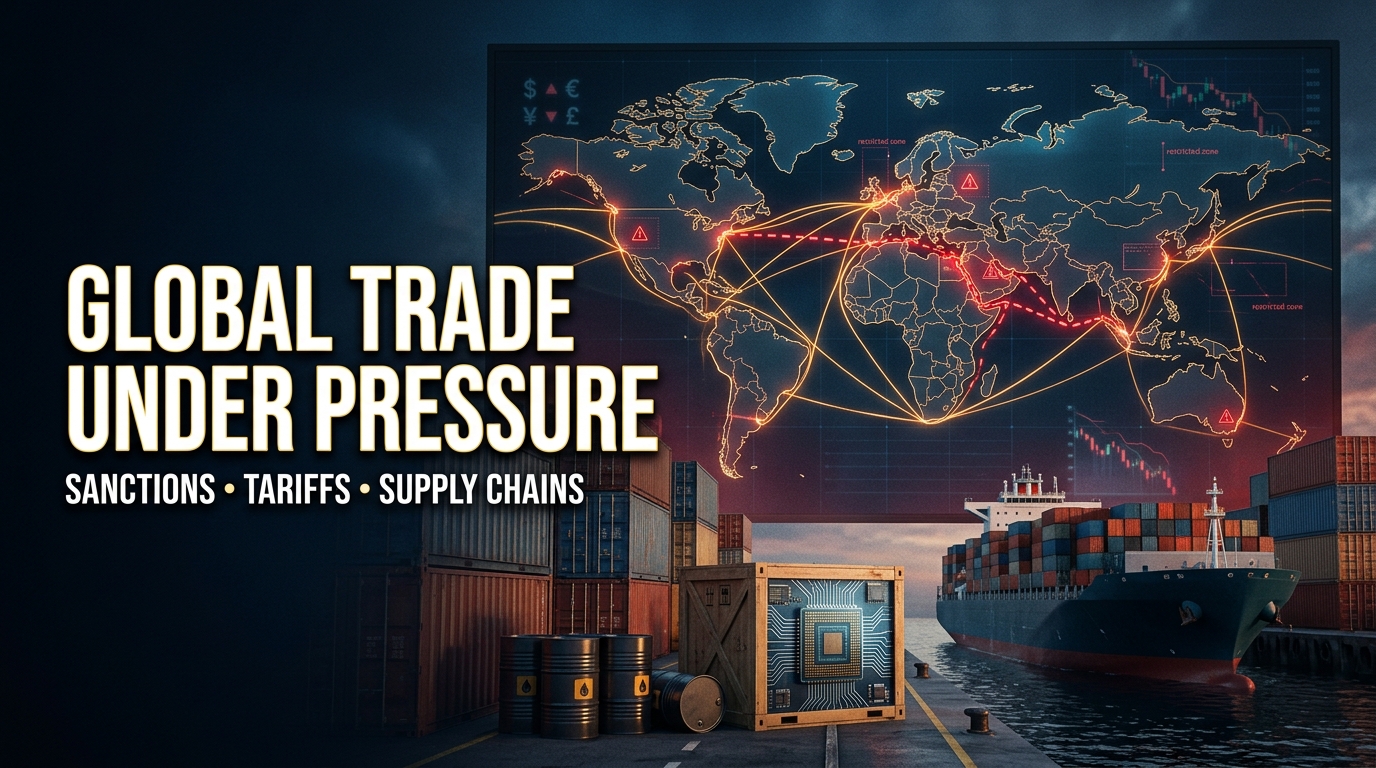
Global Trade Policies and International Sanctions Pressure: Economic Impacts and Future Strategies
In the modern era, the global economy stands at a critical crossroads where Global Trade Policies and International Sanctions have fundamentally reshaped the international economic framework. Historically, trade was primarily driven by mutual exchange, market expansion, and cooperative economic growth. Today, however, regulatory trade measures and severe sanctions are frequently deployed as powerful geopolitical instruments. This article provides an exhaustive analysis of how escalating economic pressures impact global supply chains, drive inflation, and challenge developing economies worldwide.
Also read:
The Private Credit Boom and Digital Finance: Trends & Outlook
The Rise of Protectionism and Global Trade Policies
Over recent years, major economic powers have increasingly moved away from unfettered free trade, favoring Protectionism and restrictive trade policies instead. Several core factors drive this shift:
Tariffs and Import Barriers: Heightened import duties and restrictive trade barriers have significantly raised transaction costs, placing an immediate financial burden on businesses and end consumers.
Supply Chain Reshoring: To mitigate geopolitical vulnerabilities, multinational corporations are actively reducing overseas dependencies by relocating production facilities closer to home (nearshoring) or domestically (reshoring).
Technology Restrictions: Comprehensive export controls on advanced technologies, semiconductors, and software have effectively fragmented the global technology sector into competing spheres.
Economic Pressures of International Sanctions and Their Aftermath
International sanctions are designed to isolate targeted nations or compel policy shifts through financial coercion. However, their repercussions extend far beyond the targeted states, creating systemic ripples across the global economy.
1. Severe Supply Chain Disruption
When sweeping financial or energy sanctions are imposed on major exporting nations, established trade routes, logistic networks, and long-term contracts are instantly severed. Consequently, enterprises are forced to scramble for alternative suppliers, incurring massive financial and operational delays.
2. Amplified Inflation and Cost of Living
Trade restrictions and sanctions inevitably create supply bottlenecks for essential commodities, including crude oil, industrial raw materials, and agricultural goods. This dynamic fuels persistent global inflation, eroding household purchasing power across both developed and developing markets.
3. Financial Fragmentation
Sanctions have accelerated a shift toward financial fragmentation. Many nations are actively working to bypass traditional Western-centric payment networks, turning instead to local currency settlements and alternative cross-border financial architectures.
Vulnerabilities and Challenges for Developing Economies
The cascading effects of restrictive trade policies and sanctions weigh disproportionately on emerging markets and developing economies. These nations often encounter severe structural challenges:
Depleted Foreign Exchange Reserves: Surging costs for imported energy and essential food items place an unsustainable burden on national currency reserves.
Investment Deficits: Heightened macroeconomic uncertainty discourages foreign direct investment (FDI), starving developing markets of crucial capital inflows.
Food and Energy Insecurity: Supply chain instability leads to erratic price volatility, threatening domestic food security and energy affordability.
Frequently Asked Questions (FAQs)
Q1: What is the difference between global trade policies and international sanctions? Ans: Trade policies (such as tariffs, quotas, and subsidies) primarily regulate standard commercial pricing, market access, and trade compliance between nations. In contrast, international sanctions are punitive legal or financial measures implemented to restrict or entirely ban trade and financial transactions with specific targeted countries, entities, or individuals.
Q2: How do trade restrictions and sanctions directly affect everyday consumers? Ans: These measures drive up the cost of imported goods, accelerate inflation, and create product shortages in domestic markets, ultimately reducing consumer purchasing power.
Q3: Are international sanctions universally effective in achieving their political objectives? Ans: While sanctions exert immense pressure on targeted economies, they rarely trigger immediate political compliance. Instead, they often result in complex unintended economic consequences, including the realignment of global trade partners and long-term structural changes.
Conclusion
The mounting pressure driven by restrictive global trade policies and international sanctions signals a profound transition toward economic fragmentation rather than traditional globalization. To navigate this uncertain landscape, nations must prioritize trade diversification, strengthen regional economic partnerships, and fortify domestic industries to withstand future geopolitical shocks.