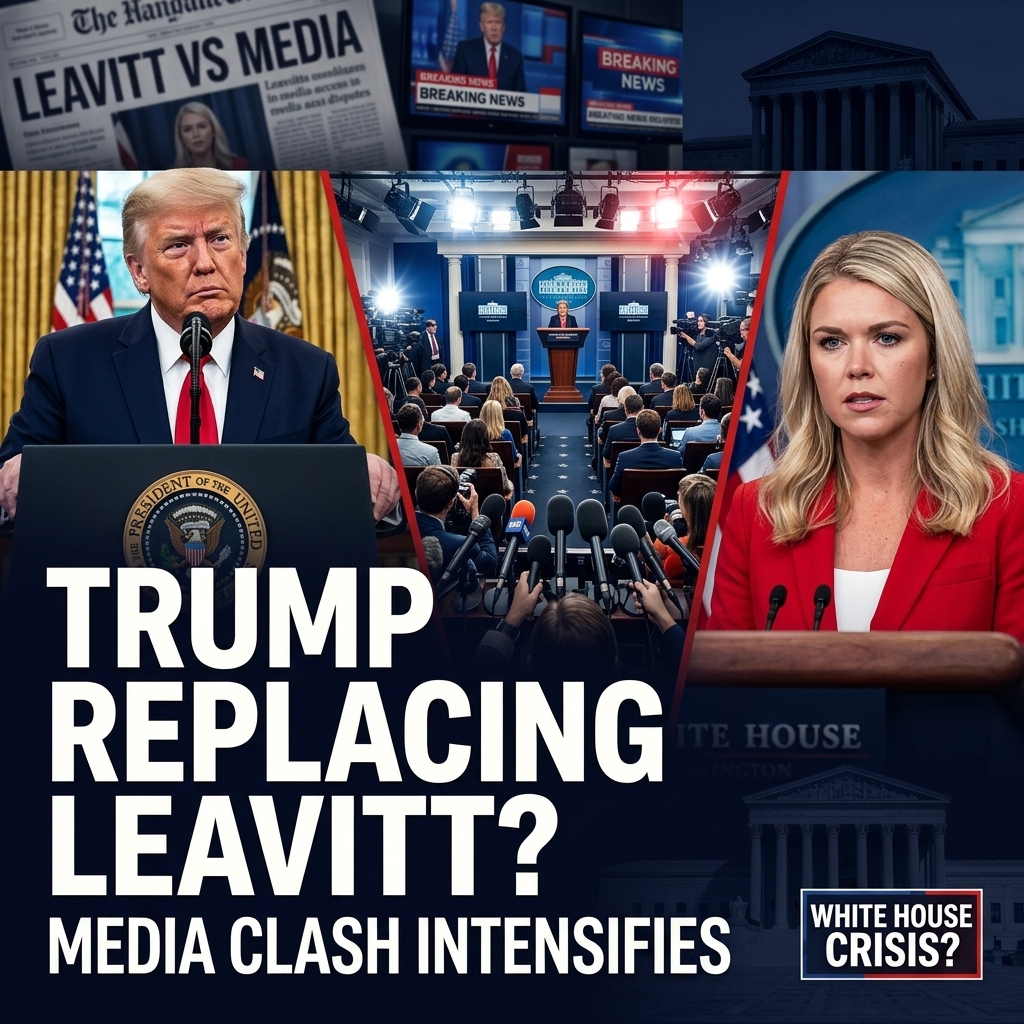
Inside Trump’s Hunt for a New Press Secretary as Media Clashes Intensify
An extraordinary confrontation between the White House and the Washington press corps has pushed the administration’s communications apparatus to a breaking point. As federal courts intervene in executive press bans, public speculation surrounding the Trump hunt for new press secretary leadership has intensified following public critiques by President Donald Trump regarding his administration’s media messaging.
The tension highlights a structural dilemma at the heart of the administration: a press office caught between executing an aggressive war on mainstream media outlets and managing the operational necessity of daily news distribution. With press pool boycotts, credential revocations, and legal setbacks mounting, the role of White House Press Secretary has once again become the most high-pressure podium in American politics.
Also Read:
Bob Pettit Dies at 93: Remembering the NBA’s Inaugural MVP
1. Public Roasts and Mounting Frustration in the Oval Office
Speculation regarding changes at the briefing room podium surged after President Trump publicly vented his frustration over media coverage during an Oval Office executive order signing. Complaining that his administration receives between 93% and 97% negative coverage, Trump turned to Press Secretary Karoline Leavitt and openly questioned her performance in front of gathered reporters.
“Maybe Karoline’s doing a poor job, I don’t know… You’re doing a terrible job. Should we keep her? I think we’ll keep her,” Trump remarked in a jab that quickly went viral across news networks.
While Trump subsequently reaffirmed support for Leavitt—calling her performance “amazing” at public gatherings—political insiders view these candid exchanges as indicative of broader executive dissatisfaction with the administration’s public relations footprint.
Serving as White House Press Secretary under Trump requires balancing two contrasting demands: maintaining absolute loyalty to the president’s aggressive counter-messaging strategy while simultaneously managing a hostile press corps demanding access and transparency.
2. The Media Ban, Network Boycott, and Judicial Injunctions
The search for an effective communications strategy unfolds against the backdrop of an unprecedented legal and operational showdown between the executive branch and major news organizations.
                 [ White House Revokes Access (CNN, MS NOW, Politico) ]
                                          |
         +--------------------------------+--------------------------------+
         |                                                                 |
         v                                                                 v
[ Major TV Networks Boycott Pool ]                       [ Media Outlets File First Amendment Lawsuit ]
(ABC, CBS, NBC, Fox News, CNN)                          (Federal Court in Washington, D.C.)
         |                                                                 |
         +--------------------------------+--------------------------------+
                                          |
                                          v
                 [ Federal Judge Grants Emergency Restraining Order ]
                 (Orders White House to Immediately Restore Credentials)
Credential Revocations: The White House revoked hard passes for journalists representing CNN, MS NOW, and Politico, accusing them of publishing “fake news” and violating standards of decorum.
Press Pool Boycott: In a rare display of solidarity, rival television networks—including Fox News, ABC, CBS, and NBC—refused to fill in for excluded outlets, effectively suspending shared video and audio pool coverage of presidential events.
Courtroom Defeat: U.S. District Judge Timothy Kelly issued a temporary restraining order forcing the administration to immediately restore press credentials to CNN, MS NOW, and Politico, ruling that the ban likely violated First Amendment protections against viewpoint discrimination.
The resulting logistical chaos—including presidential remarks drowning out under a helipad ceremony due to missing pool microphones—underscored the limits of managing executive messaging through sheer exclusion.
3. What Trump Demands in a Press Spokesperson
The ongoing friction has triggered intense discussion among White House advisers regarding the ideal candidate profile required to navigate the briefing room.
| Operational Attribute | Traditional Press Secretary Standard | Trump Administration Ideal Persona |
| Media Stance | Neutral liaison providing institutional briefings | Aggressive combatant directly challenging press motives |
| Loyalty Metric | Alignment with administration policy goals | Unwavering personal defense of the president’s statements |
| Briefing Style | Nuanced policy delivery and off-camera backgrounders | High-impact, television-ready sparring sessions |
| Legal Navigation | Standard compliance with press access precedents | Willingness to defend aggressive credentialing restrictions |
Insiders note that replacing a press secretary rarely resolves the fundamental underlying tension. Any press chief operating in this environment faces the near-impossible task of reshaping media coverage while the chief executive actively bypasses formal briefing structures via social media and direct rants.
4. The Structural Crisis of Executive Communications
As the White House communications team searches for a path forward, media analysts emphasize that spokesperson turnover is merely a symptom of a larger structural divide.
Alternative Media Pivot: The administration has increasingly bypassed legacy press corps channels in favor of direct-to-consumer digital broadcasts (“Trump TV”) and friendly podcast networks.
The “Fake News” Dilemma: By constantly framing major news organizations as “sick, treasonous, and demented,” the administration leaves little operational room for traditional press briefing negotiation.
Judicial Guardrails: Federal court rulings consistently restrict the executive branch from singling out news outlets for revocation based on editorial content, forcing press secretaries to operate within rigid legal constraints.
5. Strategic Outlook Ahead of the Midterms
With mid-term elections approaching, Republican strategists have voiced concern that prolonged disputes over White House press access divert public focus away from core economic and legislative priorities.
Whether Karoline Leavitt retains her post or the administration eventually conducts a formal personnel shift, the White House Press Secretary podium remains a frontline combat zone. As long as executive messaging prioritizes direct confrontation with mainstream journalism, any spokesperson occupying the podium must navigate an environment defined by continuous media warfare, rapid legal challenges, and heightened public scrutiny.
Frequently Asked Questions (FAQs)
Has Donald Trump officially replaced White House Press Secretary Karoline Leavitt?
No. While President Trump publicly joked about replacing Karoline Leavitt during Oval Office briefings, he subsequently stated “I think we’ll keep her” and praised her for managing one of the toughest roles in Washington.
Why did federal courts overturn the White House ban on journalists?
U.S. District Judge Timothy Kelly issued a temporary restraining order reinstating credentials for CNN, MS NOW, and Politico, ruling that selectively banning news organizations based on critical reporting constitutes unconstitutional viewpoint discrimination under the First Amendment.
Why did major networks boycott White House press pool coverage?
Networks including Fox News, ABC, CBS, and NBC suspended shared press pool coverage in solidarity with banned news outlets to defend long-standing press freedom standards and maintain independent journalistic access.
What challenges face a press secretary in the Trump administration?
A press secretary must balance strict personal loyalty to the president with intense scrutiny from an adversarial press corps, all while navigating federal court rulings on press access and managing unpredictable presidential statements.
Disclaimer
This article is an independent news synthesis compiled from open-source reporting, legal filings, and public White House press statements. It is intended strictly for educational, informational, and news reporting purposes.