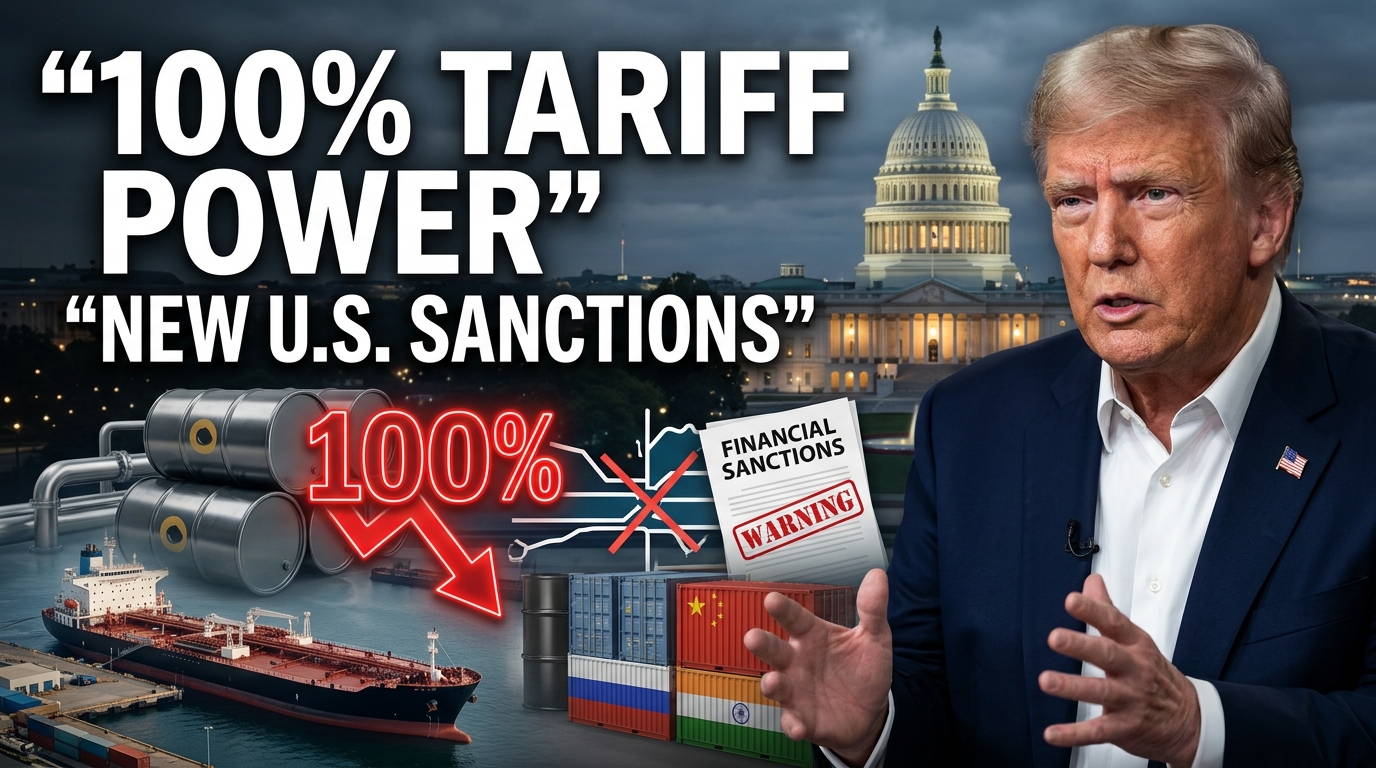
Expanded Tariff and Sanctions Authority Washington: New Legislation Unveiled
With the recent enactment of landmark legislation granting expanded tariff and sanctions authority Washington, the political landscape of international trade and foreign policy has shifted dramatically. President Donald Trump signed the Lindsey O. Graham Sanctioning Russia and Iran Act of 2026, a bipartisan bill that drastically widens executive leverage. It introduces sweeping financial measures and gives the White House discretionary authority to levy steep tariffs of up to 100% on third-party nations purchasing Russian energy.
Also read:
Treasury Yield Surge: What the 5% Rate Means for Your Portfolio & Loans
This comprehensive guide breaks down what the new legislation entails, why it was enacted, how it impacts global economies, and what critics and supporters are saying about this profound shift in American trade power.
Inside the Legislation: Key Pillars of the 2026 Act
Named in honor of the late Senator Lindsey Graham, who spent his final months championing the measure, the new law establishes robust enforcement mechanisms to isolate Moscow financially while extending restrictions on Tehran.
Expanded Sanctions on Russia: The act targets high-ranking Russian officials, critical banking systems, and financial institutions aiding the Kremlin.
The “Shadow Fleet” Crackdown: It introduces explicit penalties targeting the illicit network of oil tankers used by Russia to bypass Western export caps.
Extended Iran Sanctions: To secure broader political alignment during negotiations, the bill extends the Iran Sanctions Act through 2031, targeting its energy and weapons sectors.
Discretionary Tariff Power: The executive branch gains the statutory authority to impose tariffs of up to 100% on goods originating from the top five global importers of Russian crude oil or natural gas.
Global Repercussions: Who Is Affected?
While the core intent of the legislation is to punish Moscow for its ongoing war in Ukraine, the ripple effects stretch far across international waters. Major economies that have continued importing Russian energy resources—most notably China and India—find themselves directly in the crosshairs of potential American trade actions.
Energy Security vs. Trade Retaliation: Nations like India have consistently defended their energy procurement strategies as vital to safeguarding domestic populations against volatile global energy markets.
The Threat of 100% Tariffs: Although the law does not automatically trigger maximum tariffs immediately, it hands the White House a massive regulatory stick. Trade analysts warn that this tool could heavily influence bilateral negotiations and reshape global supply chains.
Exemptions: The text includes specific carve-outs, such as exemptions for countries whose Russian natural gas imports account for less than 15% of total exports and which demonstrate significant steps toward reducing dependence.
Domestic Political Debate and Bipartisan Tensions
The path to passing the legislation was marked by intense debate on Capitol Hill. While the Senate passed it comfortably, the House vote mirrored deep partisan divisions over the delegation of economic power.
Supporters championed the bill as an indispensable weapon to financially choke the Russian war machine. Ukrainian leadership praised the move as an exceptionally powerful tool for accountability.
Conversely, Democratic opponents raised alarm bells over the expansion of executive authority. Critics argue that handing the White House unchecked tariff powers bypasses congressional oversight and risks adding inflationary pressures onto everyday American households, who are already grappling with cumulative tariff costs.
Frequently Asked Questions (FAQs)
1. What is the official name of the new legislation?
The law is officially titled the Lindsey O. Graham Sanctioning Russia and Iran Act of 2026.
2. Does the bill automatically impose a 100% tariff on countries buying Russian oil?
No. The legislation does not trigger automatic tariffs; instead, it grants the executive branch the statutory authority and discretion to apply tariffs of up to 100% on the top five importers of Russian crude oil or natural gas.
3. Which countries are most vulnerable to these new tariff provisions?
Major importers of Russian petroleum and gas, prominently including China and India, face the highest exposure under the legislation’s target parameters.
4. Are there any exemptions included in the law?
Yes, nations that import less than 15% of their natural gas from Russia and have taken significant active steps to decrease those volumes can qualify for exemptions.
5. What are the domestic criticisms of the bill?
Opponents argue that expanding executive tariff powers without stringent congressional guardrails hands too much economic control to the White House, potentially driving up costs for American consumers.
Conclusion
The enactment of the Lindsey O. Graham Sanctioning Russia and Iran Act of 2026 marks a decisive turning point in Washington’s approach to economic statecraft. By intertwining foreign policy sanctions with aggressive secondary tariff authorities, the U.S. government has raised the stakes for global trade partners. Whether this legislation succeeds in altering foreign behavior or primarily sparks fresh diplomatic friction will depend entirely on how cautiously—or aggressively—the executive branch chooses to deploy its newfound powers.