
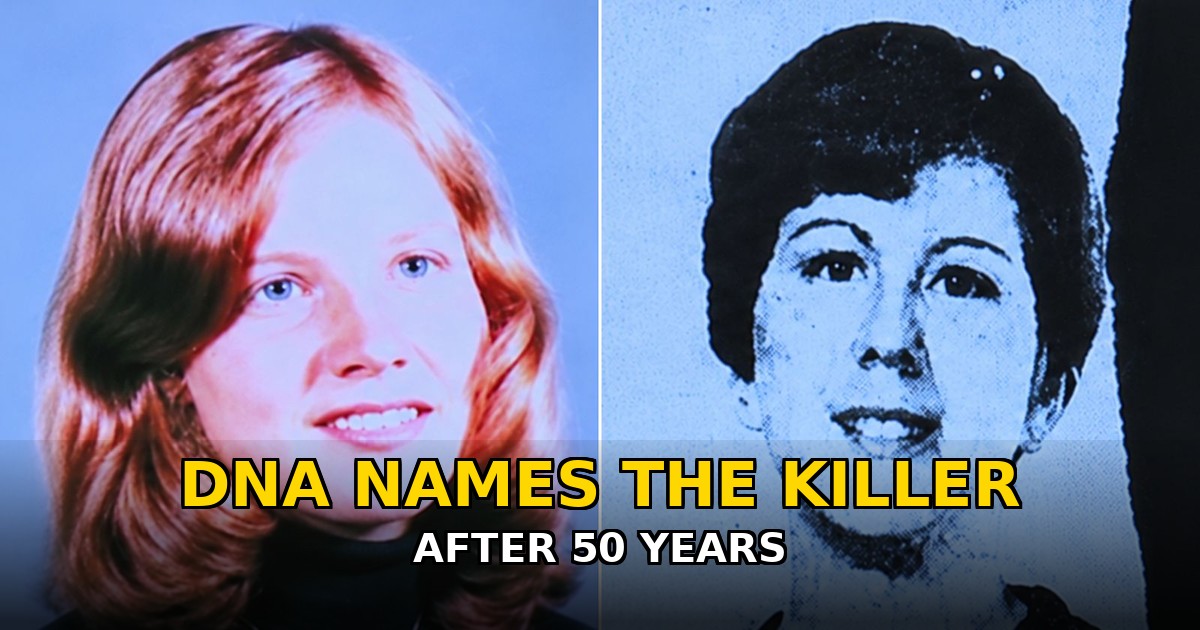
The Pennsylvania cold case serial killer has finally been named, nearly 50 years after two young women were murdered in Washington County, Pennsylvania. Pennsylvania State Police announced on Wednesday that DNA evidence has identified the now-deceased James Richard Clark as the man who killed 21-year-old Susan Rush in 1976 and 18-year-old Brenda Ritter in 1977. The announcement brings an answer to two families who waited decades to learn who was responsible — and it confirms what investigators had long suspected: a single offender was behind both killings.
Clark died of natural causes in 2023, at the age of 66, and will never face trial. That fact does not diminish what the identification means for the families, or for the investigators who kept the cases alive for almost half a century. It also raises a question that police are still working to answer: whether Clark was responsible for more killings than these two.
Pennsylvania cold case serial killer: how the two murders were linked
Testing showed that the same offender murdered both Susan Rush and Brenda Ritter, according to Cpl. James Petrosky of the Pennsylvania State Police Criminal Investigation Assessment Unit. “Testing identified that the same offender murdered both Susan Rush and Brenda Ritter. This confirmed there was a serial killer in Washington County during this time frame,” Petrosky said at the news conference.
The link was established not by a confession or a witness, but by DNA preserved from both crime scenes and analysed with technology that did not exist when the women were killed. The CNN report sets out the timeline of the cold cases and the science behind the identification.
Two young lives, six months apart
Susan Rush, a 21-year-old clerk, was last seen leaving the shopping centre where she worked one night in 1976. She was headed to church to meet her family for a Thanksgiving Eve dinner, but she never arrived. After her family reported her missing, her brother found her abandoned car along a road the next morning. Her body was in the trunk. An autopsy determined that she had been sexually assaulted and strangled, and that she had died of asphyxiation due to strangulation.
About six months later, on a stormy night in May 1977, 18-year-old Brenda Ritter left her boyfriend’s house and never made it home. Ritter, a recent graduate who worked as a secretary for a construction company, had received her beautician’s licence just three weeks earlier and had hoped to find a new job in that field. Her mother reported her missing the next morning, May 19, 1977. Later that day, her car was found abandoned along a rural road near Washington. A search with a police helicopter located her body on a hill about three-quarters of a mile from her car. She, too, had been sexually assaulted and strangled.
Following Ritter’s murder, authorities looked into whether the two deaths were connected. Don Zofchak, then police chief in South Strabane Township — where Ritter’s body was found — told the Pittsburgh Post Gazette that there were similarities between the two cases. But numerous leads in both investigations led nowhere, and both cases went cold.
The cases go cold — and stay cold for decades
For decades, the two families mourned their daughters while the answer remained a mystery, and the Pennsylvania cold case serial killer remained unnamed. Investigators kept returning to the evidence, hoping that science would eventually catch up with the crimes.
In 2008, DNA from Ritter’s investigation was uploaded to CODIS, the FBI’s DNA profile database, and was analysed against other crime scene DNA. But the profiles did not match any known offender, and the cases remained open but unsolved.
The DNA breakthrough
The break came in 2025, when investigators submitted DNA evidence from both cases to several biotechnology companies to search for new clues. Using genetic genealogy, they identified Clark as a possible suspect, and investigators then confirmed the match with direct DNA testing.
Cybergenetics isolated the unknown person’s genotypes from each DNA sample and compared them to data from Clark. The results matched. Clark, who died in 2023, was identified as the person who killed both Susan Rush and Brenda Ritter.
The Pennsylvania cold case serial killer investigation then moved from linking the crimes to naming the offender. The announcement also confirmed the fear that had lingered in Washington County for decades: a serial killer had been operating there in the 1970s.
These killings are the latest in a growing number of cold cases solved thanks to advances in DNA technology. Investigators across the United States have used the same approach — genetic genealogy and DNA databases — to solve cases that had remained unsolved for decades, bringing answers to families who waited years for justice.
For more on recent U.S. news, see our report on the Kentucky jet crash.
Who was James Richard Clark?
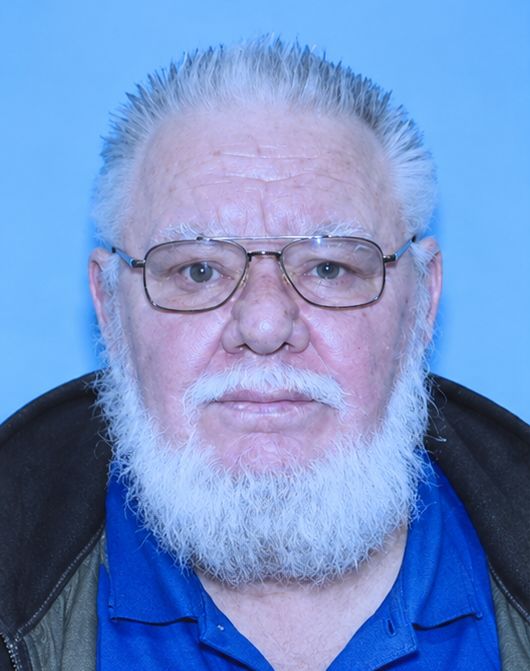
Clark was living in the Washington area at the time of the murders, according to Petrosky. He would have been around 19 years old when Rush was murdered, and 20 when Ritter was killed. Clark had a criminal history — he was sentenced to prison for a series of burglaries in the late 1970s. He was also investigated in a 1982 murder in Washington County, but no charges were ever brought against him. It is not clear whether that case is still open. Charlie Kirk murder trial plea deal possible in Utah
Clark died of natural causes in 2023 at the age of 66. Authorities have notified both victims’ families, who said they were grateful for the identification, even though the suspect will never stand trial.
That the suspect is dead changes the shape of the case. There will be no trial, no testimony, and no verdict. But for the families, the identification is an answer they waited almost half a century to hear.
Could there be more victims?
Investigators have not finished with Clark. Petrosky said he believes the man could have been responsible for more killings than the two he has been linked to. “We believe there are more victims out there,” he said at the news conference.
While identifying Rush and Ritter’s killer is a significant achievement, Petrosky said investigators are now looking at unsolved homicides in the region to see whether any can be connected to Clark.
It is a reminder that a serial killer identification rarely ends a story. The Pennsylvania cold case serial killer’s name is now known — but the full extent of his crimes may still be unknown.
What happens next
Police will continue to dig into the Pennsylvania cold case serial killer’s past, and the investigation is still under way. The case will remain open as investigators look for more victims and more evidence.
For the families of Susan Rush and Brenda Ritter, the announcement ends nearly 50 years of not knowing who killed their daughters. It is an answer, but it is not a resolution. The women were 21 and 18 when they were killed — young women with jobs, families and plans — and the resolution of their cases is, above all, about them.
The bottom line
The Pennsylvania cold case serial killer has been identified as James Richard Clark, a man who died in 2023 at the age of 66 and will never stand trial. DNA evidence preserved from both crime scenes, analysed with technology that did not exist in the 1970s, linked the murders of Susan Rush in 1976 and Brenda Ritter in 1977 and led investigators to Clark.
Petrosky put it simply: “We don’t consider the cases hopeless, we always think there’s something there. It’s not about us; it’s about the victims and their families.” After nearly five decades, the families finally have an answer — and the investigation into what else Clark may have done is still under way.