
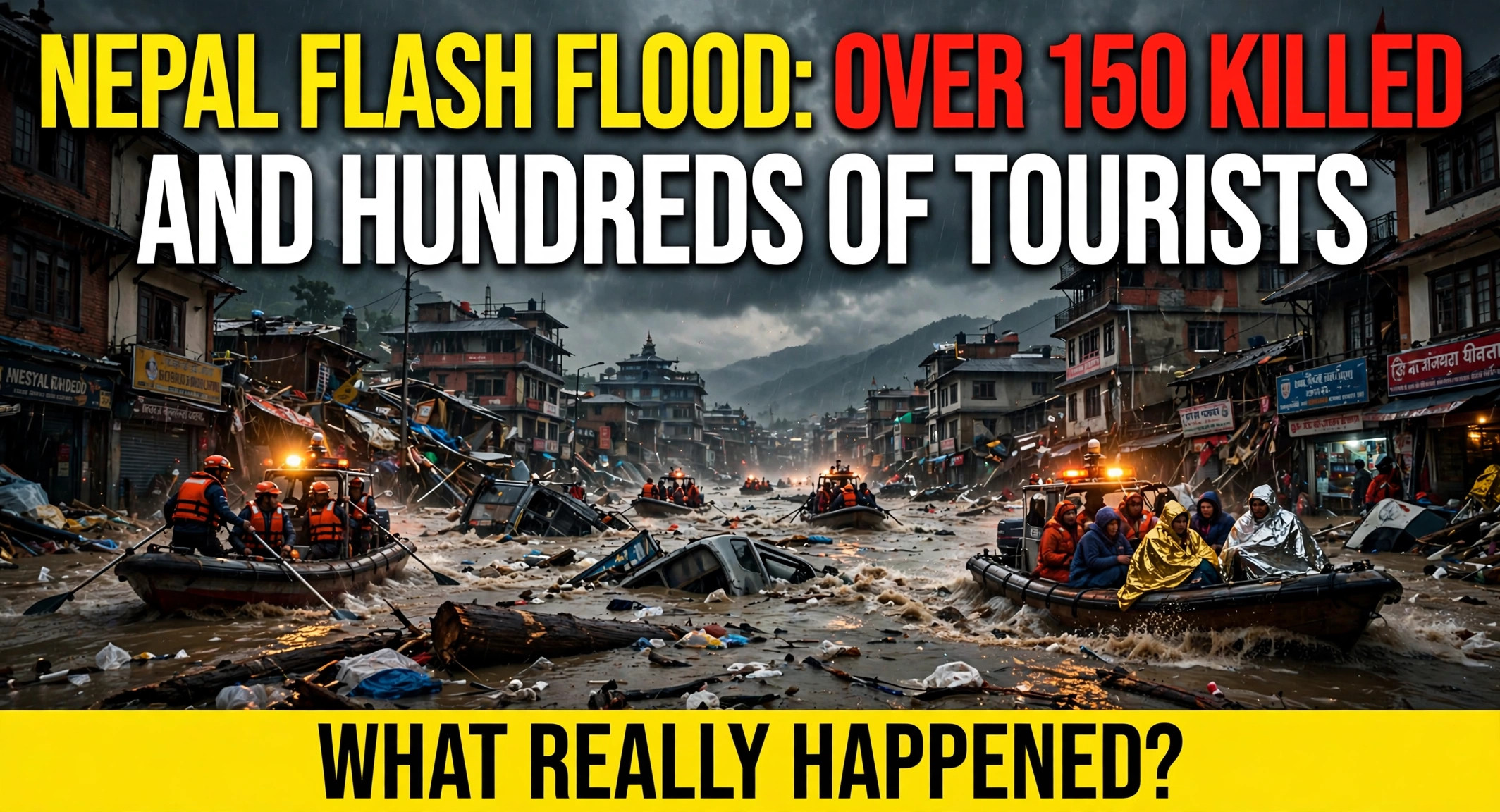
A catastrophic Nepal flash flood has struck the Himalayan region along the Nepal-China border, leaving a trail of unprecedented devastation and heartache. After a massive high-altitude glacial collapse and a violent mudslide, this devastating Nepal flash flood has confirmed over 150 fatalities, with the death toll rapidly climbing. Even more alarming: nearly 1,300 people remain entirely unaccounted for, including hundreds of international tourists, trekkers, and religious pilgrims.
Also read:
Federal Student Trainee Programs: Paid USAJOBS Internships (18+)
The disaster crippled infrastructure across multiple northern districts, wiped entire riverside villages off the map, washed away major concrete bridges, and cut off vital economic and transit corridors. Governments around the world are scrambling to coordinate emergency responses and rescue their citizens, while local search and rescue teams battle brutal terrain, rising waters, and the continuing threat of further mudslides.
Anatomy of the Disaster: What Triggered the Nepal Flash Flood?
It unfolded fast, and without warning, on a Wednesday morning. Data from the Nepal National Disaster Risk Reduction and Management Authority (NDRRMA) and geological analysts point to a massive high-altitude collapse of ice, rock, and mud from a glacier northeast of the critical Rasuwagadhi border crossing.
Early local reports suspected an earthquake, but geological surveys told a different story: the massive displacement functioned as a devastating Glacial Lake Outburst Flood (GLOF). A towering wall of water, mud, and debris slammed down the narrow mountain valleys, instantly swelling tributaries including the Bhotekoshi, Trishuli, Kali Gandaki, and Narayani rivers.
This sudden Nepal flash flood caught hundreds of villagers, migrant workers, hydropower project personnel, and seasonal travelers completely off guard. Eyewitnesses in Timure, Gyirong Port, and surrounding settlements described a sound like an explosion — followed by a roaring wall of thick black mud that swallowed houses, schools, and security posts within seconds.
Habitation and Infrastructure in Ruins
The districts hit hardest by the river’s fury: Rasuwa, Nuwakot, Dhading, Chitwan, and Gorkha. Responders have recovered bodies hundreds of miles downstream — a grim measure of the floodwater’s sheer velocity.
Road and Bridge Collapse: Initial assessments show dozens of kilometers of vital roadways and numerous major bridges completely swept away. Mountain communities are isolated, and emergency vehicle transit is paralyzed.
Hydropower and Commercial Hubs: Multiple vital hydropower project sites along the northern frontier were entirely inundated, trapping scores of on-site workers. Commercial trading posts near the Gyirong port corridor are buried under dense silt and mud.
Wiped-Out Settlements: Entire hamlet clusters and local markets were practically eradicated. Where once-thriving communities stood, there are now flattened timber frames and deep sedimentary debris. Local livelihoods are shattered.
The Human Toll: International Tourists and Pilgrims Missing
The Nepal flash flood struck at the worst possible moment — peak travel season for sacred high-altitude journeys and regional treks. Thousands of pilgrims cross through Nepal’s Rasuwa district toward Tibet for the holy Kailash Mansarovar Yatra, and domestic and foreign trekkers flock to the Gosaikunda Lake region for cultural and religious festivals. Hundreds of foreign nationals are now stranded, missing, or dead.
Tourism boards and foreign ministries have released harrowing figures:
India: Over 133 to 179 citizens unaccounted for, primarily pilgrims heading toward Mount Kailash. Entire busloads of pilgrims were reportedly caught in the deluge.
North America: Dozens of citizens from the United States (at least 65 missing) and Canada (at least 24 missing) traveling via independent outfitters or adventure groups are completely out of contact.
United Kingdom, Australia, and Europe: Significant numbers missing, including 35 Australians, 33 British nationals, and dozens more from Ukraine, Germany, France, and Spain.
Asia: More than 51 Malaysians, 8 Singaporeans, 5 Japanese, and 9 South Korean nationals unaccounted for.
Local Security Forces: The National Police and Nepali Army report at least 85 active-duty security personnel missing after border barracks and checkpoints were overrun by the initial surge.
National and International Response Efforts
Nepali officials confirmed the state has aggressively mobilized all available security forces, military reserves, and emergency response machinery.
Aerial and Ground Rescuers:
The Nepali Army has deployed specialized helicopter units to pluck stranded survivors from rooftops and mountain ledges. They are working around the clock, ferrying the critically injured back to Kathmandu for urgent medical care. Police are moving families in flood-risk areas along the Trishuli River to higher, safer ground.
Global Solidarity and Aid:
World leaders have mobilized fast. Indian Prime Minister Narendra Modi spoke directly with Nepal’s Prime Minister, pledging immediate humanitarian aid and coordinated rescue team deployments. Chinese state media reports hundreds of emergency workers, vehicles, speed boats, and sniffer dogs have been deployed on the Tibetan side of the border in Gyirong County for joint search operations.
International Embassies:
Countries worldwide have activated emergency consular services. The US Embassy in Nepal, Global Affairs Canada, and multiple European ministries have issued urgent advisories, working with Nepal’s Ministry of Tourism and local travel agencies to track down missing citizens. A toll-free emergency hotline is up for concerned families around the world.
Climate Change and the Growing Threat of GLOFs
This Nepal flash flood has reignited urgent debate among climate scientists about Himalayan vulnerability. Experts from the Kathmandu-based International Centre for Integrated Mountain Development (ICIMOD) have repeatedly warned that rising global temperatures are accelerating glacier melt.
As glaciers melt, glacial lakes swell beyond their natural capacities. When the fragile ice and moraine dams holding those lakes fail — triggered by minor seismic activity, heavy rainfall, or internal structural collapse — the resulting Glacial Lake Outburst Floods (GLOFs) send millions of gallons of water and rock hurtling down populated valleys. The Himalayan region is growing more hazardous by the year, and early warning systems and smarter infrastructure planning are now absolute necessities to prevent future tragedies.
Official Emergency Contacts and Relief Funds
For families seeking information about missing loved ones, or anyone looking to donate to relief efforts after the Nepal flash flood, official channels are open:
Nepal Tourism Board Hotline: 1144 or 1234 (Toll-Free in Nepal)
Tourist Police: +977-9851289445
Red Cross: The International Federation of Red Cross and Red Crescent Societies (IFRC) is actively managing disaster relief funds on the ground.
Conclusion
The catastrophic Nepal flash flood along the Tibet border is a stark, horrifying reminder of how vulnerable Himalayan ecosystems have become to climate volatility and sudden geological shifts. As international search-and-rescue teams race against time through debris-choked river valleys, the global community stands in solidarity with Nepal. Right now, the entire focus is on finding the missing tourists and locals, treating the critically injured, and supporting thousands of displaced families through a humanitarian tragedy of historic proportions.
Frequently Asked Questions (FAQs)
Q1: What exactly caused the massive Nepal flash flood?
Geological evaluations point to a high-altitude glacial collapse — a Glacial Lake Outburst Flood — combined with a rock avalanche in Tibet near the border. The surge of water, mud, and debris tore down the Bhotekoshi and Trishuli river systems.
Q2: How many people have been killed or are missing in this disaster?
Over 150 fatalities are confirmed, and more than 1,300 people — including hundreds of locals, hydropower workers, and foreign tourists — remain missing as searches continue.
Q3: Which nationalities are among the missing tourists?
Citizens of India (170+), the United States (65), Canada (25), the United Kingdom (33), Australia (35), Malaysia, Ukraine, South Korea, and several other countries. Many were on regional treks or the Kailash Mansarovar pilgrimage.
Q4: Are rescue operations currently underway for the Nepal flash flood victims?
Yes. Nepal has deployed military helicopters, police units, and disaster management teams. India and China are assisting heavily with cross-border rescue operations and humanitarian relief.
Q5: How can families check on missing travelers?
Contact your country’s embassy or foreign ministry first. The Nepal Tourism Board has also set up an emergency hotline (1144 or 1234) to help coordinate lists through Nepal’s immigration bureaus and local tour operators.
Official News Links & Trust Sources
Nepal National Disaster Risk Reduction and Management Authority (NDRRMA): bipad.gov.np
International Centre for Integrated Mountain Development (ICIMOD): icimod.org
Global News: 24 Canadians missing in Nepal flash floods
Associated Press: People from 30+ countries missing in Nepal flash floods
1 thought on “Nepal Flash Flood: Over 150 Killed and Hundreds of Tourists Missing”