

Unlocking Your Future: Paid Federal Student Trainee & Internship Programs for Ages 18+
Federal Student Trainee Programs offer an exceptional pathway for young adults, high school graduates, and college students aged 18 and older to bypass the traditional entry-level employment barrier.
Finding a meaningful start to a professional career can feel like navigating a maze. For young adults, high school graduates, and college students 18 and up, job hunting comes with a frustrating catch-22: entry-level jobs want experience, and you can’t get experience without a job. But there’s a way through — Paid Federal Student Trainee and Internship Programs on USAJOBS.
Also read:
Mitchell Starc ICC No 1 Test Bowler: Dethrones Jasprit Bumrah
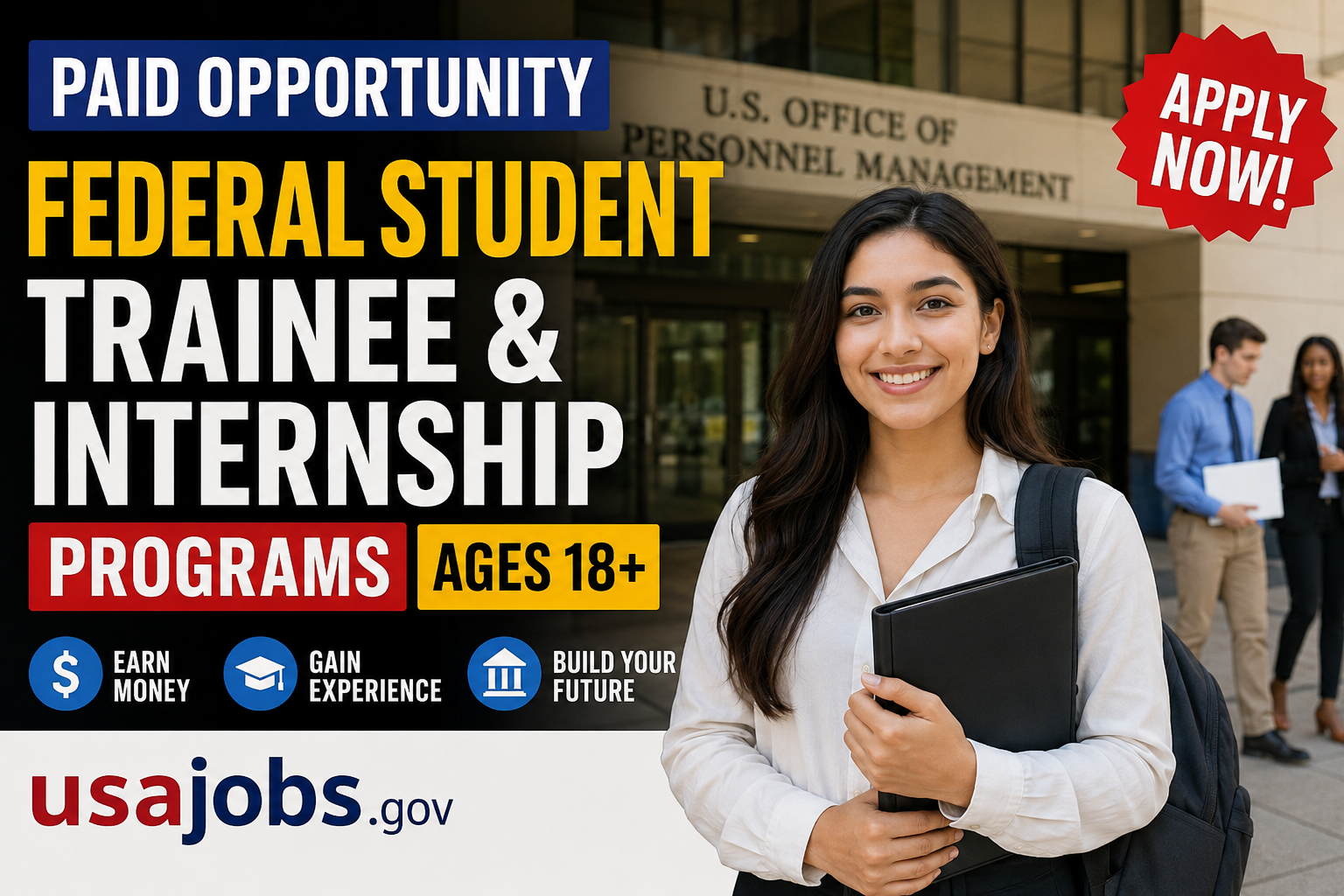
These aren’t your typical unpaid coffee-fetching internships. Federal student programs pay competitive wages, come with structured mentorship and flexible schedules, and — best of all — they open a direct pipeline into permanent civil service careers. If you’re a young adult who wants to earn money, build a serious resume, and actually make an impact, federal student trainee openings are one of the smartest career moves you can make.
What Are Federal Student Trainee Programs?
Under the broader umbrella of the federal Pathways Programs, the student internship track is tailored for people currently enrolled in all kinds of educational institutions — high school and trade programs, community colleges, four-year universities, and graduate schools.
Participants usually carry the official title of “Student Trainee.” Depending on the agency, you might work in administrative support, information technology, environmental science, finance, engineering, or social work. The whole idea behind Federal Student Trainee Programs is to blend your classroom education with hands-on, practical work experience tied to your academic or career goals.
Why Young Adults (18+) Should Apply
Earn While You Learn: Unlike corporate internships that pay little or nothing, federal student trainee programs are entirely paid positions. You get regular wages, and there’s often room for pay scale increases — like General Schedule (GS) grade bumps — as you complete more education or hours.
Flexible Work Schedules: The federal government knows your main job right now is being a student. Schedules flex around your classes. Work part-time during active semesters, switch to full-time during summer or winter breaks, or use Leave Without Pay (LWOP) status when exams come first.
The 640-Hour Conversion Pipeline: This might be the biggest advantage of Federal Student Trainee Programs. Once you finish your degree requirements and complete a minimum of 640 hours of work experience under the program, agencies can non-competitively convert you into a permanent or term full-time federal employee. You skip the brutal general public application pool entirely.
Comprehensive Benefits: Depending on your appointment type and hours worked, Federal Student Trainee Programs participants may get access to healthcare benefits, sick and annual leave accrual, and student loan repayment assistance programs.
Eligibility Criteria: Who Can Apply?
To qualify for Federal Student Trainee Programs on USAJOBS, applicants generally need to meet these criteria:
Age and Status: Must be at least 16 or 18 years old (depending on agency rules) and accepted for enrollment — or actively enrolled — as a degree- or certificate-seeking student on at least a half-time basis.
Citizenship: United States citizenship is typically required.
Academic Standing: Must maintain good academic standing, usually a cumulative GPA of 2.0 or 2.5 and above.
Agreement: Must sign a Pathways Internship Program Participant Agreement outlining performance and educational expectations.
Tips for Crafting a Winning USAJOBS Application
Federal hiring runs on strict guidelines, so applying for a government job is nothing like applying to a local retail store or corporate office. A few things to keep in mind:
Tailor Your Resume: Federal resumes can — and should — be longer than the standard one-page corporate limit (though individual postings, like student notices, often cap them at two pages, so always read the fine print). Spell out your coursework, school projects, volunteer work, and relevant skills.
Include Required Documents: Read the posting’s document list carefully. That usually means your most recent unofficial school transcripts, proof of enrollment, and a detailed resume showing start and end dates in month/year format along with hours worked per week.
Apply Early: Plenty of high-demand federal student listings have applicant caps. Once the posting hits a set number of applications, it closes automatically — sometimes within hours of going live. Set up alerts on USAJOBS so you can apply the day listings appear.
Frequently Asked Questions (FAQs)
Q1: Are all USAJOBS student trainee positions paid?
Yes — every position under Federal Student Trainee Programs is a paid position.
Q2: Can high school seniors apply, or is it strictly for college students?
Plenty of student trainee spots are open to high school seniors, vocational and trade school students, and community college students, not just four-year university and graduate candidates. Check individual listings for the specific educational thresholds, like GS-1 through GS-5 grade levels.
Q3: What happens after I graduate?
If you finish your academic program, hit the 640-hour work requirement, and perform well, Federal Student Trainee Programs allow your agency to non-competitively convert you into a permanent full-time civil servant.
Q4: Can international students apply for these federal internships?
Generally, federal civil service positions require U.S. citizenship, though it can vary by agency or appointment type. Always check the “Who May Apply” section of the specific USAJOBS announcement.
Conclusion
Starting a career doesn’t have to begin with uncertainty. Federal Student Trainee Programs bridge the gap between education and the professional workforce, giving young adults financial security, elite training, and a secure pathway to long-term government employment. If you’re ready to take control of your professional future, explore open listings today and take your first step toward public service.
jpewnzetkvwmgzzpurpvunhovmtyqr