
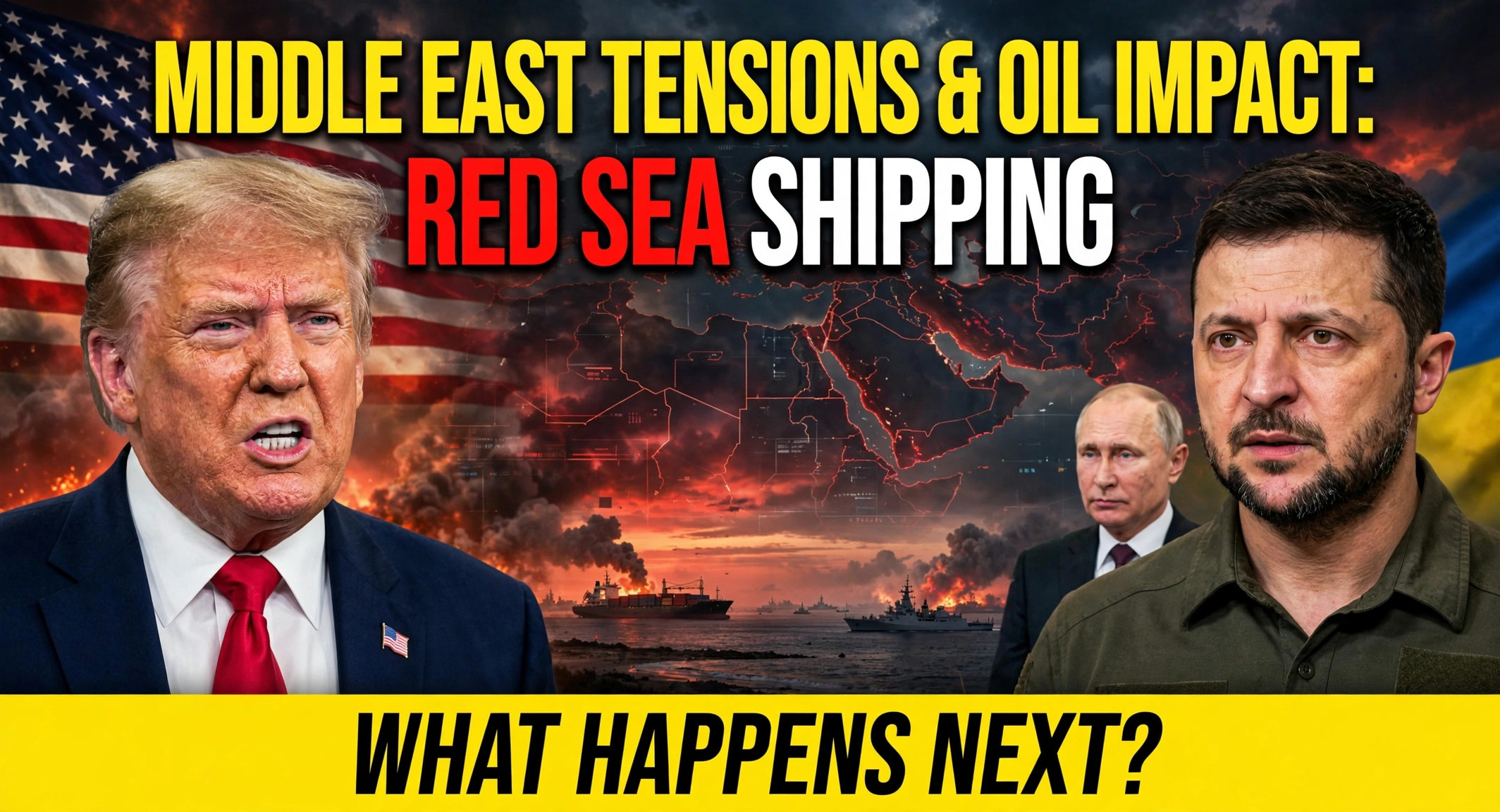
Middle East Tensions and the Red Sea Oil Crisis: How Regional Conflicts Drive Global Energy Prices
The Middle East has entered one of its most volatile phases in decades. Ongoing U.S.-backed military confrontations involving Iran, allied regional factions, and Yemen-based Houthi movements have severely disrupted critical global maritime chokepoints. With the Strait of Hormuz effectively restricted and Red Sea operations under constant threat, Saudi oil exports and global supply chains are under unprecedented pressure — and international financial markets have taken the hit, driving benchmark crude and retail fuel prices to staggering new highs.
Also read:
Federal Court Blocks Plan to Slash FEMA Disaster Relief Workforce by Half
The Geopolitical Trigger and the Chokepoint Crisis
The current energy crunch traces back to major military escalations involving U.S. and Israeli operations targeting Iranian infrastructure. In retaliation, Iranian forces and aligned networks moved to restrict commercial shipping through the Strait of Hormuz — a maritime corridor that historically accommodated roughly a fifth of the world’s petroleum trade.
With the Persian Gulf route heavily constrained, major producers like Saudi Arabia tried to bypass the bottleneck: pipelines toward Red Sea terminals, such as Yanbu, to keep exports moving. Then the workaround got undermined. The strategic expansion of Yemen’s Houthi movement — seizing coastal positions including the port city of Mocha and areas near the Bab el-Mandeb Strait — has established an effective maritime embargo targeting Saudi export infrastructure. A dual-chokepoint squeeze. Traditional contingency pathways: neutralized.
Impact on Saudi Oil Exports and Production
As the world’s leading crude exporter, Saudi Arabia holds outsized influence on global supply stability. Sustained security threats along the kingdom’s western maritime routes have forced state energy firms to drastically scale back output. Storage capacities hit critical thresholds, and international tanker operators refused to risk high-tariff war zones without exorbitant insurance premiums. Result: Saudi crude production plummeted to yearly lows.
Export volumes have contracted severely — millions of barrels per day cut off from international refiners. And here’s the thing: even when oil gets pumped, getting it to consumer markets in Asia, Europe, and the Americas has become an astronomical logistical challenge, with neither the Persian Gulf nor the Red Sea safe to guarantee passage.
Global Economic Fallout and Surging Fuel Costs
The constriction of Middle East energy supplies triggered an immediate commodities-market reaction. Brent crude surged past the psychological threshold of $100 a barrel — deep-seated market anxiety over prolonged deficits made visible. Beyond crude benchmarks, refined products took an even harsher blow. Freight rates for Very Large Crude Carriers (VLCCs) on alternative, lengthier routes — navigating around the African continent instead of using the Suez Canal — skyrocketed to record-breaking daily sums.
For everyday consumers and industrial sectors, these maritime bottlenecks translate directly into painful inflation. Surging diesel and gasoline margins ripple through supply chains, inflating the cost of manufacturing, agriculture, and global logistics. Governments are scrambling for alternative strategic reserves and diplomatic safeguards — but with the region’s security picture still fractured, short-term remedies are scarce.
Frequently Asked Questions
Why are the Red Sea shipping lanes crucial for global oil?
The Red Sea, accessed via the Bab el-Mandeb Strait, connects the Indian Ocean to the Mediterranean through the Suez Canal. It’s a primary artery for international commerce — and a vital alternative route for Middle Eastern oil and liquefied natural gas exports when the Persian Gulf is restricted.
How have Houthi actions affected Saudi Arabia’s oil capacity?
Houthi naval blockades and drone/missile strikes on Saudi energy installations and Red Sea ports have forced Saudi Aramco to cut production significantly. Domestic storage is limited, and safe export transit has become heavily restricted.
What role does Iran play in these maritime disruptions?
Western governments and intelligence assessments describe the Houthi movement and other regional armed factions as part of an Iran-backed network, putting coordinated pressure on international shipping lanes to counter U.S. and allied strategic objectives. Tehran denies direct operational control over the group’s specific tactical choices.
How are global fuel prices responding to the crisis?
Brent crude has crossed $100 per barrel, and tanker freight costs and charter rates have hit historic highs — driven by war-risk premiums and the necessity of sailing longer alternative routes around Africa.
Conclusion
The convergence of U.S.-Iran hostilities and Houthi maritime campaigns has exposed the fragile underbelly of global energy security. As long as key chokepoints like the Strait of Hormuz and the Bab el-Mandeb remain contested or restricted, international markets stay vulnerable to severe price volatility. Resolving this crisis takes more than stabilizing regional security dynamics — it requires restoring unhindered commercial navigation, for the sake of the global economic recovery.
1 thought on “Middle East Tensions & Oil Impact: Red Sea Shipping & Energy Crisis”