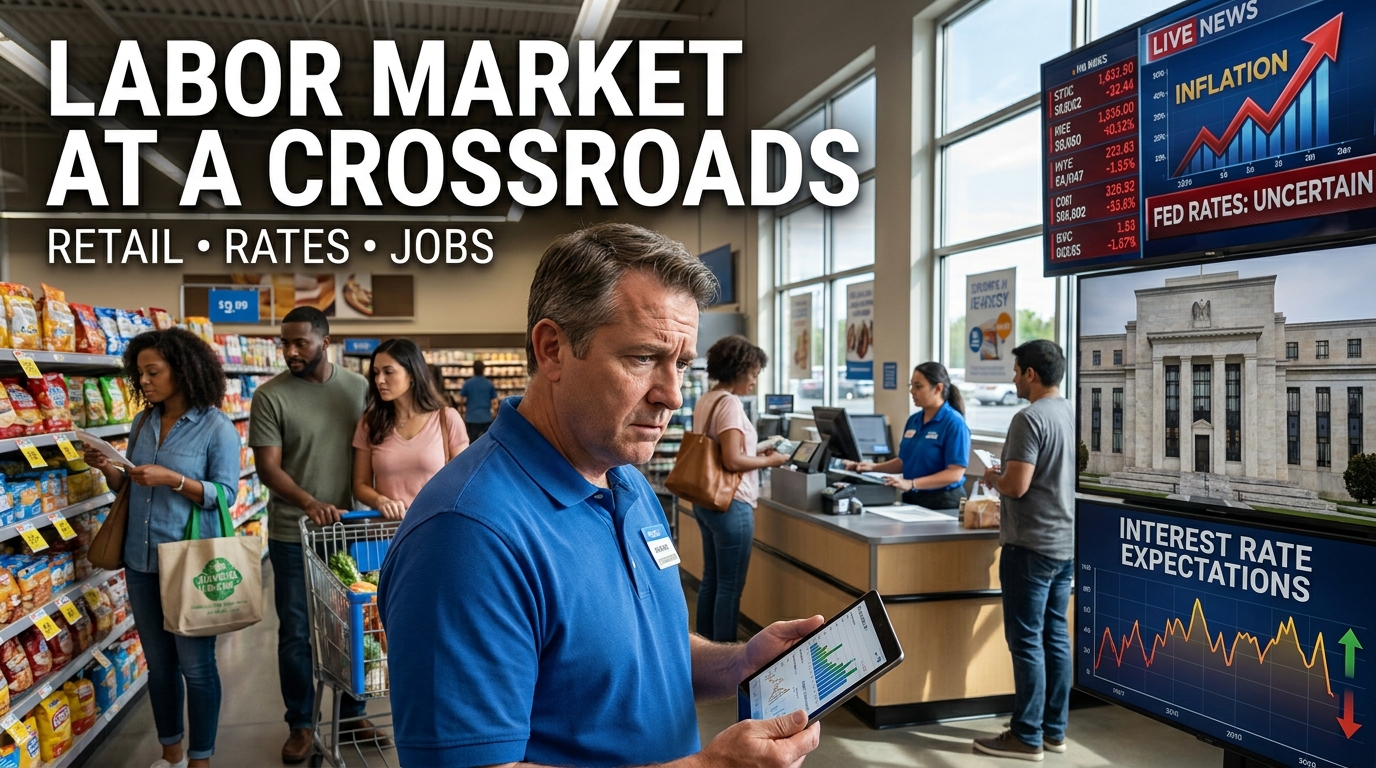
Navigating the Labor Market Crossroads: Retail, Consumer Spending, and Shifting Rate Outlooks
Employment discussions are increasingly anchored in the performance of the retail and consumer spending sectors. As businesses and policymakers grapple with the lingering impacts of inflation, fluctuating monetary policy, and shifting interest rate trajectories, the broader labor market finds itself at a critical crossroads. Consumer resilience has continuously surprised economists, yet structural cost pressures and a cooling hiring environment mean that the interconnected dynamics of retail activity and employment require close examination.
Also read:
Middle East Tensions & Oil Impact: Red Sea Shipping & Energy Crisis
The Interlocking Triangle: Retail, Inflation, and Employment
To understand the current state of the labor market, one must first look at the engine that drives it: consumer expenditure. Retail sales and consumer spending account for a massive share of economic activity, directly dictating corporate revenues, expansion plans, and, by extension, payroll numbers. When consumer demand remains robust, businesses are incentivized to hire and retain talent to meet volume requirements.
However, persistent inflation has altered this relationship. Even as headline retail metrics show nominal gains, real consumer spending—which strips out the effects of price increases—paints a picture of a more cautious household sector. Price-sensitive shoppers are gravitating toward discount alternatives, private-label goods, and promotional events. This “flight to value” compresses margins for consumer-facing businesses, forcing executives to carefully balance wage growth against operational cost-efficiency.
Consequently, labor market indicators are starting to reflect this cautious corporate stance. While mass layoffs have largely been avoided, hiring velocity has moderated. Employers are prioritizing productivity gains—often through automation and targeted technology integration—over aggressive headcount expansion.
Shifting Rate Outlooks and Corporate Decision-Making
Monetary policy remains a dominant variable in strategic corporate planning. Central banks globally have navigated a delicate path, balancing the necessity of cooling stubborn inflation against the risk of triggering an employment downturn. Shifting interest rate expectations directly influence how retail businesses and corporate employers manage their capital.
Cost of Capital: Elevated interest rates make debt financing more expensive. Retailers and consumer goods companies with thin operating margins must rely more heavily on organic cash flow, putting a premium on lean inventory management and disciplined labor scheduling.
Discretionary Spending Impact: High borrowing costs trickle down to consumers through mortgages, auto loans, and credit cards. As household debt servicing costs rise, discretionary retail segments—such as high-end apparel, consumer electronics, and leisure travel—experience softer demand, directly impacting employment levels in those niche sub-sectors.
The Expectation Loop: Anticipation of future rate cuts creates a waiting game. Businesses often delay major capital expenditures or large-scale workforce expansions until monetary easing materializes and demand stabilization is confirmed.
Sector-Specific Realities: Omnichannel Shifts and Workforce Evolution
The retail ecosystem is far from monolithic. Divergent trends are playing out across different channels, reshaping the skills and headcount requirements of the modern workforce.
E-Commerce and Digital Integration
Digital channels continue to capture a growing share of retail transactions. Warehousing, logistics, and digital marketing continue to demand specialized talent, even as traditional brick-and-mortar storefronts experience mixed foot traffic. Retailers are investing heavily in omnichannel capabilities, merging online discovery with physical fulfillment. This shift requires a workforce adept at managing inventory across multiple touchpoints, driving demand for tech-literate retail associates and supply chain coordinators.
The Value and Discount Sector Resilience
While luxury and mid-tier discretionary retailers face headwinds, discount stores, warehouse clubs, and grocery essentials providers display relative stability. Employment in these segments remains steadier because consumer demand for basic goods is inelastic. However, employers here are also facing rising labor costs and are actively exploring workforce optimization tools to protect profitability.
Frequently Asked Questions
How does consumer spending directly affect the labor market?
Consumer spending accounts for the majority of economic activity. When sales are strong, businesses expand operations, increase inventory, and hire more workers. Conversely, a pullback in spending leads to compressed margins and slower hiring.
Why are interest rate outlooks crucial for retail employment?
Interest rates dictate the cost of borrowing for both corporations and consumers. High rates increase corporate debt burdens and reduce household disposable income through costly loans, leading to softer retail sales and more conservative hiring strategies.
Are employment levels dropping across the entire retail sector?
No. While discretionary and brick-and-mortar segments face hiring freezes or cautious adjustments, logistics, e-commerce fulfillment, and essential retail sectors maintain steadier labor demands.
What role does inflation play in current hiring trends?
Inflation erodes household purchasing power. Even if nominal retail sales appear stable, consumers buy fewer actual items, forcing retailers to prioritize operational efficiency and automation over expanding headcounts.
Conclusion
The health of the labor market remains inextricably linked to consumer behavior and macroeconomic policy. As businesses navigate the dual pressures of sticky inflation and evolving interest rate environments, agility is paramount. Retailers that successfully adapt to shifting consumer preferences—balancing value, digital convenience, and operational efficiency—will be best positioned to sustain healthy employment models moving forward.
Official News and Trust Resources
U.S. Bureau of Labor Statistics (BLS) – Official updates on employment, payroll trends, and consumer price indexes.
Federal Reserve Official Website – Access monetary policy releases, FOMC meeting minutes, and economic projections.
J.P. Morgan Research Insights – Global economic outlooks and inflation forecasts.
Deloitte Insights – Industry analyses on retail, consumer products, and global market trends.