
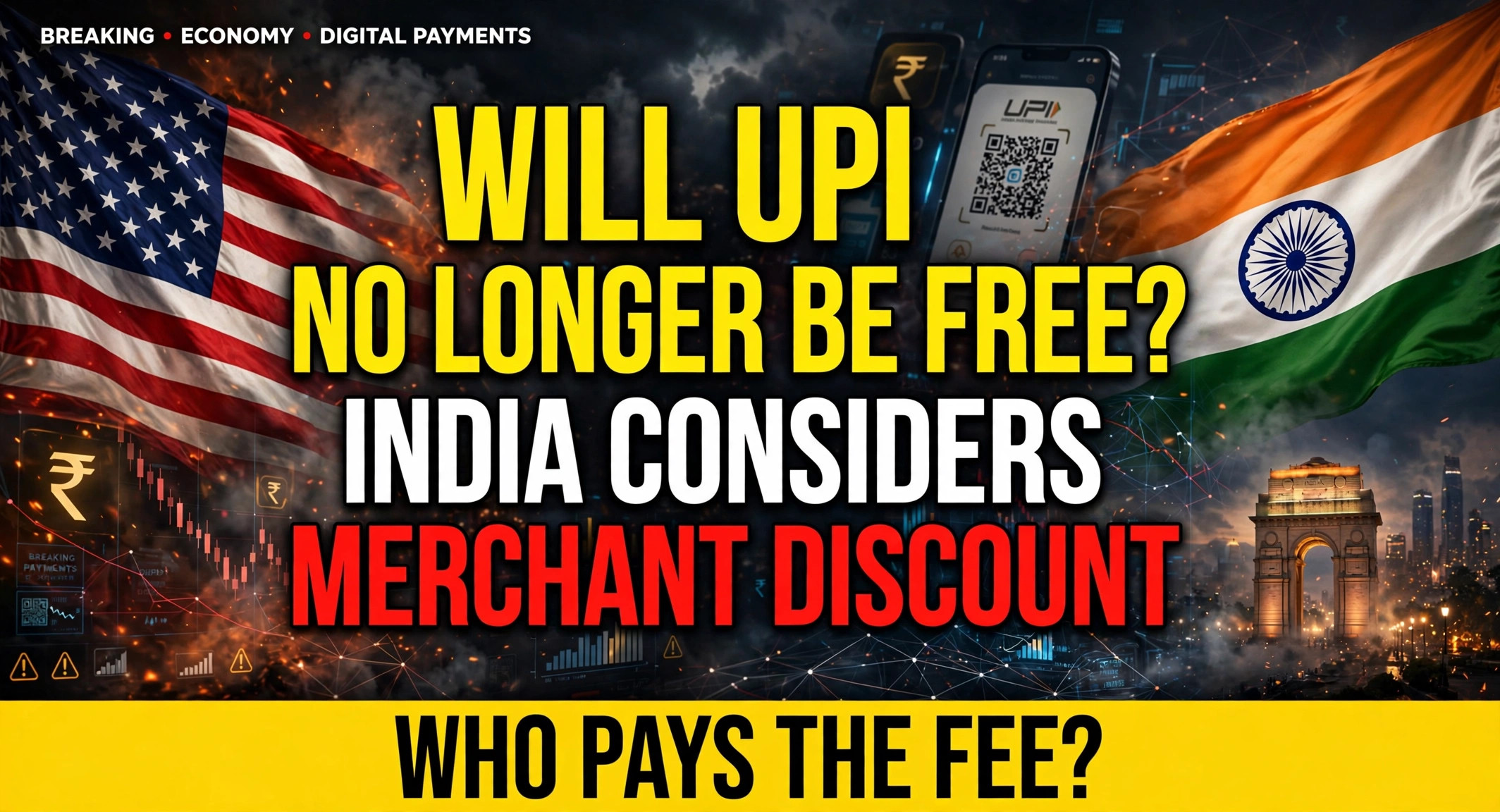
The End of Free Digital Payments? India Weighs Merchant Fees on UPI
The Merchant Discount Rate on UPI debate has put India’s celebrated free-payments model in the spotlight. For hundreds of millions of Indians, paying via the Unified Payments Interface (UPI) has transformed from a tech novelty into an absolute second nature. Whether settling a bill at a high-end restaurant, paying for groceries at a neighborhood corner store, or sending money to a friend, the routine is seamless: scan a QR code, authorize with a quick tap or PIN, and watch the money transfer instantly. Crucially, this ultra-fast convenience comes with no visible credit card machines, no fumbling for physical cash, and — most importantly — no visible transaction fee for the everyday consumer.
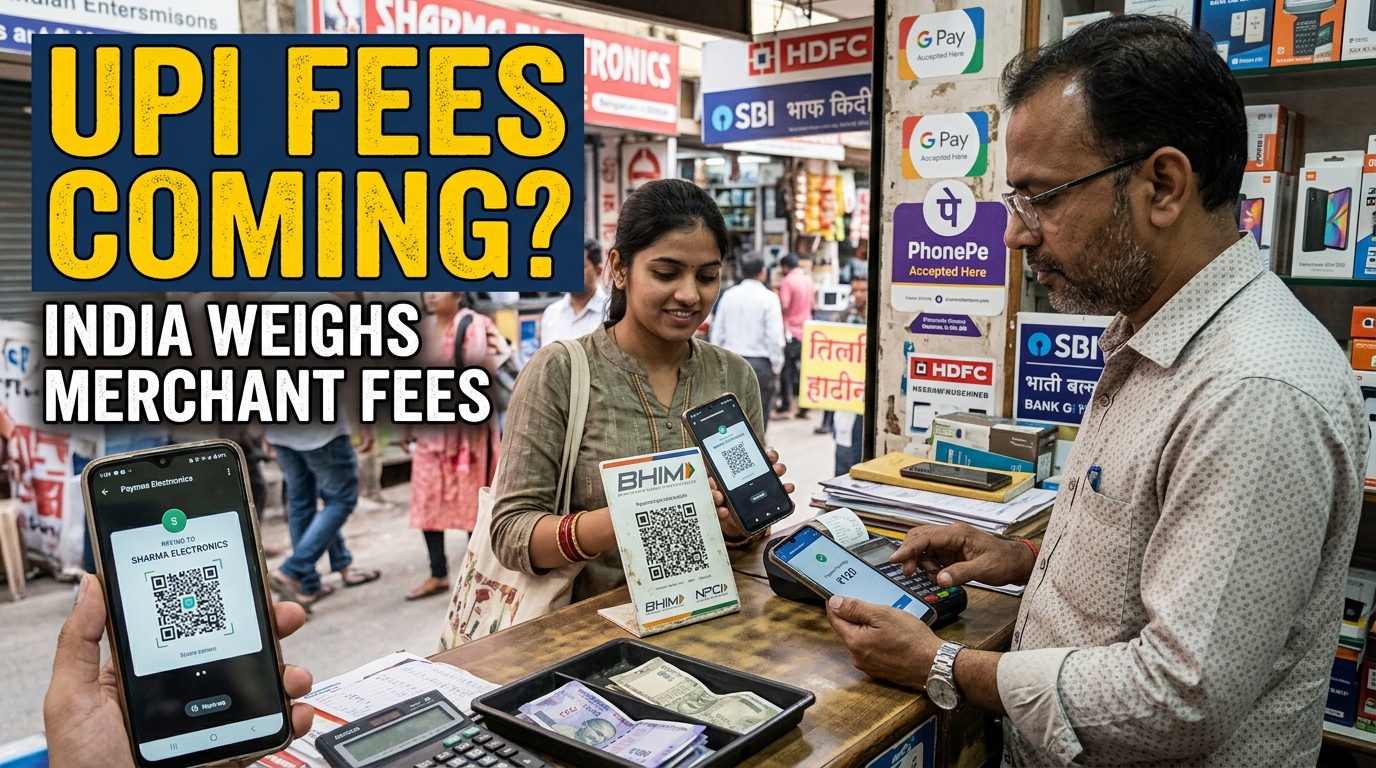
But that bedrock feature of modern Indian commerce may be entering a transitional phase. India has established the legal framework allowing banks and payment aggregators to introduce a Merchant Discount Rate on UPI — a fee on specific transactions that could modify a decade-long ecosystem built on absolute zero-cost digital payments.
What is Changing and Why Now?
The core mechanism under parliamentary and regulatory evaluation centers around the Merchant Discount Rate on UPI — a small percentage fee paid by a business or merchant to the banks, payment gateways, and technology providers processing digital payments. While credit card transactions in India typically attract an MDR of around 1.5% and debit cards carry up to 0.9%, UPI has remained entirely free for merchants since its inception in 2016.
Payment industry executives and banking stakeholders have long flagged that the exponential scaling of digital transactions has become expensive to maintain. Without direct revenue from standard UPI transfers, service providers face tighter constraints on investing in cybersecurity, fraud prevention infrastructure, and system scalability. Legislative updates, such as amendments to the payment and settlement acts, provide the structural authority needed to implement MDR if regulators deem it necessary.
Also Read:
How Would the Proposed Fees Work?
To protect consumer adoption and small businesses, policymakers have emphasized that any potential fee structure will come with strict guardrails. Any Merchant Discount Rate on UPI would apply only to merchant transactions — consumer and peer-to-peer payments stay free.
- Consumers Remain Exempt: Regular users and everyday peer-to-peer (P2P) transfers will remain entirely free. Sending money to family or friends will not incur any charges.
- Threshold-Based Application: Proposals under evaluation suggest a nominal MDR — potentially between 0.3% to 0.5% — applied strictly to larger ticket transactions.
- Targeting Large Businesses: Rather than burdening micro-merchants or small street vendors, the charges are meant for high-volume, high-turnover corporate and large-scale commercial entities.
No final decision on exact rates or operational categories has been locked in. Regulatory bodies continue to review ecosystem data carefully.
Resources & Reference Links
For official details on the Merchant Discount Rate on UPI framework, consult these sources:
- Reserve Bank of India (RBI) Official Portal
- National Payments Corporation of India (NPCI)
- Ministry of Finance, Government of India
The Broader Debate: Sustaining Growth vs. Maintaining Momentum
The central dilemma facing Indian policymakers is delicate. UPI is celebrated globally as a monumental real-time payment breakthrough, shattering records month after month. Introducing a price tag — even one limited to big corporations — risks adding friction to a system that thrived precisely because it had none.
The Merchant Discount Rate on UPI proposal has split opinion between industry groups and consumer advocates. Recent economic data indicates that while digital payments keep scaling, cash usage across parts of the economy has also fluctuated as stakeholders adapt to evolving regulatory environments and security guidelines. Critics worry that any merchant fee, even if legally restricted to businesses, could indirectly trickle down to consumers through adjusted retail pricing. Conversely, proponents argue that a sustainable financial model is essential to prevent network congestion, fund advanced security protocols, and protect the world’s most robust digital public infrastructure from future strain.
Merchant Discount Rate on UPI FAQs
Here are answers to common questions about the Merchant Discount Rate on UPI.
Will everyday users have to pay fees for using UPI?
No. The government has repeatedly clarified that person-to-person (P2P) transfers and everyday consumer payments will remain entirely free of transaction charges.
What is a Merchant Discount Rate (MDR)?
It’s a fee paid by businesses (merchants) to banks and digital payment service providers for processing electronic payments. If applied to UPI, the Merchant Discount Rate on UPI would typically range between 0.3% and 0.5% for large transactions.
If introduced, will small local vendors have to pay MDR?
Current proposals focus on large transactions and high-turnover businesses, aiming to shield small merchants and micro-entrepreneurs from extra financial overhead.
Has the government finalized the UPI fee rates?
Not yet. The recent legislative changes only set up the legal and regulatory framework permitting a fee structure — exact rates, thresholds, and applicability are still under review by financial committees.
1 thought on “Will UPI No Longer Be Free? India Considers Merchant Discount Rate (MDR)”