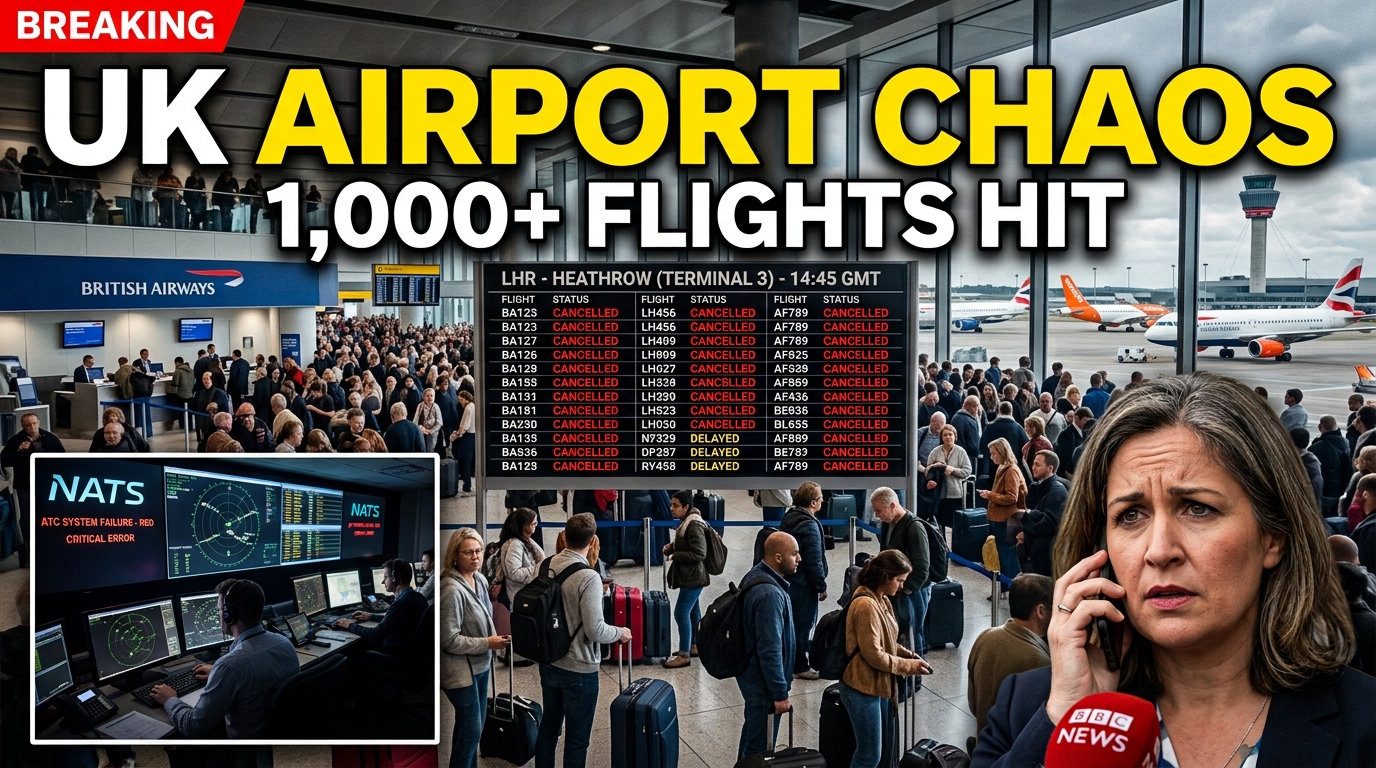
UK Airport Chaos: Nats Air Traffic Control Technical Failure Grounds Over 1,000 Flights at Heathrow, Gatwick, and Major Hubs
The recent Nats air traffic control failure sent immediate shockwaves through the global aviation industry, causing widespread travel chaos, stranded passengers, and massive scheduling gridlocks across the United Kingdom. Hundreds of thousands of air travelers faced severe disruptions after a critical software flaw within the national airspace provider’s core flight data processing system abruptly halted departures at key aviation hubs, including London Heathrow and London Gatwick.
Also read:
Administrative Support Assistant GS-4 to GS-7: USAJOBS Guide & No-Degree Requirements
The Anatomy of the Outage and Immediate Operational Impacts
The crisis began early in the afternoon when National Air Traffic Services (Nats) flagged an unexpected technical anomaly within its automated systems. While UK airspace officially remained open, the digital breakdown severely crippled the automated handling and validation of flight plans. Air traffic controllers were forced to restrict traffic volume drastically and halt departures to maintain baseline safety protocols, resulting in gridlock across major domestic and international transit networks.
Major aviation hubs—including Heathrow, Gatwick, Manchester, Birmingham, and Stansted—bore the brunt of the emergency. Passengers reported being stuck on stationary aircraft for hours on taxiways, while terminal departure boards filled with red cancellation notices. Flight tracking data from platforms like Flightradar24 indicated that upwards of 1,000 flights were cancelled, with thousands more facing compounding delays that stretched deep into the evening and affected inbound European and transatlantic itineraries.
Airline Industry Backlash and Frustration
Airlines scrambled frantically to reallocate stranded flight crews and aircraft stuck out of position across different continents. Major commercial carriers, including British Airways, easyJet, and Ryanair, warned customers of extended residual delays that would take days to iron out.
Frustration among airline executives quickly boiled over in the wake of the incident. Pointing to prior technological failures in previous years, airline leaders fiercely criticized the overall resilience and technological preparedness of Britain’s aviation infrastructure. Budget carriers and legacy operators alike openly questioned leadership accountability, labeling the recurring software breakdowns unacceptable given the massive financial losses and consumer toll involved.
System Recovery and Official Government Oversight
Nats engineering teams worked intensively under high pressure to isolate, diagnose, and patch the glitch within the core flight processing architecture. Later in the evening, Nats confirmed that a corrective software fix had been successfully deployed and that systems were gradually returning to operational capacity. However, industry specialists cautioned that clearing the immense scheduling backlog and repositioning aircraft would take several days.
Government figures, including Transport Secretary Heidi Alexander, monitored the situation closely, demanding formal reviews and strict assurances from aviation regulators to ensure robust contingency frameworks are instituted moving forward to prevent similar systemic collapses.
Frequently Asked Questions
What caused the flight disruptions across UK airports? The disruption was triggered by a technical fault within the flight data processing system managed by Nats, which prevented the safe digital management and validation of flight plans.
Which airports were worst affected? London Heathrow and London Gatwick suffered the heaviest impact, alongside Manchester, Birmingham, Stansted, and several regional facilities across the UK.
Has the technical problem been fixed? Yes, Nats engineers successfully deployed a system patch, and normal data processing is recovering, though schedule normalization requires extended recovery time.
Am I entitled to compensation or a refund for a cancelled flight? Under applicable passenger rights regulations, airlines are required to offer alternative travel options (rebooking or refunds) as well as care and assistance (food, drink, and hotel accommodation) during extended delays.
The latest crisis underscores the profound vulnerability of modern airspace networks to isolated software disruptions. While technical fixes can eventually restore raw data processing capabilities, rebuilding consumer trust requires structural modernization, transparent communication, and resilient backup frameworks across the entire aviation sector.