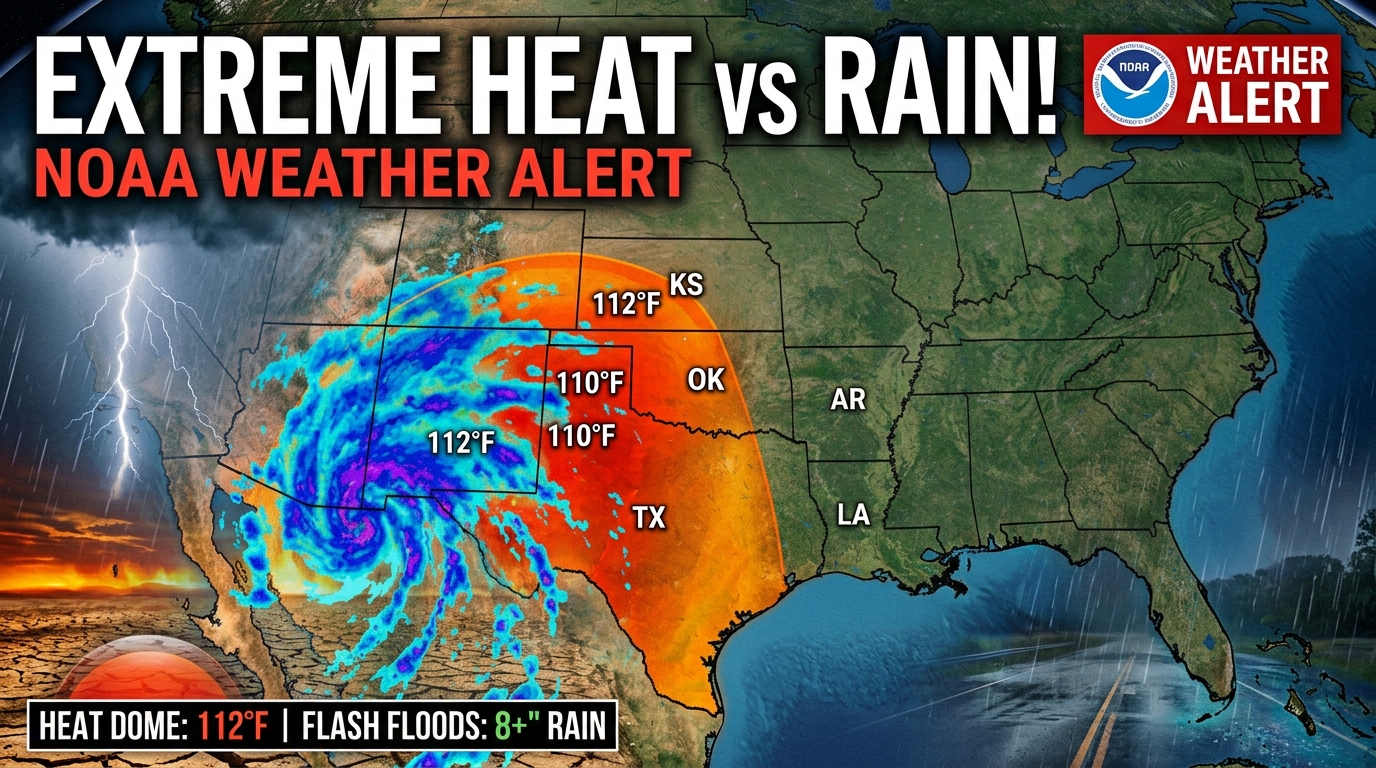
Navigating Extremes: NOAA Weather Outlook Highlights Lingering Plains Heat and Tropical Moisture Relief for the West and Texas
Recent updates from the National Oceanic and Atmospheric Administration (NOAA) and the Weather Prediction Center (WPC) outline a striking contrast in weather patterns across the United States. While dangerous, lingering heat continues to bake the central and southern U.S. plains, a vital shift is underway elsewhere. Tropical weather systems and surges of monsoonal moisture are streaming into parts of the drought-impacted West and Texas, offering a complex mix of heavy rainfall, localized flood risks, and critical long-term drought relief.
Also read:
Apple “Surprise and Shine” Keynote 2026: iPhone 18 Pro, First Foldable iPhone Ultra, and Everything You Need to Know
The Persistence of Plains Heat and Rapid Onset Drought Risks
The heart of the country continues to bear the brunt of stubborn mid-level high-pressure ridges. NOAA’s climate and hazards outlooks emphasize that the central and southern Great Plains, along with parts of the South, remain gripped by high temperatures and dry conditions.
Temperature Anomalies: Forecasters note that probabilities for above-normal temperatures remain highest across the southern tier of the country, with certain areas in the Southern Plains seeing strong odds for a persistently warm stretch.
Rapid Onset Drought (ROD): The combination of below-normal antecedent precipitation, low soil moisture, and high evapotranspiration rates has elevated the risk of Rapid Onset Drought. Regions spanning from the Central and Southern Plains into the Mississippi, Ohio, and Tennessee valleys are closely monitored for flash drought indicators.
Agricultural and Infrastructure Stress: Prolonged dry spells and high heat index values continue to place stress on regional agriculture, driving up fire danger and straining local water resources.
Tropical Systems and Moisture Deliver Relief to Texas and the West
In stark contrast to the baked plains, tropical activity and eastern Pacific moisture surges are channeling much-needed water into historically dry landscapes.
+--------------------------+-----------------------------------+---------------------------------------------------+
| Region                   | Primary Weather Driver            | Expected Impact                                   |
+--------------------------+-----------------------------------+---------------------------------------------------+
| Southern/Western Texas   | Tropical system remnants          | Heavy rainfall, localized flooding, drought relief|
+--------------------------+-----------------------------------+---------------------------------------------------+
| Desert Southwest / West  | Gulf of California / Monsoonal flow| Enhanced precipitation, soil moisture recovery    |
+--------------------------+-----------------------------------+---------------------------------------------------+
| Central & Southern Plains| Mid-level high pressure ridges    | Lingering heat, elevated rapid drought risk       |
+--------------------------+-----------------------------------+---------------------------------------------------+
Texas Downpours: Portions of Texas have faced heavy, drought-mitigating rainfall courtesy of tropical remnants tracking across the region. While this moisture is invaluable for combating long-term precipitation deficits, it also carries a moderate risk of excessive rainfall and localized flash flooding.
Western US Moisture Surges: Trough activity near the West Coast, combined with enhanced tropical moisture surging from the Gulf of California, is triggering heavier precipitation across the Four Corners region, the Great Basin, and the Desert Southwest.
Mitigating Long-Term Deficits: Although western drought conditions are deeply entrenched, any influx of moisture helps replenish depleted soil moisture levels and provides a psychological and environmental break for parched ecosystems.
Frequently Asked Questions
What is causing the lingering heat in the central and southern U.S. plains?
The heat is primarily driven by persistent mid-level high-pressure systems (ridges) that trap warm air over the region, limiting cloud cover and preventing significant cooling rain events.
How do tropical systems help drought-impacted areas?
Tropical systems and their remnants carry massive amounts of atmospheric moisture. When they move over land, they can drop several inches of rain in a short window. This rapidly boosts surface water levels, fills reservoirs, and dampens dry soils, though it can occasionally cause flash flooding.
What is Rapid Onset Drought (ROD)?
Rapid Onset Drought refers to a sudden and severe intensification of drought conditions caused by a combination of high temperatures, strong winds, low relative humidity, and a swift lack of rainfall that quickly depletes soil moisture.
Where can I monitor real-time updates for these weather events?
Official updates, live radar maps, and localized warnings are actively tracked and published by federal agencies. You can consult resources like the NOAA Official Website, the Climate Prediction Center, and the U.S. Drought Monitor for continuous updates.
Managing the dual threats of excessive heat and sudden tropical flooding requires continuous vigilance from local communities, farmers, and emergency management teams. As NOAA forecasters track the evolution of these atmospheric patterns, staying informed through official channels remains the best defense against shifting climate hazards.
Official News Links & Trust Resources: