The New Arctic Security Pact: U.S., Denmark, and Greenland Reach Landmark Deal
The Geopolitical Shift in the Arctic
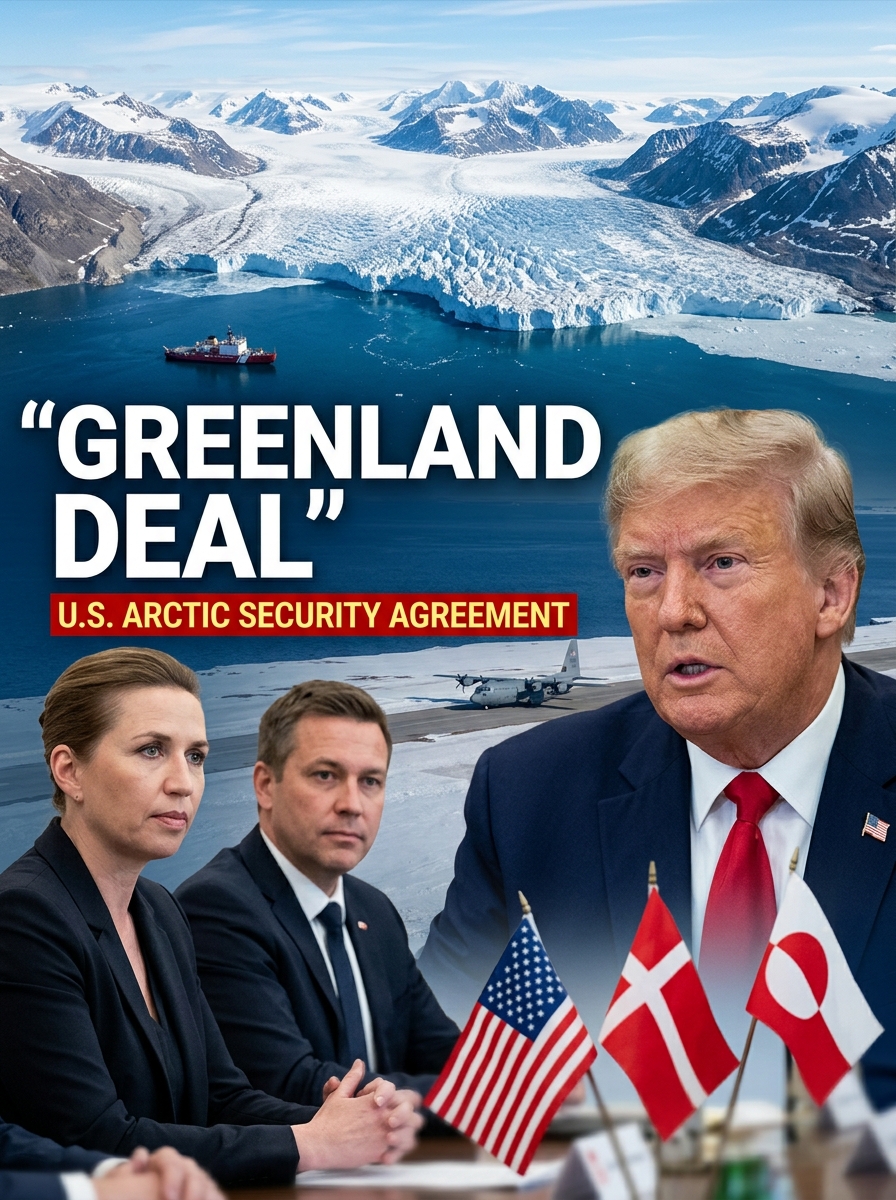
President Donald Trump recently announced a landmark Arctic security agreement involving the United States, the Kingdom of Denmark, and the autonomous territory of Greenland. The pact grants Washington permanent security control and expanded basing rights on the strategic island, while formally barring adversaries like Russia and China from setting up military installations or making sensitive investments.
While the White House framed the accord in sweeping terms, officials in Copenhagen and Nuuk quickly clarified that the framework strictly preserves Greenland’s territorial integrity and the self-determination rights of its people. This article breaks down the core components of the agreement, its strategic implications for NATO, and what it means for Arctic sovereignty.
Also read:
NFL Rookie Debuts and Injury Recoveries Dominate Early Action
Core Pillars of the Greenland Security Agreement
Expanded U.S. Military Presence: The pact paves the way for a deeper American defense footprint, building upon the long-standing foundations established by the 1951 Defense of Greenland Agreement.
Blocking Foreign Adversaries: Competitors such as China and Russia are explicitly prohibited from establishing military bases, deploying troops, or securing sensitive resource investments without explicit U.S. and allied approval.
Preserving Sovereignty: Danish and Greenlandic leadership underscored that the text respects national red lines, ensuring that local governance and ultimate sovereignty remain untouched.
Permanent Strategic Alignment: Described by U.S. leadership as an enduring framework, the pact is slated for formal signing on the sidelines of the United Nations General Assembly.
Comparing Perspectives: Washington vs. Copenhagen
| Actor | Stated View of the Agreement | Primary Focus |
| United States | “Infinite Life” agreement granting permanent control over security and strategic needs. | Countering Arctic expansion by geopolitical rivals |
| Denmark | Binding security pact respecting national red lines and sovereignty. | Reinforcing North Atlantic stability within NATO |
| Greenland | An arrangement recognizing local interests and the right to self-determination. | Balancing international partnerships with local autonomy |
Frequently Asked Questions (FAQs)
Does the U.S. now own Greenland?
No. The agreement centers strictly on defense, military access, and security cooperation. It does not transfer territorial sovereignty or alter Greenland’s constitutional status within the Kingdom of Denmark.
Why is Greenland so strategically important?
Situated between North America and the Arctic, Greenland acts as a critical choke point for monitoring maritime traffic, aerospace corridors, and emerging shipping routes opened by a warming climate.
When will the pact take effect?
The formal signing is scheduled for the upcoming UN General Assembly, pending standard parliamentary procedures and reviews in Denmark and Greenland.
Conclusion
The new Arctic security pact marks a pivotal evolution in transatlantic defense strategy. By balancing the United States’ urgent need to counter adversary influence in the high north with Denmark and Greenland’s staunch defense of local sovereignty, the agreement secures a vital region without destabilizing local governance. As formal implementation approaches, the pact will serve as a cornerstone for future Arctic policy.
Official News & Reference Links
Read more about the framework on The Economic Times.
Catch regional updates via Dawn News.
Explore legal and diplomatic analysis on Diplomacy and Law.