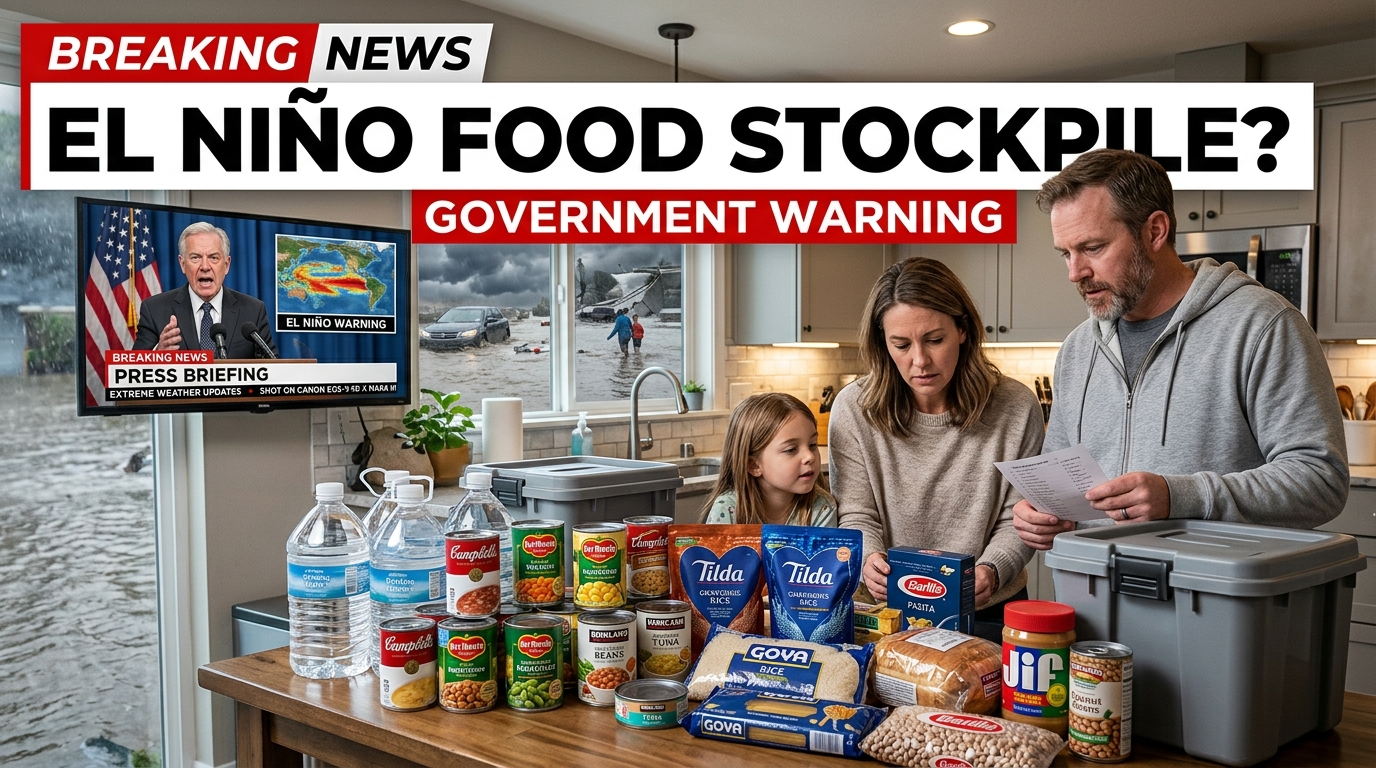
El Niño Food Stockpile: Government Urges Households to Prepare for Extreme Weather
As the strongest El Niño event in a generation develops over the Pacific Ocean, governments and international organizations are sounding urgent alarms. Officials have issued direct advisories encouraging households to build an El Niño food stockpile, along with clean water and basic necessities, to build individual resilience against impending climate shocks. With meteorological agencies warning of unprecedented atmospheric shifts, understanding the gravity of this natural phenomenon is essential for safeguarding your family’s future.
Also read:
Administrative Support Assistant Federal Jobs: GS-4 to GS-7 Guide
Understanding the “Super” El Niño Phenomenon
El Niño is a naturally occurring climate pattern characterized by the warming of sea surface temperatures in the central and eastern tropical Pacific Ocean. While it recurs every few years, scientific models and global meteorological networks indicate that the unfolding cycle is exceptionally powerful. Forecasters from major weather services note that rising ocean temperatures could match or exceed historic records, triggering cascading anomalies in global weather patterns.
The ramifications of this thermal surge extend far beyond tropical waters. Climatologists project that while certain regions will face devastating droughts and heatwaves, others will suffer from intense rainfall, severe flash floods, and violent storm systems. For Western nations and parts of Europe, the shift is anticipated to materialize as unusually wet winters, violent windstorms, and prolonged drier periods, putting massive stress on local infrastructure, utility grids, and agricultural output.
Government Warnings and the Call to Stockpile
In response to these mounting risks, senior government officials have stepped forward to alter public preparedness strategies. Environment Secretary Dame Angela Eagle recently underscored the necessity of household-level planning, warning that citizens must take proactive measures to buffer against potential supply chain interruptions and localized emergencies.
Echoing similar readiness programs already standard in nations like Finland and Sweden, officials stress that keeping a modest stock of non-perishable food and bottled water at home is a matter of basic common sense. When extreme storms knock out power grids, damage transport links, or isolate communities, emergency services cannot reach every household immediately. Having a self-sustaining buffer for a few days ensures that families remain safe while infrastructure repairs are underway.
Vulnerabilities in Global Food Supply Chains
The push for domestic preparedness does not emerge in a vacuum. A comprehensive report released by the National Audit Office (NAO) highlighted structural vulnerabilities within modern food supply chains. The oversight body pointed out that regulatory departments have historically relied heavily on private sector actors to manage supply shocks, leaving domestic markets exposed to compounding crises such as climate extremes and cyber-attacks.
Because international markets source specialized commodities—such as rice, coffee, tea, and citrus fruits—from regions highly vulnerable to El Niño droughts, local price inflation and availability bottlenecks are very real possibilities. When agricultural yields fail abroad due to scorching heat or torrential flooding, the ripples are felt directly on supermarket shelves at home. Stocking up on everyday essentials ahead of time helps insulate individual households from sudden cost spikes and temporary scarcity.
Practical Steps for Household Emergency Readiness
Preparing for extreme weather does not require panic buying or building an underground bunker; rather, it calls for a calm, structured approach to domestic resilience. Families can follow several foundational steps to ensure they are adequately protected:
Build a Basic Food Reserve: Focus on non-perishable items that require little to no cooking, such as canned meats, vegetables, beans, pasta, rice, peanut butter, and energy bars. Rotate these items regularly into your weekly meals to prevent expiration.
Secure Safe Drinking Water: Aim to store at least a basic reserve of bottled water per person, calculating roughly three liters per day for drinking and basic sanitation.
Prepare Emergency Gear: Keep battery-powered or hand-crank flashlights, a first-aid kit, a portable radio, extra batteries, and essential prescription medications on hand.
Stay Informed: Monitor official local weather updates and civil defense channels so you can respond quickly to severe weather warnings or localized evacuation advisories.
Frequently Asked Questions
What is an El Niño event?
El Niño is a climate pattern marked by warmer-than-average sea surface temperatures in the Pacific Ocean. It disrupts normal wind and rainfall patterns, creating extreme weather anomalies across the globe.
Why are governments telling people to stockpile food now?
Governments and public spending watchdogs are advising preparation because intense El Niño conditions heighten the risk of severe storms, flooding, and infrastructure disruptions that can temporarily cut off supply chains or isolate communities.
How much food and water should a household store?
Experts generally recommend keeping enough non-perishable food and water to sustain your household independently for a few days until emergency services or normal supply lines can be fully restored.
Will El Niño cause food prices to rise?
Yes, agricultural drought and extreme weather in major crop-producing regions frequently reduce harvests, which can drive up market prices and create localized supply shortages for imported goods.
Conclusion
The emergence of a generational El Niño event serves as a stark reminder of our planet’s interconnected vulnerability to natural climate cycles. While large-scale agricultural protection and infrastructure improvements remain the responsibility of national governments and international bodies, individual preparedness begins at home. By taking sensible, proactive measures to secure an El Niño food stockpile today, households can ensure peace of mind, reduce strain on emergency services, and weather whatever storms tomorrow may bring.
Strong El Niño Could Push 49 Million More Into Acute Hunger, UN A United Nations report details how the developing El Niño threatens global food security and intensifies agricultural vulnerabilities worldwide.