
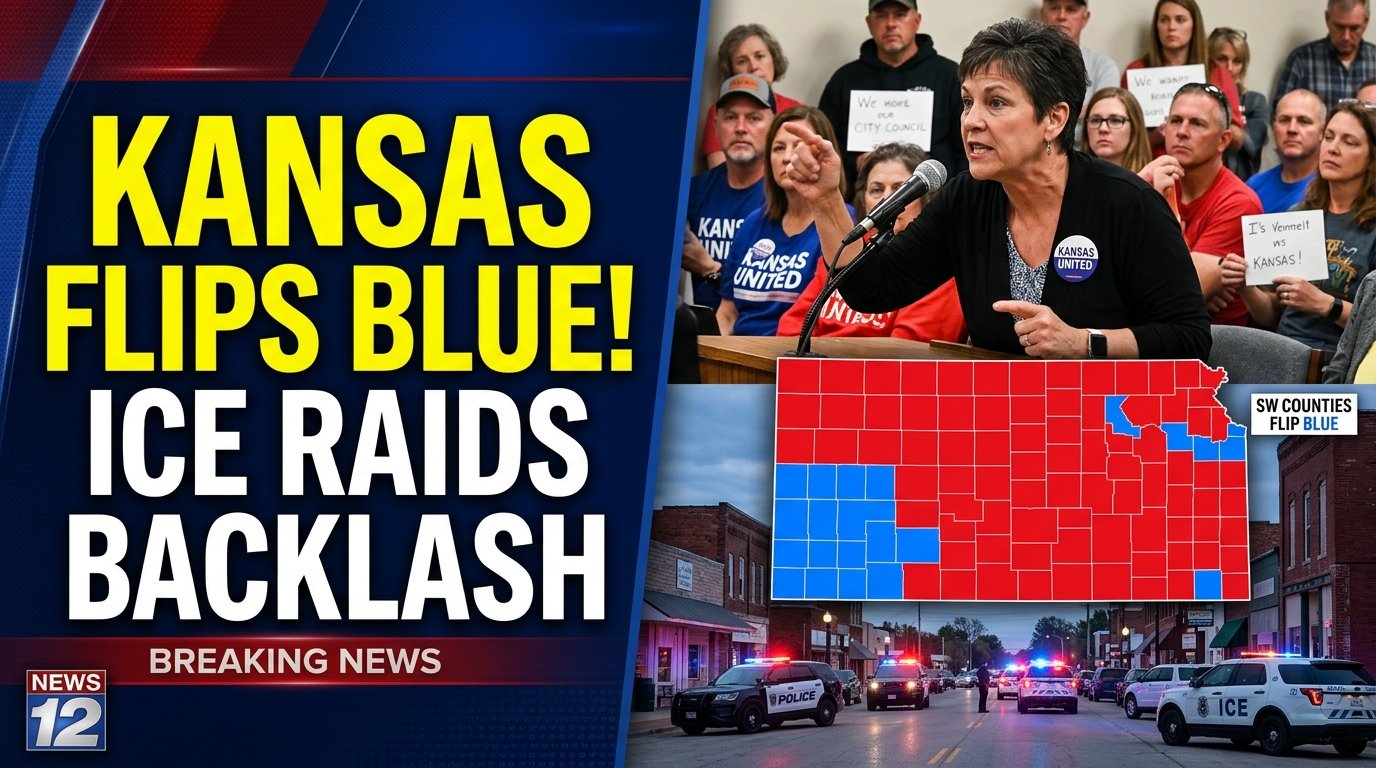
After ICE Raids, Southwest Kansans Swung to a Democrat. Now They Want Accountability
In a historic political shift across rural America’s meatpacking heartland, after ICE raids, southwest Kansans swung to a Democrat. Now they want accountability from local officials and federal immigration authorities alike. Just six weeks after a sweeping three-day U.S. Immigration and Customs Enforcement (ICE) operation detained 104 people across three southwest Kansas towns in late September 2026, voters in traditionally Republican strongholds delivered a decisive blow at the ballot box—helping flip a U.S. Senate seat.
Now that the November 3 midterm election has passed, residents, business owners, and community organizers across Dodge City, Garden City, and Liberal are packing local city commission meetings and demanding answers. For families torn apart by the enforcement sweep, casting a ballot was only the first step toward holding leaders responsible.
Also Read:
Indonesia’s Vice President Gibran Resigns Amid Diploma Eligibility Row
How the September ICE Raids Transformed Southwest Kansas
For decades, the economy of southwest Kansas has relied heavily on immigrant labor to staff its massive beef-processing plants, cattle feedyards, and agricultural operations. Because the region’s meatpacking industry is vital to the national food supply, many residents long believed their communities would be spared from large-scale federal enforcement sweeps.
“We thought we were untouchable” because of the local meatpacking plants and their dependence on immigrant workers, Dodge City resident Amy Soberanes told the Dodge City commission last month.
That assumption shattered on September 22, 2026, when federal immigration agents arrived in southwest Kansas for a three-day operation that resulted in 104 detentions, according to the local U.S. Attorney’s office. Eyewitnesses and civil rights advocates described masked, unidentified agents surrounding vehicles and stopping residents in public spaces, sending shockwaves of fear through neighborhoods. During the height of the raids, some parents were reportedly too terrified to pick their children up from elementary school, leaving classrooms and local businesses noticeably empty.
A Historic Political Realignment in the November 2026 Midterms
The emotional and economic fallout from the operation quickly translated into unprecedented political mobilization. Community members who had rarely engaged in partisan politics organized voter registration drives, packed public forums, and rallied around Democratic U.S. Senate challenger Adam Hamilton in his race against incumbent Republican U.S. Senator Roger Marshall.
On November 3, 2026, Hamilton defeated Marshall statewide by a margin of 51% to 46%—fueled in part by a stunning reversal across all three heavily Hispanic meatpacking counties targeted during the September raids:
Ford County (Dodge City): Flipped to Hamilton by roughly 1 percentage point.
Finney County (Garden City): Flipped to Hamilton by approximately 3 percentage points.
Seward County (Liberal): Swung decisively to Hamilton by about 13 percentage points.
In his victory speech, Hamilton recalled speaking with a Dodge City mother who described parents being too frightened to pick up their children from school during the raids. “This was not OK,” Hamilton told supporters. Even several local Republican officials voiced concern over how the federal operation was carried out in their communities.
Families Separated and a Community Rallying Together
Behind the election statistics are deeply personal stories of family separation. On the day the raids began, Dodge City residents Karla Flores and her husband, Alfredo Arrieta, dropped their children off at school and stopped at Walmart to buy groceries so they could shelter at home. Within hours, both parents were detained by federal agents.
“We got up, we took them to school and then a few hours later they’re told your mom and dad aren’t here anymore,” Arrieta later recalled by phone after he and Flores were deported to Mexico following five weeks in ICE custody. Their two youngest children eventually joined them in Mexico, while their 17-year-old son remained in Kansas living with Flores’ brother so he could finish high school.
In the absence of their parents, neighbors and classmates stepped in—even banding together a week after the arrests to throw a 15th birthday party for the couple’s middle son. “We were really impressed by the amount of support from the community,” Flores said.
Demanding Accountability Beyond the Ballot Box
While the midterm victory demonstrated the collective voting power of southwest Kansas communities, local advocates emphasize that the political shift is only the beginning. After ICE raids, southwest Kansans swung to a Democrat. Now they want accountability regarding whether local law enforcement cooperated with federal agents, why unidentified officers conducted stops without clear warrants, and what protections city leaders will put in place for mixed-status families.
As Soberanes summed up the mood across Dodge City, Garden City, and Liberal: “I had never seen people so politically energized. Now, our community wants people to be held responsible for what happened”.
Frequently Asked Questions (FAQs)
Why did voters in southwest Kansas swing toward a Democrat in 2026? Voters in Ford, Finney, and Seward counties swung strongly toward Democratic U.S. Senate candidate Adam Hamilton following late-September ICE raids that detained 104 people across the region’s meatpacking towns, sparking widespread anger and political mobilization.
Who won the 2026 U.S. Senate race in Kansas? Democrat Adam Hamilton defeated Republican incumbent Senator Roger Marshall on November 3, 2026, winning 51% of the vote to Marshall’s 46% with crucial support from southwest Kansas counties.
How many people were detained during the southwest Kansas ICE raids? According to the local U.S. Attorney’s office, federal immigration agents detained 104 people during a three-day enforcement operation beginning on September 22, 2026.
Which towns in southwest Kansas were impacted by the ICE raids? The raids and subsequent political backlash centered on three major agricultural and meatpacking communities: Dodge City (Ford County), Garden City (Finney County), and Liberal (Seward County).
What kind of accountability are southwest Kansas residents demanding now? Residents are attending city commission meetings and pressing local and federal leaders for transparency on how the raids were conducted, whether local authorities assisted ICE, and how immigrant families and workers will be protected going forward.
Disclaimer
This article is for informational and news reporting purposes only. Election margins, detention figures, and community statements are based on verified news reporting and public records from November 2026.