
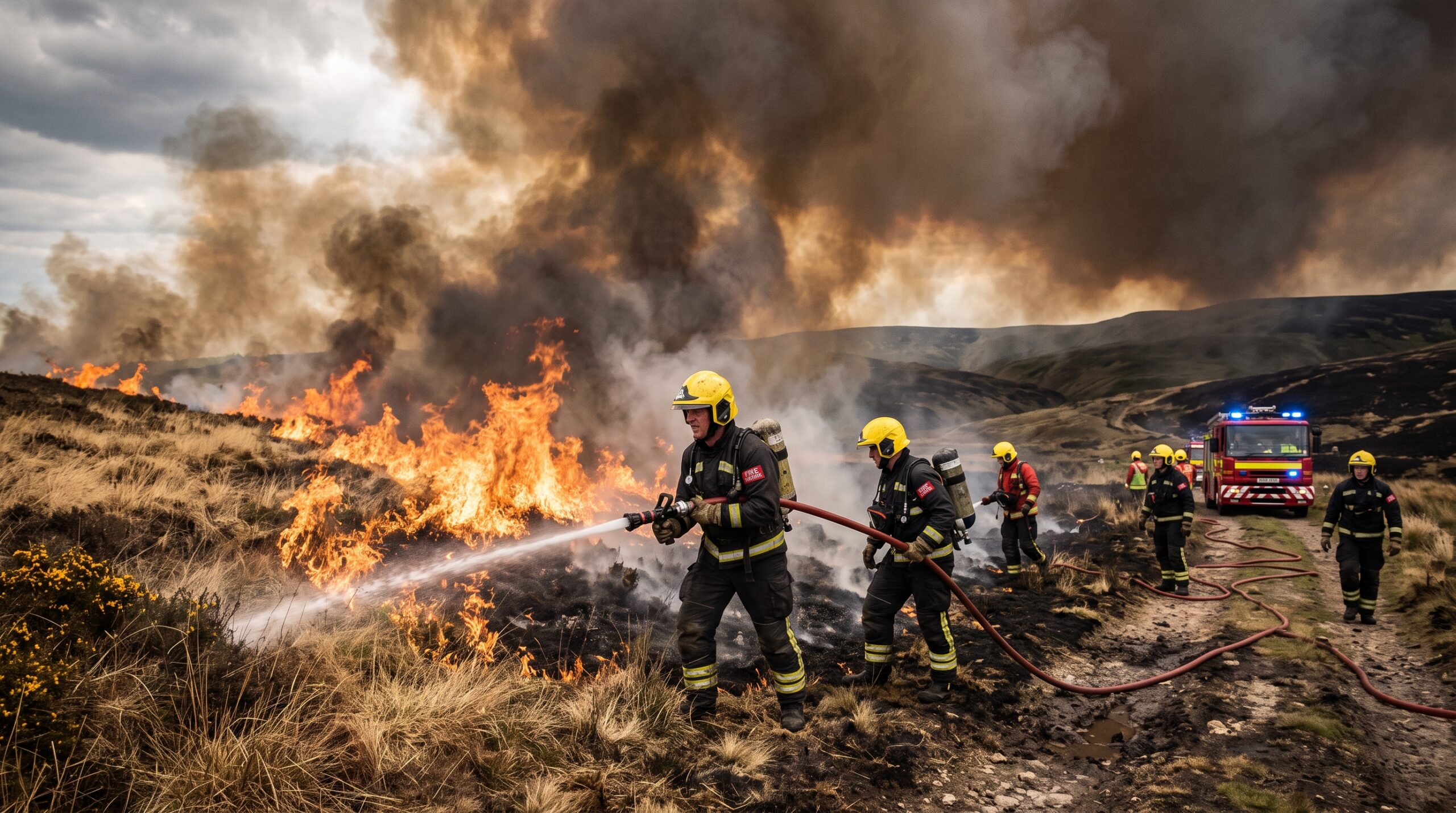
Wildfire warning as weather increases risk
The scorching summer weather gripping the United Kingdom has triggered an urgent public safety crisis. After the Environment Agency confirmed that regions such as Kent and East Sussex have officially entered a period of prolonged dry weather, emergency services sounded the alarm. With parched woodlands, heathlands, and grasslands acting as a tinderbox, authorities have issued a stark wildfire warning as weather increases risk, putting local communities, natural habitats, and critical infrastructure in danger.
It doesn’t take much to see how fast things can spiral. A massive blaze recently scorched a 600m by 200m section of ancient woodland at Abbot’s Wood — a reminder of how quickly a small spark becomes a full-blown environmental emergency. The incident underlines why a wildfire warning as weather increases risk cannot be ignored by residents or visitors.
Also Read:
Government raises concerns over council finances
The Anatomy of the South East Fire Crisis
July has been an exceptionally destructive month for wildfires. Weeks of uninterrupted sunshine, high temperatures, and almost no rain have drained moisture from soil and vegetation alike. Data compiled by the National Fire Chiefs Council (NFCC) shows hundreds of wildfire incidents have needed rapid deployment across England and Wales — piling enormous pressure on regional brigades. It is precisely this dangerous combination that prompted the wildfire warning as weather increases risk across the South East.
Official News Links & Trusted References
Fire and rescue services across Sussex, Surrey, and Kent have been stretched thin responding to repeated outbreaks — the very scenario this wildfire warning as weather increases risk was issued to prevent. Sensitive ecological zones have been hit — including parts of Ashdown Forest, the famous backdrop of the Winnie-the-Pooh stories, alongside major grass fires across the South Downs, Sittingbourne, Faversham, and Maidstone.
Vulnerable Ecosystems: Parched gorse, dry bracken, and brittle leaf litter give fires instant fuel — they can race through vegetation on barely any wind at all.
Strain on Resources: Taming a large woodland fire takes dozens of firefighters, specialized off-road vehicles, and help from local farm workers damping down the edges.
Unpredictable Ignition Points: Officials stress that wildfires can start without warning in remote areas. Prevention matters far more than containment.
Expert Insights: Protecting Communities and Wildlife
Getting through this threat takes active public participation. Matt Gamblen, West Sussex Fire and Rescue Service’s (WSFRS) wildfires tactical advisor, has stressed the importance of everyday vigilance while this wildfire warning as weather increases risk remains in force.
“By taking a few simple precautions, residents can help protect their communities, local wildlife and our firefighters.” — Matt Gamblen, WSFRS Wildfires Tactical Advisor
East Sussex Fire and Rescue Service (#WildfireReady Campaign)
Fire authorities have laid out clear behavioral rules for anyone visiting rural spaces, parks, or countryside trails during peak heat:
Ban Disposable Barbecues: Never use disposable barbecues or campfires in open countryside, parks, or wooded areas — radiant heat ignites dry peat and roots with ease.
Dispose of Smoking Materials Properly: Make sure cigarettes and matches are fully out, and never toss them from car windows or onto dry grass.
Take Litter Home: Glass bottles and shiny discarded packaging can focus sunlight like a magnifying glass, beaming intense heat onto dry vegetation.
Careful Vehicle Parking: Don’t park over long grass — a hot catalytic converter can spark dry ground within minutes.
Frequently Asked Questions (FAQs)
Why have emergency services issued a wildfire warning as weather increases risk?
The warning follows the Environment Agency’s confirmation of prolonged dry weather, combined with a surge in destructive woodland and grassland fires across Kent, Surrey, and East Sussex — the exact conditions behind this wildfire warning as weather increases risk.
Which areas in the UK South East have been affected recently?
Notable blazes broke out at Abbot’s Wood near Polegate, Ashdown Forest, the South Downs near Eastbourne, and several locations across Kent.
What are the primary causes of summer wildfires?
Most incidents come down to human carelessness — discarded glass, unextinguished cigarettes, or disposable barbecues used in vulnerable open spaces.
How can residents help prevent these fires?
Skip open flames in rural areas, take all litter home, park away from dry grass, and report smoke or unattended fires straight away.
Conclusion
The relentless frequency of blazes across the UK’s countryside is a sobering reminder of how vulnerable local ecosystems are to extreme weather. With a wildfire warning active as weather increases risk, public accountability is the first line of defense. Caution, fewer accidental sparks, and listening to fire authorities — that’s how communities protect their natural landscapes, keep wildlife safe, and lighten the load on frontline emergency services.
1 thought on “Wildfire warning as weather increases risk across the UK South East”