Japan Earthquake Death Toll Rises to 34 as Evacuees Battle Sweltering Heat
The humanitarian crisis in southwestern Japan intensified significantly as authorities confirmed that the death toll from the powerful earthquake has climbed to 34. Days after a magnitude 7.1 tremor struck the Kumamoto prefecture on Japan’s southern main island of Kyushu, search-and-rescue teams are racing against the clock. Beyond the immediate devastation of flattened homes, collapsed infrastructure, and severed utility lines, survivors and emergency responders are now fighting a grueling secondary threat: a severe regional heatwave.
The Scope of Destruction and Rescue Efforts
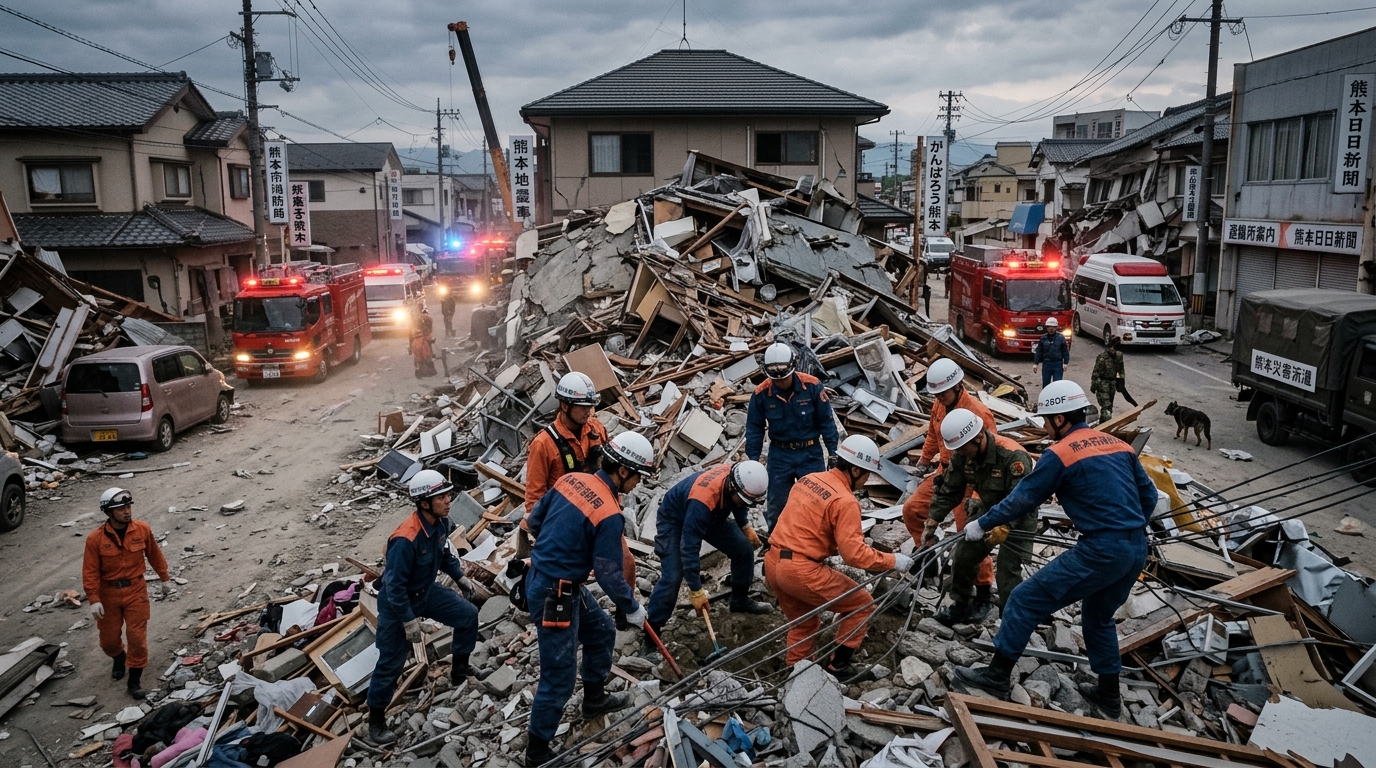
The violent tremor, which struck without warning, triggered catastrophic structural failures across Kumamoto. Among the hardest-hit locations were a heavily damaged commercial shopping center—where a suspected gas leak explosion exacerbated the collapse—and a local industrial factory where a massive smokestack toppled over.
Also Read:
How Chinese Warehouse Robots Are Reshaping the UK Retail Sector
Thousands of police officers, firefighters, and Self-Defense Force personnel have been deployed to comb through tons of tangled concrete, steel, and debris. Heavy aftershocks continue to rattle the region, complicating perilous rescue operations and terrifying residents who remain hesitant to re-enter damaged buildings.
Surviving Without Utilities Amid Extreme Temperatures
As rescue work presses forward, the living conditions for the displaced population have deteriorated sharply. Tens of thousands of households remain entirely cut off from electricity and water supplies. With vital infrastructure crippled, roughly 10,000 residents have sought refuge in hundreds of makeshift evacuation centers—primarily crowded school gymnasiums and community halls—while others have resorted to sleeping inside personal vehicles parked outdoors.
Official News Links & Trusted References
Compounding this misery is an aggressive summer heatwave. The Japanese Ministry of Environment issued urgent heatstroke alerts for the Kumamoto region, with local forecasts predicting ambient temperatures to spike as high as 39 degrees Celsius (over 102 degrees Fahrenheit). For an aging demographic, the combination of dehydration, lack of ventilation, and physical trauma has created an alarming spike in medical emergencies.
Power Outages: Tens of thousands of homes continue to experience total blackouts, hindering refrigeration for food and medicine.
Emergency Coolants: Defense ministries and local municipalities are rushing mobile generators, bottled water, and emergency air-conditioning units to shelters.
Heatstroke Risks: Medical professionals are actively touring shelters to monitor vulnerable elderly evacuees displaying symptoms of severe heat exhaustion.
Government Response and International Concern
Prime Minister Sanae Takaichi and central government officials have pledged unsparing resources to secure affected zones and support local prefectural governments. Emergency relief supplies are being fast-tracked into isolated pockets, though blocked roads and damaged bridges continue to hamper logistics. Medical teams have set up triage stations outside major shelters to treat injuries sustained during the initial quake alongside heat-related illnesses.
Frequently Asked Questions (FAQs)
What was the magnitude of the earthquake in Japan?
The primary earthquake registered a magnitude of 7.1, striking the Kumamoto prefecture on Kyushu island.
What is the current confirmed death toll?
Local authorities and police tallies have confirmed that the death toll has risen to 34, with several others injured or missing.
Why is the heatwave posing such a big risk to survivors?
Temperatures reaching up to 39 degrees Celsius, combined with widespread power outages and lack of air conditioning in shelters, have triggered severe heatstroke risks, especially among elderly evacuees.
How is the government assisting displaced residents?
Authorities are distributing emergency bottled water, deploying portable generators, and installing temporary air-conditioning units across hundreds of evacuation centers.
Conclusion
The tragedy in Kumamoto highlights the compounding vulnerabilities communities face when natural disasters coincide with extreme weather events. While rescue workers remain fully mobilized to pull survivors from the wreckage, managing the severe heatwave and restoring basic utilities are critical priorities to prevent further loss of life. Japan’s resilience is once again being tested, demanding a swift, coordinated national response to protect its most vulnerable citizens.
1 thought on “Japan Earthquake Death Toll Rises to 34 as Evacuees Battle Sweltering Heat”