How Chinese Warehouse Robots Are Reshaping the UK Retail Sector
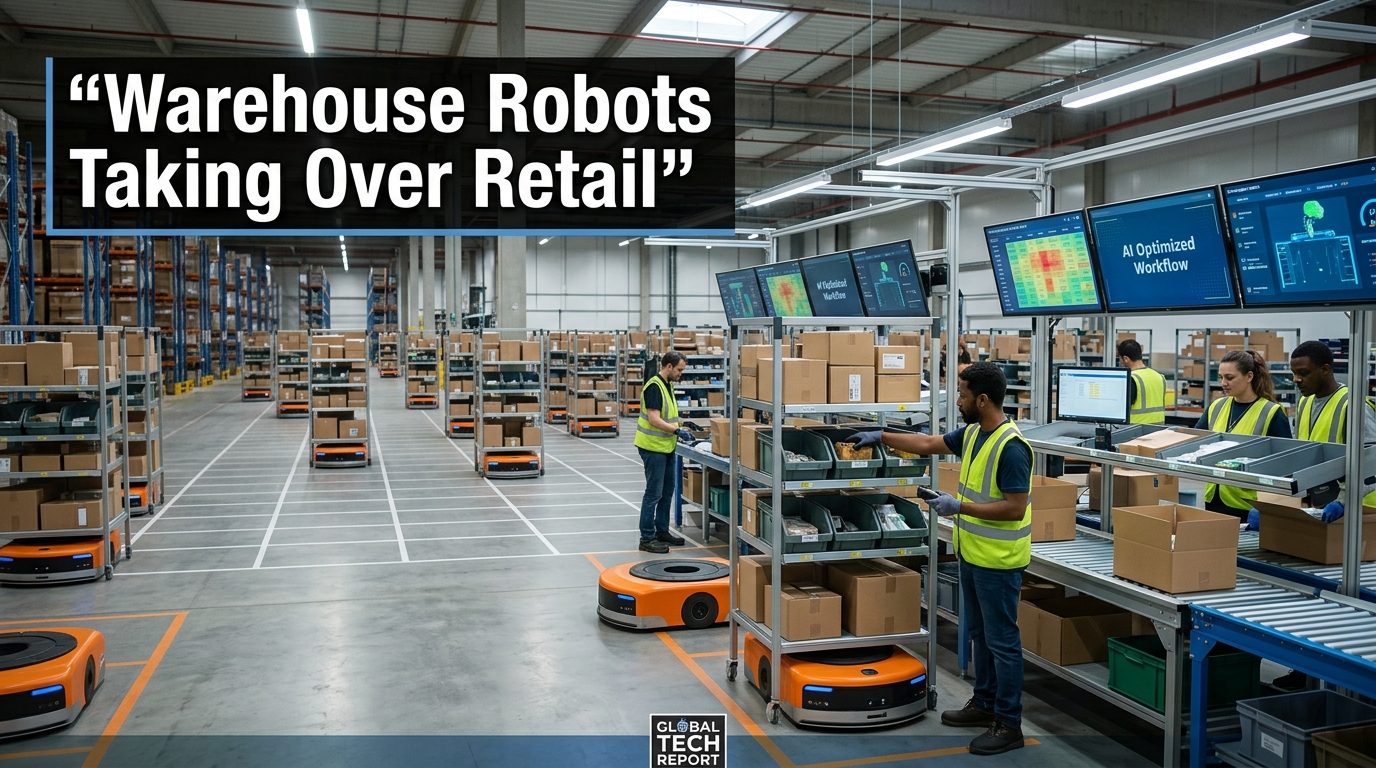
The retail landscape across the United Kingdom is undergoing a quiet, high-tech revolution. Step inside modern distribution centers belonging to household British names, and you are unlikely to hear the clatter of traditional heavy machinery. Instead, you will witness fleets of low-profile, intelligent machines gliding silently across polished floors.
Driven by advanced artificial intelligence and flexible navigation setups, Chinese-manufactured autonomous mobile robots (AMRs) have rapidly occupied a central role in British supply chains. As major UK retailers race to satisfy relentless consumer demand for rapid home delivery, these robotic systems are stepping in to solve persistent labor shortages and long-standing productivity stagnation.
Also Read:
UK-US Trade Deal 2026: Why It No Longer Looks World-Beating
The Anatomy of Modern Fulfillment: How the Tech Works
For decades, warehouse automation required massive capital investment in fixed infrastructure, such as rigid conveyor belts, overhead cranes, and permanent sorting assemblies. These traditional systems were expensive to install, inflexible to scale, and difficult to modify when consumer trends shifted.
The new generation of warehouse automation—pioneered heavily by global giants like Beijing-headquartered Geek+—relies on flexibility. Utilizing simple floor-mounted QR code stickers and localized safety perimeters, fleets of squat, disc-shaped or multi-tiered mobile robots can be deployed in weeks rather than years.
Goods-to-Person (G2P) Efficiency: Instead of human pickers walking miles across massive distribution sheds to find items, mobile robots slide underneath heavy storage racks, lift them entirely, and ferry them directly to stationary human workers.
High-Density Space Optimization: These systems make use of vertical storage and narrow aisles that would be hazardous or inefficient for human-operated forklifts.
Real-Time Fleet Management: Centralized AI software coordinates hundreds of robots simultaneously, optimizing paths, preventing traffic bottlenecks, and balancing workloads dynamically based on incoming online orders.
Why Britain Has Become a Prime European Hub
The United Kingdom represents one of Europe’s largest and most digitally mature e-commerce markets. However, British industry has wrestled with a chronic productivity puzzle for over a decade. According to assessments by organizations like the OECD, the UK’s rate of industrial robot adoption has historically lagged behind its strong manufacturing and retail heritage.
Compounded by post-Brexit labor restrictions, an aging domestic workforce, and high operational overheads, UK retailers faced a stark choice: automate or fall behind. Chinese robotics firms capitalized on this window of opportunity. Offering modular, cost-effective, and easily scalable deployment models, companies like Geek+ have turned Britain into their primary European stronghold, with retail giants such as Tesco, Asda, and Next integrating these systems into their fulfillment networks.
Economic Impact: Balancing Efficiency and Labor Realities
The influx of foreign automation technology brings profound economic questions. On one hand, retail executives praise the technology for slashing error rates, multiplying picking speeds, and stabilizing supply chains during peak shopping events like Black Friday and Christmas.
On the other hand, labor unions and economic watchdogs monitor how this shift alters the workforce. While robots replace physically grueling, repetitive walking tasks with stationary inventory management, they fundamentally change warehouse job profiles. Workers are increasingly transitioned from manual order-pickers to system monitors, technicians, and digital logistics coordinators.
Frequently Asked Questions (FAQs)
Which UK retailers are using Chinese warehouse robots?
Major British brands, including Tesco, Asda, and Next, utilize automated mobile robot technologies supplied by firms like Geek+ to streamline their distribution networks.
Why are retailers choosing autonomous mobile robots (AMRs) over traditional conveyors?
AMRs require minimal structural changes to existing warehouses, can be set up using simple floor markers, offer supreme scalability, and cost significantly less to implement than rigid legacy systems.
How do these robots improve worker conditions?
Instead of walking up to 15 miles a day across concrete floors to pull items manually, workers remain at ergonomic stations while the robots bring inventory directly to them.
Are security concerns raised over foreign robotics software?
As with any interconnected IoT or AI infrastructure, supply chain resilience and data compliance are heavily scrutinized by corporate IT and regulatory bodies to ensure secure cloud integration.
Conclusion
The integration of Chinese robotics into the UK retail ecosystem marks a critical turning point for modern commerce. What began as an experimental strategy to cut fulfillment times has evolved into an essential structural backbone for British supply chains. As global AI capabilities continue to accelerate, the collaboration between flexible robotic automation and human oversight will dictate which retailers survive and thrive in a hyper-competitive digital economy.
2 thoughts on “How Chinese Warehouse Robots Are Reshaping the UK Retail Sector”