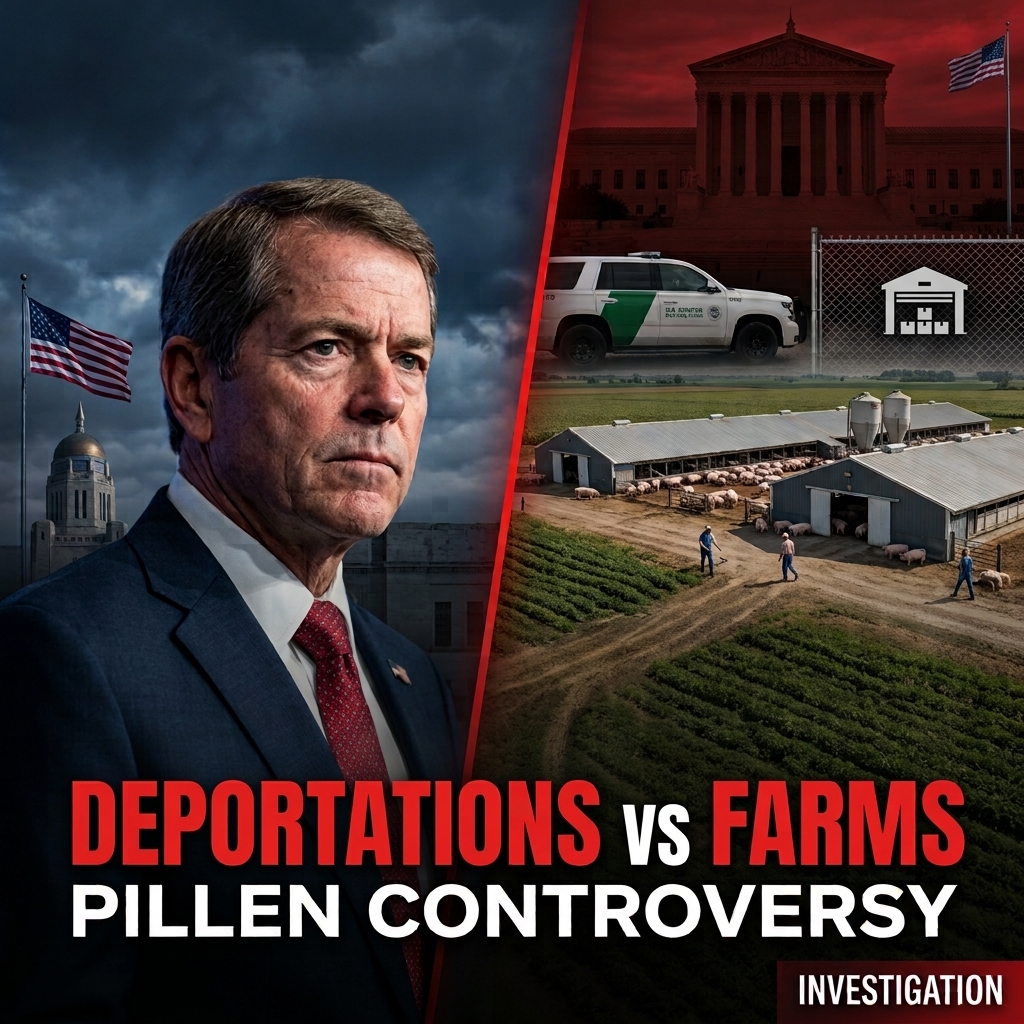
GOP Governor Deportation Push Family Farms Controversy Explained
A high-profile political controversy has exposed the deep-seated tension between hardline anti-immigration policy and the agricultural economy of the American Midwest. Nebraska Republican Governor Jim Pillen, who has positioned himself as a leading voice advocating for border enforcement and mass deportations, is facing intense scrutiny following investigative reports detailing the employment of undocumented workers across his family-owned swine production operations.
The revelations present a stark contrast between Governor Pillen’s public policy positions—characterizing unauthorized immigration as an “invasion”—and the operational realities of his multi-million-dollar agricultural enterprise, Pillen Family Farms. As state and national debates over immigration intensify, this case highlights systemic vulnerabilities in the American agricultural labor supply chain and the challenges facing elected officials whose private businesses rely on immigrant workforces.
Also Read:
US Outlets Boycott Trump Coverage Over White House Media Ban
1. The Investigation: What the Reports Revealed
A joint investigative report published by the Flatwater Free Press and The New York Times brought national attention to the workplace practices at Pillen Family Farms. The investigation drew upon interviews with current and former workers, legal filings, and public records to evaluate labor practices across the governor’s agricultural network.
Key findings from the investigative reports include:
Scope of Employment: The report identified at least 20 individual farms affiliated with Pillen Family Farms that had employed undocumented immigrants in various operational roles.
Worker Testimony: Former laborers interviewed by journalists stated that undocumented workers were routinely hired to perform labor-intensive tasks essential to maintaining farm operations, with several expressing a desire for the truth about industry reliance on foreign labor to be publicly acknowledged.
Gubernatorial Response: A spokesperson for Governor Pillen maintained that the governor never knowingly hired undocumented workers and that his business enterprises comply with applicable employment laws and verification processes.
Despite official denials of intentional wrongdoing, the findings triggered widespread discussion among policymakers, agricultural workers, and political analysts regarding labor compliance and political messaging.
2. Political Rhetoric vs. Agricultural Realities
Governor Pillen’s stance on immigration has mirrored the broader platform of the Republican party, emphasizing strict border security, increased federal enforcement, and state-level cooperation with federal deportation directives. However, the economic backbone of Nebraska’s agricultural sector depends heavily on foreign-born labor, much of which lacks permanent legal authorization.
| Area of Analysis | Governor Pillen’s Public Policy Position | Agricultural Operational Reality |
| Immigration Enforcement | Endorses mass deportations and federal enforcement sweeps. | Reliance on consistent livestock and farm labor forces. |
| State Infrastructure | Allocated state land and resources for detention facilities. | Labor shortages in rural counties limit local hiring pools. |
| Border Rhetoric | Frames unauthorized border crossings as a national security invasion. | Undocumented workers perform critical food supply roles. |
Agricultural advocacy groups have long warned that aggressive deportation pushes could severely disrupt food production networks. According to estimates from agricultural economists and industry groups, immigrant workers—both documented and undocumented—make up a substantial percentage of total dairy, livestock, and meatpacking labor across the United States.
3. The “Cornhusker Clink” and State Enforcement Escalation
Prior to the investigative disclosures, Governor Pillen took active steps to position Nebraska as a key partner in federal deportation efforts. The administration announced plans to convert a state correctional facility into an immigration detention center designed to house individuals awaiting deportation proceedings.
                 [ Governor's Hardline Border Stance ]
                                  |
         +------------------------+------------------------+
         |                                                 |
         v                                                 v
[ State Infrastructure Actions ]            [ Private Sector Reality Check ]
* Repurposing McCook Facility                * Investigation reveals 20+ farms
* Deploying National Guard Units             * Undocumented workers employed
         |                                                 |
         +------------------------+------------------------+
                                  |
                                  v
                [ Public & Political Fallout ]
Facility Repurposing: The state agreed to utilize a work camp in McCook, Nebraska, to create a facility nicknamed the “Cornhusker Clink,” capable of holding up to 300 immigration detainees.
National Guard Deployment: Pillen ordered Nebraska National Guard personnel to provide administrative and logistical assistance to federal immigration authorities operating within the state.
Local Reaction: The detention center plans sparked demonstrations from civil rights advocates, who argued that state resources should not be diverted toward expanding immigration detention infrastructure.
The contrast between building state-level detention infrastructure and benefiting commercially from undocumented farm labor amplified public interest in the investigative reports.
4. Systemic Labor Challenges in American Farming
The controversy surrounding Pillen Family Farms reflects a broader structural challenge confronting the U.S. agricultural sector. Farm owners across red and blue states alike frequently struggle to recruit domestic workers for demanding physical labor in rural areas.
Limitations of H-2A Visa Programs
While the federal H-2A visa program allows agricultural employers to hire temporary foreign workers, the program is primarily designed for seasonal crop harvesting rather than year-round livestock and dairy operations. Pork production and meat processing facilities require year-round staffing, leaving many producers reliant on local labor markets that rely heavily on foreign-born workers.
Document Verification and E-Verify Gaps
Many large agricultural operations utilize automated verification systems like E-Verify or rely on third-party staffing agencies to manage hiring. However, document fraud and flaws in verification mechanisms can lead employers to hire undocumented workers without direct awareness at the executive level, providing legal cover while failing to resolve the underlying labor gap.
5. Political Impact and Future Policy Implications
The revelation of labor discrepancies at Pillen Family Farms has energized political opponents and sparked debate among policy reform advocates.
Critics argue that politicians advocating for immediate deportation strategies should address how agricultural supply chains would function if their own farm labor practices were strictly applied across the industry. Conversely, supporters of the governor emphasize that farm owners cannot be held personally accountable for individual hiring discrepancies managed by farm managers, provided legal verification protocols are followed.
As state legislatures and federal lawmakers consider immigration legislation, this controversy underscores the complex relationship between national political rhetoric, rural economic reliance on foreign labor, and the practical challenges of immigration enforcement.
Frequently Asked Questions (FAQs)
Which governor is involved in the farm labor controversy?
Nebraska Republican Governor Jim Pillen was named in joint investigative reports examining employment practices at his family’s swine production enterprise, Pillen Family Farms.
What did the reports uncover about Pillen Family Farms?
Investigative reports by the Flatwater Free Press and The New York Times revealed that at least 20 farms tied to Pillen Family Farms had hired undocumented immigrants.
How did Governor Pillen respond to the reports?
A spokesperson stated that Governor Pillen never knowingly hired undocumented workers and that his business operations strictly adhere to employment laws.
What is the “Cornhusker Clink”?
The “Cornhusker Clink” is the nickname given to a state correctional work camp in McCook, Nebraska, designated for conversion into an immigration detention facility.
Disclaimer
This article is an independent journalistic review based on open-source reporting, news coverage, and public records. It is intended strictly for educational and news reporting purposes and does not represent official statements from any government entity or business.