
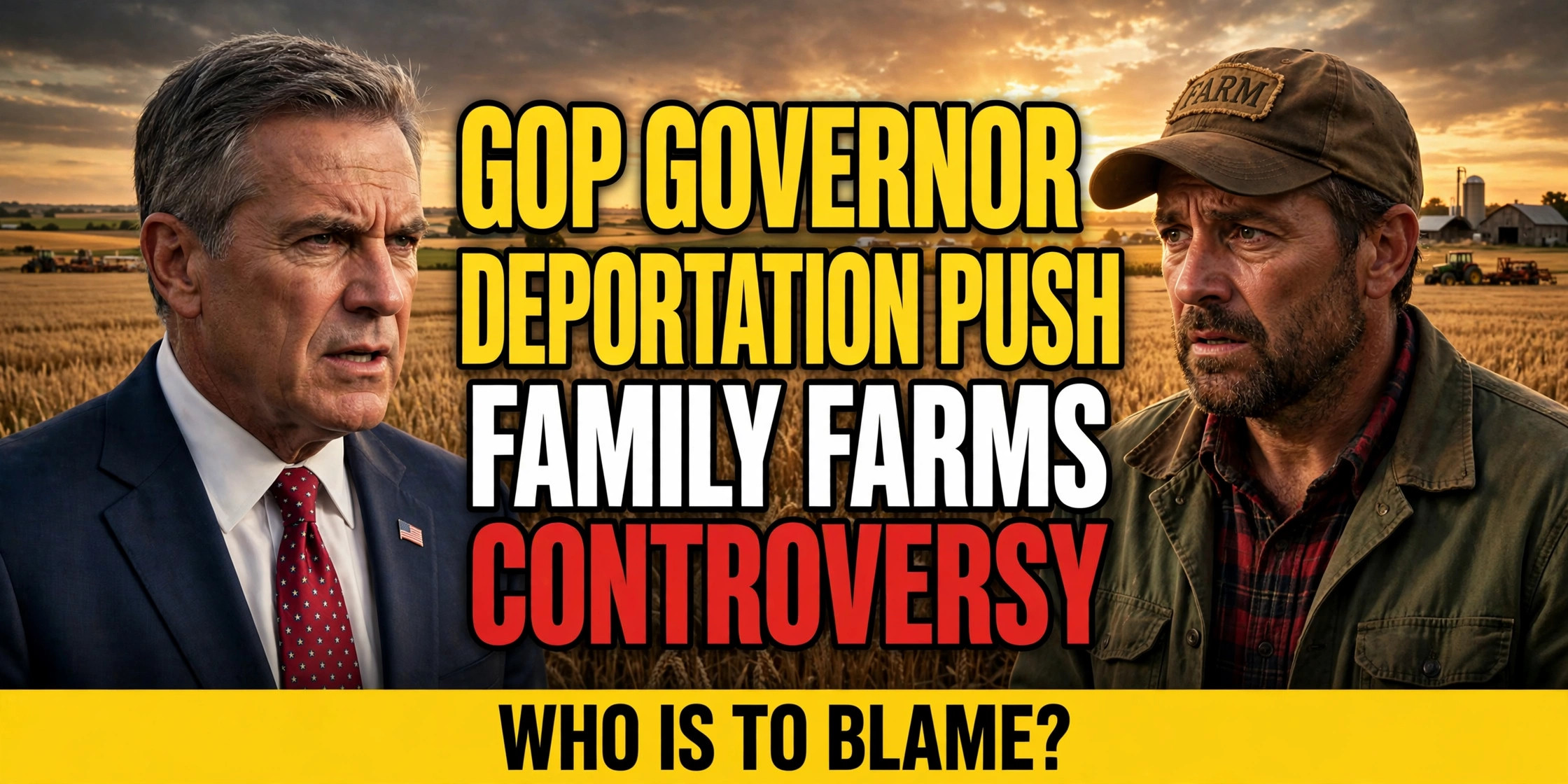
GOP Governor Deportation Push Family Farms Controversy Explained
A high-profile political controversy has cracked open one of the oldest tensions in American life: hardline anti-immigration policy on one side, the agricultural economy on the other. Nebraska Republican Governor Jim Pillen, who has built his name as a leading voice for border enforcement and mass deportations, is now under intense scrutiny after investigative reports detailed the employment of undocumented workers across his family-owned swine production operations.
That contrast is the whole story. Publicly, Governor Pillen has called unauthorized immigration an “invasion.” Privately, his multi-million-dollar agricultural enterprise, Pillen Family Farms, has run on workers it is now alleged lacked legal status. And as state and national debates over immigration intensify, this case is exposing the fault lines in the American agricultural labor supply chain — and the awkward position of elected officials whose own businesses run on immigrant labor.
Also Read:
US Outlets Boycott Trump Coverage Over White House Media Ban
1. The Investigation: What the Reports Revealed
The story broke through a joint investigation by the Flatwater Free Press and The New York Times, which dug into workplace practices at Pillen Family Farms. The reporters built their account from interviews with current and former workers, legal filings, and public records.
What they found:
- Scope of Employment: At least 20 individual farms affiliated with Pillen Family Farms had employed undocumented immigrants in operational roles.
- Worker Testimony: Former laborers said undocumented workers were routinely hired for the labor-intensive tasks that keep a farm running. Some of them said they just wanted the industry’s reliance on foreign labor acknowledged out loud.
- Gubernatorial Response: A spokesperson for Governor Pillen said the governor never knowingly hired undocumented workers — and that his businesses comply with employment laws and verification processes.
Denials aside, the findings kicked off a round of debate among policymakers, farm workers, and political analysts about who really bears responsibility for labor compliance — and how much political messaging survives contact with business reality.
2. Political Rhetoric vs. Agricultural Realities
Pillen’s immigration stance tracks the broader Republican platform: strict border security, more federal enforcement, and state-level cooperation with federal deportation directives. Nebraska’s farm economy, though, runs on different math — one heavily dependent on foreign-born labor, much of it without permanent legal authorization.
Put side by side, the split looks like this:
- Immigration enforcement: Pillen endorses mass deportations and federal enforcement sweeps. His farms depend on a steady, year-round livestock and farm labor force.
- State infrastructure: He has put state land and resources behind detention facilities. Rural counties, meanwhile, face labor shortages that shrink the local hiring pool.
- Border rhetoric: He frames unauthorized border crossings as a national security invasion. Undocumented workers perform critical roles in the food supply.
Agricultural groups have warned for years that an aggressive deportation push could shake food production networks loose. According to agricultural economists and industry groups, immigrant workers — documented and undocumented alike — make up a substantial share of total dairy, livestock, and meatpacking labor across the United States.
3. The “Cornhusker Clink” and State Enforcement Escalation
Before any of this reporting surfaced, Pillen was busy turning Nebraska into a showcase partner for federal deportation efforts. The plan: convert a state correctional facility into an immigration detention center for people awaiting deportation proceedings.
Two tracks ran in parallel — hardline state infrastructure on one hand, a private-sector labor reality on the other — and the investigation landed right in the middle of them. The fallout kept growing from there.
- Facility Repurposing: The state agreed to use a work camp in McCook, Nebraska, to build a facility nicknamed the “Cornhusker Clink,” designed to hold up to 300 immigration detainees.
- National Guard Deployment: Pillen ordered Nebraska National Guard personnel to give administrative and logistical backup to federal immigration authorities operating in the state.
- Local Reaction: The detention center plans drew demonstrations from civil rights advocates, who argued that state resources should not be diverted toward expanding immigration detention infrastructure.
Building detention infrastructure at the state level while the family business benefits from undocumented farm labor — that contrast is what gave the investigative reports their charge.
4. Systemic Labor Challenges in American Farming
This controversy isn’t really about one governor’s farms. It’s a structural problem that haunts American agriculture coast to coast. Farm owners in red states and blue states alike can’t recruit enough domestic workers for hard physical labor in rural places.
Limitations of H-2A Visa Programs
The federal H-2A visa program lets farm employers bring in temporary foreign workers, but it’s built for seasonal crop harvesting — not year-round livestock and dairy operations. Pork production and meat processing need staffing twelve months a year, which leaves producers leaning on local labor markets that run heavily on foreign-born workers.
Document Verification and E-Verify Gaps
Big agricultural operations often run E-Verify or hire through third-party staffing agencies. But document fraud is real, and verification systems have holes. An employer can end up hiring undocumented workers without anyone at the executive level knowing. That provides legal cover. It doesn’t fix the labor gap.
5. Political Impact and Future Policy Implications
The revelations have handed Pillen’s political opponents plenty of ammunition, and reform advocates are using it too.
Critics make a simple argument: politicians pushing immediate deportation should explain how the food supply chain would work if their own farms were held to that standard. The governor’s supporters counter that farm owners can’t be held personally responsible for hiring decisions made by farm managers — provided the legal verification protocols were followed.
As state legislatures and federal lawmakers weigh immigration legislation, the controversy keeps circling back to the same knot: national political rhetoric, rural dependence on foreign labor, and enforcement that keeps colliding with economic reality.
Frequently Asked Questions (FAQs)
Which governor is involved in the farm labor controversy?
Nebraska Republican Governor Jim Pillen. He was named in joint investigative reports examining employment practices at Pillen Family Farms, his family’s swine production enterprise.
What did the reports uncover about Pillen Family Farms?
The Flatwater Free Press and The New York Times found that at least 20 farms tied to Pillen Family Farms had hired undocumented immigrants.
How did Governor Pillen respond to the reports?
A spokesperson said Governor Pillen never knowingly hired undocumented workers — and that his business operations follow employment laws.
What is the “Cornhusker Clink”?
It’s the nickname for a state correctional work camp in McCook, Nebraska, that was designated for conversion into an immigration detention facility.
Disclaimer
This article is an independent journalistic review based on open-source reporting, news coverage, and public records. It is intended strictly for educational and news reporting purposes and does not represent official statements from any government entity or business.
1 thought on “GOP Governor Deportation Push Family Farms Controversy Explained”