
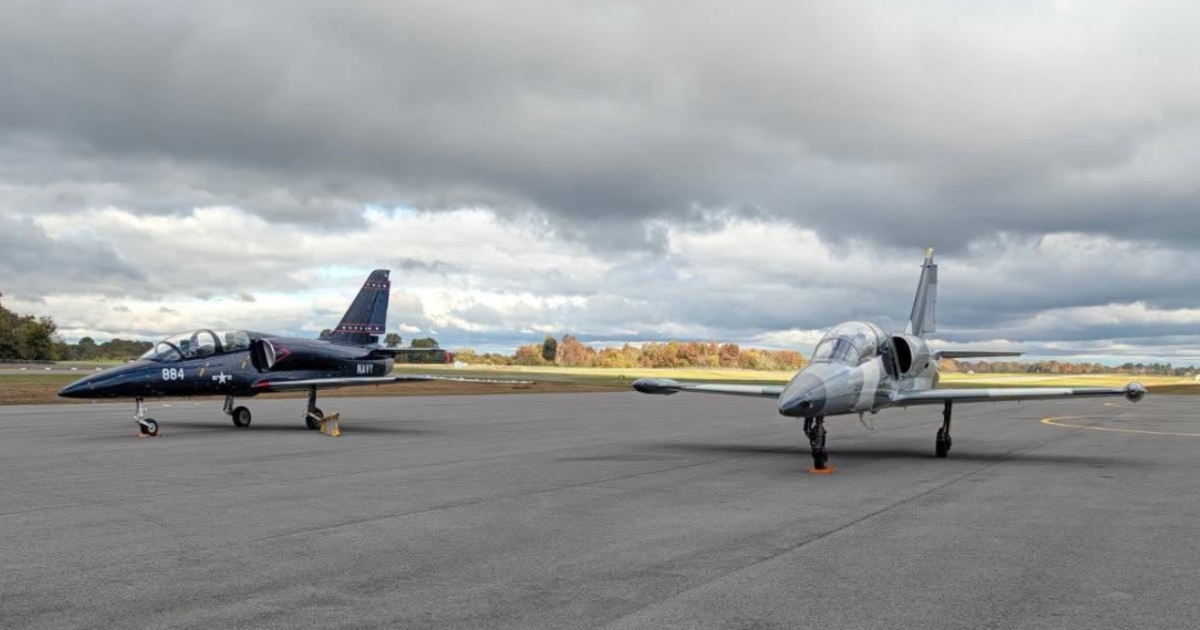
The Kentucky jet crash has left a Wisconsin family grieving after a father died when his jet went down shortly after takeoff from a small airport in western Kentucky. James Alan Michaels, 70, was the sole occupant of the L-39 Albatros when it crashed in a field near the Mayfield Graves County Airport on Sunday, November 8. His daughter, who was flying a second L-39 back from the same trip, returned to the airport and landed safely. Federal investigators are now working to understand what went wrong.
What is known so far comes from the Graves County Sheriff’s Office, which described a flight that ended within minutes of leaving the ground. Michaels radioed that he was experiencing a problem and was returning to the airport. The aircraft went down soon afterward. The cause of the crash has not yet been determined, and officials have not speculated about it.
Kentucky jet crash: what happened at Mayfield
According to the sheriff’s office, calls reporting a plane crash near Interstate 69 and Kentucky Highway 131 reached 911 at 2:08 p.m. on Sunday. Emergency crews found the aircraft on fire in a field off Spence Chapel Road, close to the Mayfield Graves County Airport.
Michaels was identified on Monday as the pilot who died in the crash. He was 70 years old and from Wisconsin. The WDRB report on the crash sets out the timeline and the sheriff’s account of what happened.
The flight had begun as a routine stop. Michaels and his daughter, both from Wisconsin, were returning from an airshow in Mississippi and had stopped at the Mayfield Graves County Airport to refuel. Each was flying a separate L-39 Albatros. After refuelling, they took off to continue the journey home. Only one of the two aircraft made it back.
A father and daughter flying home together
The detail that has stayed with many readers is the simplest one: a father and daughter, flying home together in two jets, after a weekend at an airshow. Flying in formation or in company with family is a familiar part of the vintage military jet community, where owners often travel together to events across the country.
After takeoff, Michaels radioed that he was experiencing an issue and that he was returning to the airport. The aircraft went down soon afterward, the sheriff’s office said. The second plane — flown by his daughter — returned to the airport and landed safely.
No further details about the daughter have been released, and none should be assumed. What the record shows is that she completed the return flight to the airport while her father’s aircraft went down nearby. It is a loss that will be felt far beyond the airfield in Graves County.
About the L-39 Albatros
The Kentucky jet crash involved an L-39 Albatros, an older military-style jet. The L-39 was built in Czechoslovakia as a trainer for military pilots, and it has since become one of the most widely flown vintage jets in civilian hands. Owners fly them at airshows and fly-ins across the United States, and they are a common sight at events like the one Michaels and his daughter had attended in Mississippi.
The aircraft is a single-engine jet, designed in the 1960s and 1970s, and civilian owners are required to maintain and operate it under Federal Aviation Administration rules for experimental and former military aircraft. That history does not, by itself, explain what happened on Sunday. The investigation will look at the aircraft, the flight, and the conditions on the day — not at the type alone.
What the investigation will look at
The Kentucky jet crash is now the subject of a federal investigation. The Federal Aviation Administration and the National Transportation Safety Board have been notified and are responding to investigate, the sheriff’s office said.
Investigators will typically examine the wreckage, maintenance records, the pilot’s radio calls, weather conditions, and any data the aircraft carried. The process can take months, and early statements from local officials are usually limited to the basic facts: where the aircraft came down, who was aboard, and what the pilot reported before the crash.
That is an important discipline to respect. In the hours after a crash, there is often pressure to explain what happened quickly. The NTSB’s work is deliberately slower, and its findings — when they come — will carry far more weight than any early speculation. For now, the confirmed facts are the ones the sheriff’s office has released, and the cause remains unknown.
Fatal crashes involving vintage military jets are rare, but they are not unheard of. When they do occur, they are often examined closely by the aviation community itself, which shares information about maintenance and operations in the hope of preventing a repeat. Our report on the Learjet crash in Palm Beach County that killed all nine people aboard covered another recent US crash in which federal investigators were called in.
What happens next
The investigation will continue in the coming days and weeks, and the sheriff’s office has said the FAA and NTSB are responding. Further information is likely to be released as the investigation progresses, though the full findings will take considerably longer.
For the family, the Kentucky jet crash is not a news story but a sudden and profound loss. A father who shared his love of flying with his daughter died on the way home from an airshow, minutes after takeoff from a small Kentucky airport where they had stopped only to refuel. The daughter’s safe landing is a small mercy in an otherwise devastating day.
The bottom line
The Kentucky jet crash took the life of 70-year-old James Alan Michaels of Wisconsin on Sunday, November 8, shortly after he took off from Mayfield Graves County Airport. His daughter, flying a second L-39, landed safely. The aircraft went down in a field off Spence Chapel Road after Michaels radioed that he was having an issue and was returning to the airport.
The cause is not yet known, and the FAA and NTSB are investigating. Until their work is done, the facts that matter are the ones already established — and the family at the centre of them deserves to be remembered with respect.