
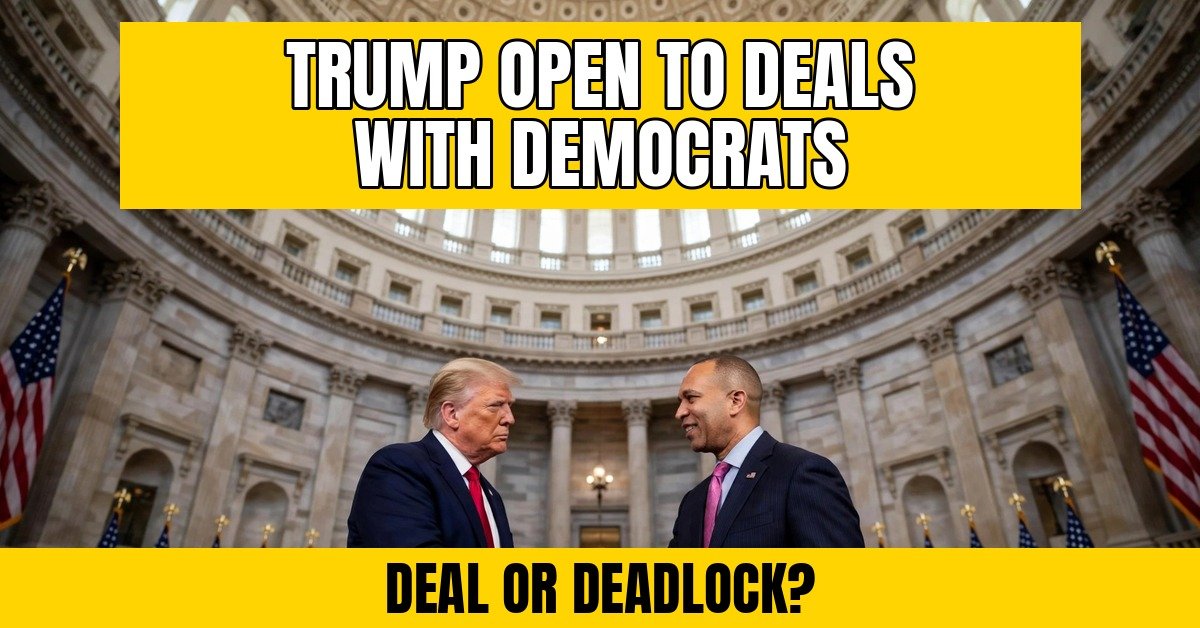
Trump Says Deals Possible With Democrats on Health Care and Immigration
President Donald Trump said on Friday that he could work with congressional Democrats on health care, immigration, bringing movie production back to the US and limits on paying college athletes — and the Trump Democrats deals he described would be the first test of a new political map.
“If they want to get things done, I want to get things done, too,” Trump told a White House news conference on November 20. But he added a warning: he will veto legislation he does not like — even as he talked up Trump Democrats deals.
The timing is no accident: Democrats chose Rep. Hakeem Jeffries to be the next speaker when they gain control of the House on January 3. Trump called Jeffries and Sen. Chuck Schumer “smart” and said he could negotiate compromises with them.
It was a striking change of tone. The question now is whether the offer is real — or the opening move in a longer standoff.
The Veto Threat Behind the Offer
Trump’s confidence came with a catch, and he spelled it out plainly. “They’re going to send things my way and I’m going to veto them,” Trump said. “But I think after a month or so they’re going to send things and I’m going to veto unless you want to do this and this and this.”
In other words, the Trump Democrats deals would come on his terms: Democrats send bills, he vetoes the ones he dislikes, and after a month or so, they start sending bills shaped by his demands.
Trump Democrats Deals: Health Care Is the First Test
Health care is where the two sides are closest — and furthest apart. Jeffries has said the first Democratic priorities would be to reduce health care costs, restore tax cuts for Affordable Care Act participants, and restore cuts to Medicaid funding.
“Out of the gate, what we clearly have to do is fix our broken health care system,” Jeffries told reporters at the Capitol on November 18.
The problem is that those provisions were part of Trump’s signature tax-cut bill that Republicans approved in 2025. Undoing them would mean unwinding a piece of his own legacy. “I’m open to great health care,” Trump said. “Can it be what they want? No. But it can be a combination of what we all want.”
The details — who pays, who is covered, what gets cut — are still to be fought over, and that is where Trump Democrats deals get hard.
Immigration: Sympathy and a Hard Line
Immigration is another possible topic, Trump said. He had a good conversation on November 18 with Texas Gov.-elect Gina Hinojosa, a Democrat, about keeping a strong southern border. “She wants to have a strong border,” Trump said. “I think we’ll be able to work something out.”
Another Jeffries priority is legislation to give permanent-residence status to undocumented immigrants who arrived as children, or to people who had protected status. Under the bill from Rep. Sylvia Garcia, D-Texas, immigrants would have to have been in the country since 2021 and pass a background check.
Many Republicans oppose granting what they call “amnesty.” Trump has said his crackdown targets “the worst of the worst.” But he also voiced sympathy for “very hard-working” immigrants who arrived years ago. “What are we going to do?” Trump said. “They work well and they work hard.”
Movies and College Sports: The Surprise Areas
The most unexpected areas of agreement may be the ones furthest from the usual partisan fights. Trump has threatened 100% tariffs on movies made abroad, but he has worked, “believe it or not,” with Sen. Adam Schiff, D-California — who led the first impeachment against Trump — on tax incentives to bring moviemaking back.
“We’re actively in negotiations on that and I can tell you it’s going to be very bipartisan,” Trump said. “It’s a very important industry.”
Another arena is payments to college athletes for their “name, image and likeness.” The College Sports Commission reported in May that $75 million in deals were signed in two months. “Every college is going to go bankrupt if we don’t get a bill done because they’re going crazy. They’re paying quarterbacks $12 million a year,” Trump said. He has signed executive orders to rein in the deals. The Senate approved legislation on the fees in September. “We have to pass that bill,” Trump said.
What Happens Next
The Trump Democrats deals will be tested in January, when Democrats take control of the House and Jeffries becomes speaker.
Health care and immigration are the hard cases. Movies and college sports are the easy ones — where a president and an opposition party can find common ground without angering their bases.
If Trump Democrats deals happen on the easy issues first, that could build trust for the harder ones. If the first bills get vetoed, as Trump predicted, the new Congress could start with a standoff instead.
Sources and Resources
Frequently Asked Questions
What Trump Democrats deals did the president mention?
Trump said deals were possible on health care, immigration, bringing movie production back to the US, and limits on paying college athletes for their name, image and likeness.
Who will lead the Democrats in the new Congress?
Rep. Hakeem Jeffries will be speaker when Democrats take control of the House on January 3. Sen. Chuck Schumer faces a challenge to lead the Senate Democrats.
Will Trump veto Democratic bills?
He said he would veto bills he dislikes, but predicted that after a month or so, Democrats would start sending bills shaped by his demands — the first Trump Democrats deals.
What is the Democratic health care priority?
Jeffries said the first priority for Trump Democrats deals is to reduce health care costs, including restoring tax cuts for Affordable Care Act participants and cuts to Medicaid funding.
What did Trump say about college athletes’ pay?
He said colleges are “going crazy” paying quarterbacks $12 million a year, and that every college will go bankrupt without a bill capping the deals. The Senate approved related legislation in September.
Conclusion
Trump’s offer of Trump Democrats deals was real but conditional: he will talk, he will negotiate, and he will veto anything he does not like. Health care and immigration will test whether the two sides can bridge gaps that have lasted for years. January will tell.