
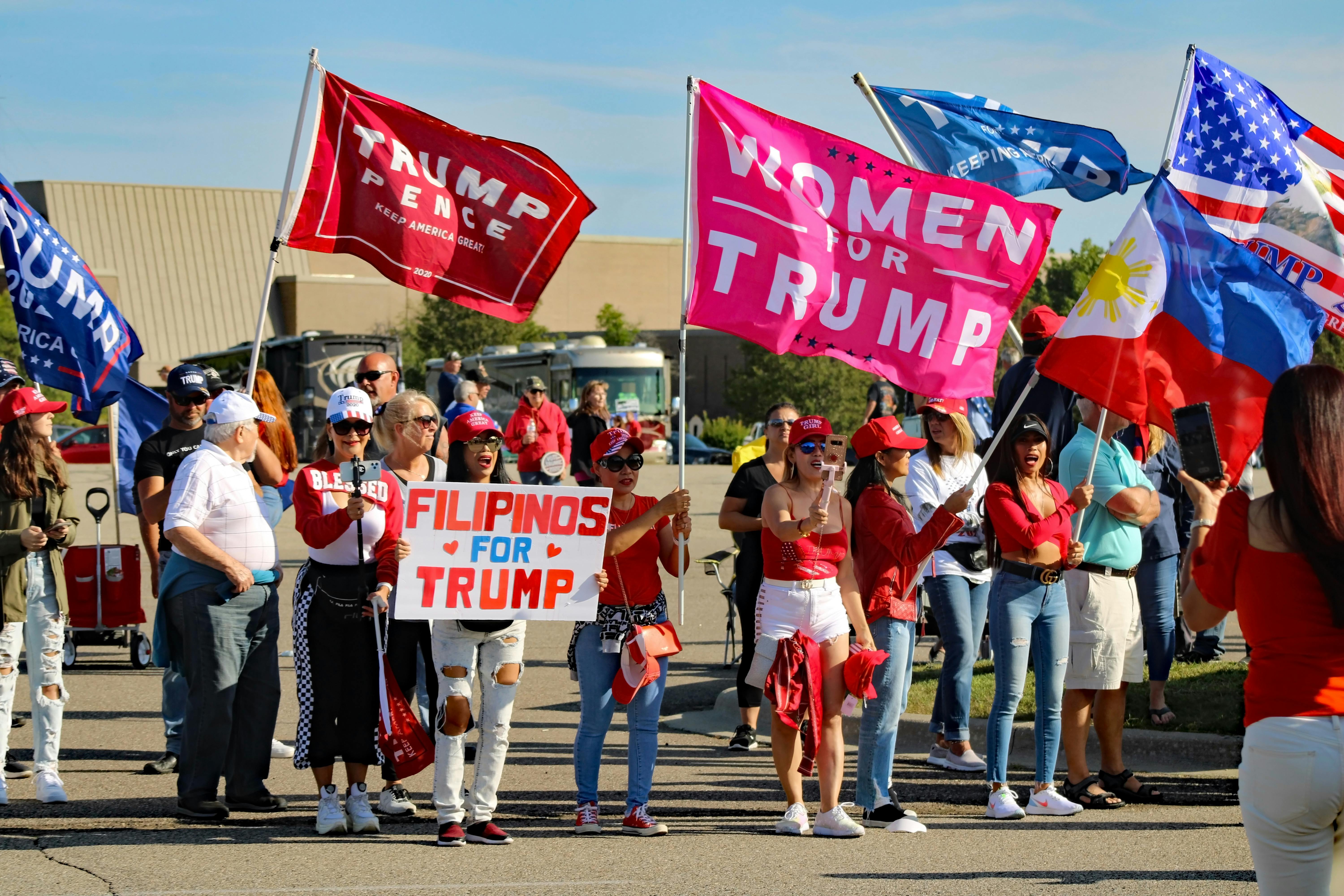
President Donald Trump brought his midterm message to Port Huron, Michigan, firing up an enthusiastic Republican crowd and putting a bold promise at the center of the pitch: $5,000 checks for every American, if Republicans keep Congress.
The promise is tied directly to that outcome: $5,000 checks for every American if Republicans keep Congress.
The rally, reported by the Detroit Free Press on October 25, 2026, came as Republicans worked to hold their ground ahead of the midterm elections on November 3. The setting mattered as much as the message. Port Huron is not a quiet stop on a routine tour; it was chosen as a place to rally supporters, sharpen the contrast with Democrats, and turn enthusiasm into votes in a contest that could decide who controls Congress.
A rally built around the midterms
Trump’s appearance was, above all, a midterm rally. The Free Press described him firing up an enthusiastic Republican crowd amid a midterm push, in a political moment in which Republicans face the prospect of a midterm blue wave on November 3.
That framing is important. Midterm elections are often shaped less by a single speech than by turnout: which side’s supporters show up, which side stays home, and how the final weeks of campaigning are framed. A rally like the one in Port Huron is designed to do that work in person, giving supporters a reason to stay engaged, to talk to neighbors, and to vote.
For Republicans in Michigan and beyond, the Port Huron stop was a chance to hear that case directly from the party’s most prominent voice. For voters still making up their minds, it was also a reminder of how much is riding on November 3, when voters will decide whether Republicans keep Congress.
The $5,000 promise, with a condition
The headline promise from the rally was simple and direct: $5,000 checks for every American. But the promise came with a clear condition, and that condition is the point of the pitch.
Trump tied the checks to Republicans keeping Congress. In other words, the checks are presented not as a standalone payment already in motion, but as something voters can expect if Republicans retain control. The message links a tangible household benefit to a political outcome: keep the Republican majority, and the checks follow.
That kind of conditional promise does two things at once. It gives supporters a concrete reason to vote, beyond party loyalty, and it gives undecided voters a way to measure what is at stake. Five thousand dollars is a number most households can picture immediately, whether it is put toward bills, savings, a car repair, or the cost of living. By naming the amount, Trump turned an abstract argument about congressional control into a personal one.
At the same time, the condition leaves important questions open. The reporting from Port Huron does not, in the material available here, spell out a detailed plan for how such checks would be funded, who would be eligible, or when they would be paid. Those details would matter enormously if the proposal moved from a rally promise to legislation, and they are not something to fill in with guesswork. What is clear from the rally itself is the political bargain being offered: a Republican Congress in exchange for $5,000 checks.
Why keeping Congress matters to the pitch
Congressional control is the lever that makes or breaks a promise of this size. A president can propose, argue, and campaign, but a nationwide payment program would need Congress to act. That is why the condition is not a footnote. It is the mechanism.
In other words, the question before voters is whether Republicans keep Congress.
If Republicans keep Congress, Trump is arguing, they will have the votes to move his agenda. If they do not, the path to $5,000 checks becomes far harder, whatever the level of public support. The rally therefore framed the midterms not just as a referendum on the past, but as a choice about a specific future payment.
That framing also explains the tone of the Port Huron event. An enthusiastic crowd is not just an audience; it is a signal to other voters that the campaign has momentum. Rallies are meant to be seen, shared, and talked about, and a fired-up room in Michigan sends a message well beyond the hall itself.
What to watch before November 3
Between now and November 3, the $5,000 promise is likely to be tested in several ways. Voters will hear it repeated, challenged, and explained by both parties. Supporters will present it as a direct benefit if Republicans keep Congress. Critics will ask how it would be paid for and whether it is realistic. Campaigns in competitive races will decide how much to lean on it, and how much to focus on other issues.
For households, the practical question is not just whether $5,000 sounds good, but whether the political conditions attached to it are met. The Port Huron rally made that bargain explicit. The election on November 3 will decide whether voters accept it.
Until then, the rally stands as a clear statement of intent: Trump is asking Americans to connect a midterm vote to a check in the mail, and he is asking them to do it if Republicans keep Congress.
Summary: $5,000 checks if Republicans keep Congress
In short, the Port Huron rally linked a midterm vote to $5,000 checks for every American. The checks were presented as the outcome if Republicans keep Congress.
The rally was reported by the Detroit Free Press on October 25, 2026, ahead of the midterm elections on November 3. A nationwide payment program would need Congress to act, which is why the condition is central to the pitch.
The Port Huron stop in Michigan was chosen to rally supporters and turn enthusiasm into votes, as the post notes.
The election on November 3 will decide whether voters accept that bargain, and whether Republicans keep Congress.
Source: Detroit Free Press, October 25, 2026. Rally details and the $5,000 promise are as reported in that coverage.