
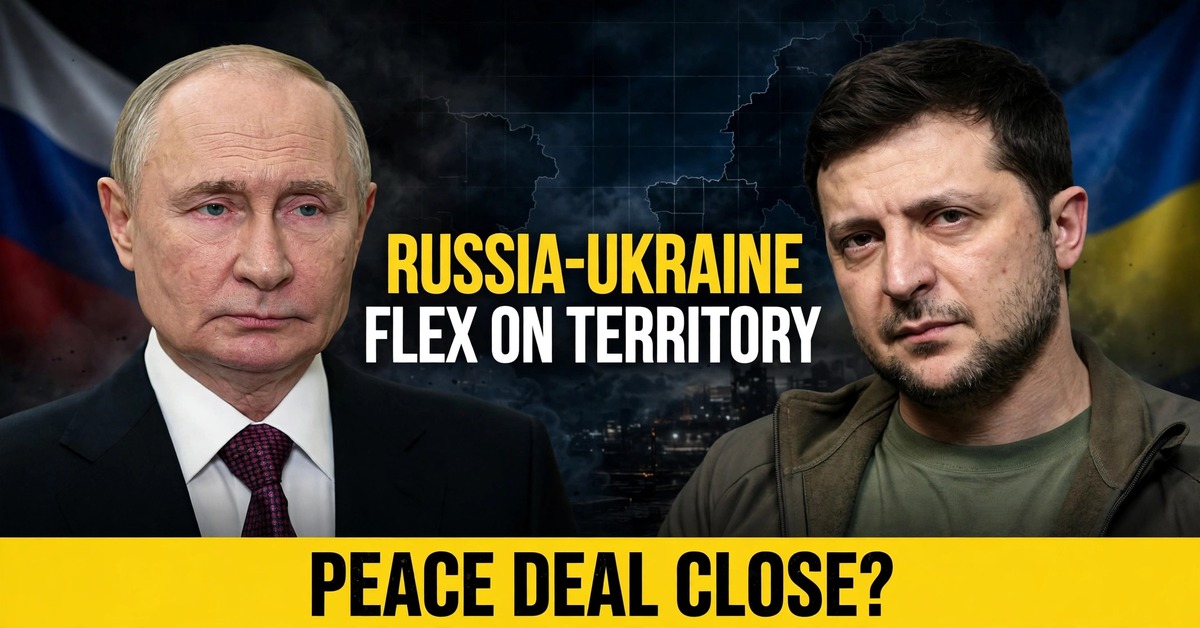
Russia Ukraine territory talks are set to resume in Abu Dhabi on Tuesday, and a US official says both sides are privately showing some flexibility on a possible exchange of territory. The claim is modest — neither Moscow nor Kyiv has shifted its public position — but after nearly four years of war, even a hint of movement behind closed doors could matter a great deal.
On this page
The talks are mediated by the United States, and they are scheduled to run for two days. US envoys Steve Witkoff and Jared Kushner are leading the effort, and the official who briefed reporters voiced cautious optimism about where things stand. “This is the first time I feel like we see real desire on the Russian side to finish,” the official said.
Russia Ukraine territory talks: what the two sides are signalling in private
Publicly, the gap between Russia and Ukraine still looks wide. Ukraine wants Russia pushed back to the original border, while President Vladimir Putin wants all of the Donbas, the industrial region in eastern Ukraine that his forces have fought over since 2014 and seized in large part since the full-scale invasion in early 2022.
Privately, though, the picture is less rigid. The US official said both sides are showing some flexibility on a possible exchange of territory, a phrase that suggests neither side has walked into Abu Dhabi with a take-it-or-leave-it map. The Russia Ukraine territory talks will test whether that flexibility is real or simply a way to keep the process alive.
Territory is not the only item on the table, and it may not even be the first one settled. The official said any territorial agreement would likely come at the end, once other items are agreed. That order matters: it means the hardest question is being left until the rest of the package is in place, which gives both sides a reason to keep talking.
Security guarantees are at the centre of the talks
Security guarantees for Ukraine are a major topic in Abu Dhabi, and they may matter more to Kyiv than any line on a map. Ukraine wants a promise that Russia will not simply regroup and attack again once a deal is signed, and the talks are looking at a possible NATO-style Article 5 defence pledge for Kyiv.
An Article 5-style pledge would mean an attack on Ukraine is treated as an attack on its guarantors, a commitment close to the one that binds NATO members together. Ukraine is not a NATO member, so such a pledge would have to be built from scratch, and the details — who signs it, what triggers it, and how fast it acts — would decide whether it is worth anything in practice.
For Russia, the question is different. Moscow has long opposed NATO’s presence near its borders, and any guarantee that ties Ukraine closely to Western powers will be hard for Putin to accept. That tension is why the Russia Ukraine territory talks cannot be settled by maps alone; the security arrangements around any deal may prove just as difficult.
Who is in the room, and what happens after Abu Dhabi
Witkoff and Kushner are leading the US mediation in the Russia Ukraine territory talks, and their presence underlines how directly the Trump administration is running this process. The talks are scheduled for two days, and the envoys may travel to Russia afterwards to meet Putin, a step that would carry the discussion straight to the top in Moscow.
President Donald Trump has repeatedly pointed to the heavy losses both sides have taken since Russia’s invasion in early 2022. The human and economic cost of the war is now the backdrop to every round of talks, and it is the argument Trump uses most often for pressing both sides to settle.
Why cautious optimism is still cautious
The official’s optimism was real but carefully worded. “This is the first time I feel like we see real desire on the Russian side to finish” is a statement about mood, not about a deal. It does not mean the two sides are close, and it does not mean Putin has agreed to give up his demand for the whole Donbas.
The two days in Abu Dhabi will also test whether the envoys can carry any agreement back to Washington and Moscow without it unravelling in public, and whether the cautious optimism voiced before the talks holds once the details are on the table.
Sources and Resources
Read the original reporting from Reuters: Russia and Ukraine showing flexibility on territory, US official says – Reuters
Read more on World Reach Daily: World Reach Daily
Frequently Asked Questions
Are Russia and Ukraine really talking about swapping territory?
A US official said both sides are privately showing some flexibility on a possible exchange of territory ahead of the Russia Ukraine territory talks in Abu Dhabi. Neither side has changed its public position, and no deal has been agreed.
When and where are the talks happening?
The US-mediated talks start on Tuesday in Abu Dhabi and are scheduled for two days. US envoys Steve Witkoff and Jared Kushner are leading the mediation.
What security guarantees is Ukraine asking for?
Security guarantees are a major topic, including a possible NATO-style Article 5 defence pledge for Kyiv. Ukraine wants protection against a future Russian attack after any deal is signed.
What does each side want on territory?
Ukraine wants Russia pushed back to the original border, while Putin wants all of the Donbas. Any territorial agreement would likely come at the end, once other items are agreed.
Will the envoys meet Putin?
They may travel to Russia after the Abu Dhabi talks to meet Putin. That step would take the discussion to the top in Moscow, and it is a sign the White House wants a result quickly.
Conclusion
The Russia Ukraine territory talks in Abu Dhabi open with a rare note of optimism from a US official, but the hard work is still ahead. Both sides are showing private flexibility, security guarantees are on the table, and envoys may head to Moscow when the two days are done. Whether that adds up to a deal depends on the territorial question both sides have so far refused to settle.