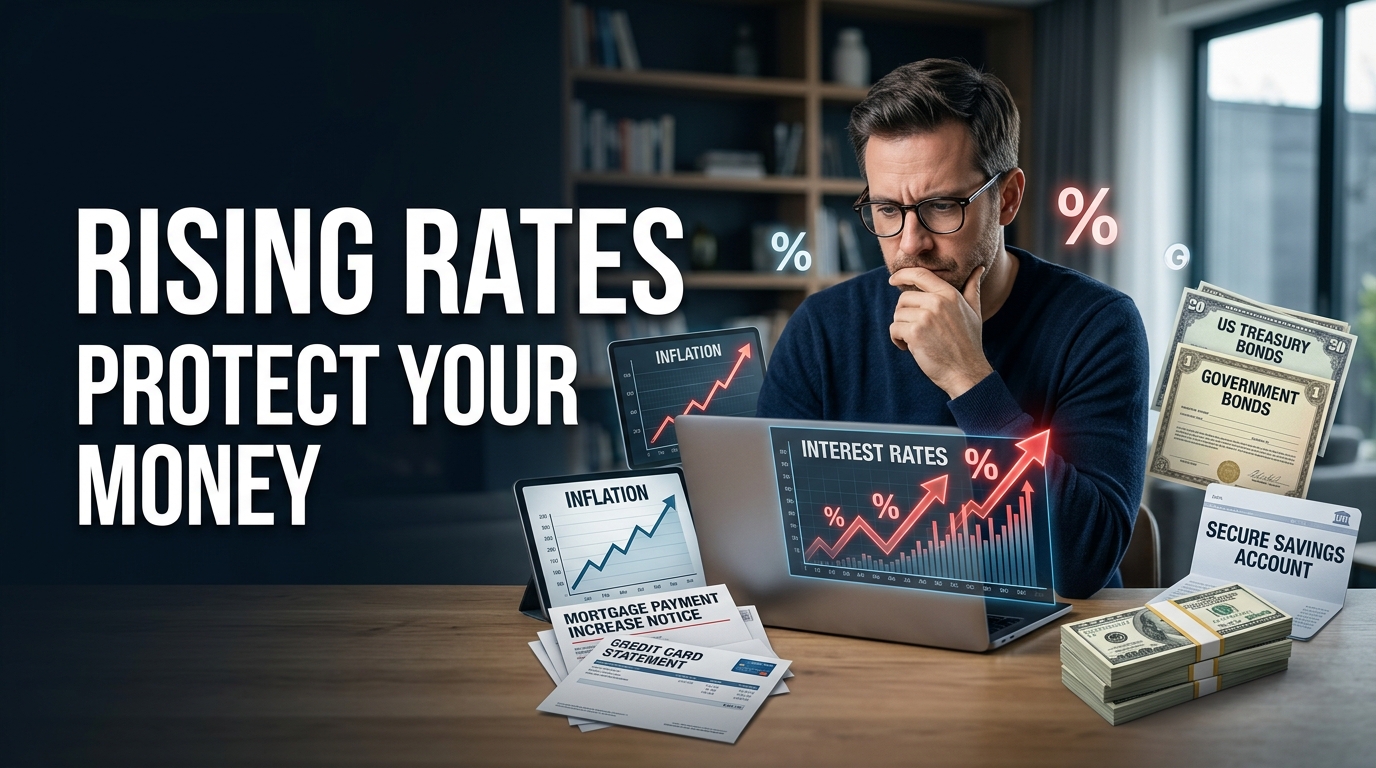
Navigating Personal Finance Amid Rising Interest Rates: Strategies to Protect Wealth and Beat Inflation
Introduction
Mastering personal finance rising interest rates is one of the most critical skills you can develop in today’s shifting economy. Economic landscapes change rapidly, and few macroeconomic shifts impact household budgets quite like rising interest rates…
Navigating personal finance amid rising interest rates requires a fundamental shift in strategy. Moving away from speculative risk and casual budgeting toward calculated cash management, aggressive debt elimination, and asset optimization is essential. This comprehensive guide explores actionable frameworks to safeguard your hard-earned money, capitalize on higher yields, and future-proof your financial portfolio.
Also read:
Dan Thomas Reform UK Wales Resignation: Leader Steps Down After Police Arrest
1. Understanding the Impact of Rising Rates on Your Wallet
When central banks hike interest rates to combat inflation, the cost of borrowing money increases universally. Commercial banks pass these costs down to consumers, affecting variable-rate loans, home equity lines of credit (HELOCs), auto loans, and credit cards.
The Bad News for Borrowers: Minimum payments on credit cards surge because average Annual Percentage Rates (APRs) frequently climb past 20%. Adjustable-rate mortgages (ARMs) reset at higher monthly obligations, shrinking household disposable income.
The Good News for Savers: Financial institutions compete more aggressively for deposits. This environment breathes new life into high-yield savings accounts (HYSAs), certificates of deposit (CDs), and money market instruments, allowing cash reserves to generate meaningful returns rather than sitting idle.
2. Attack High-Interest Debt First
In a low-rate environment, carrying low-interest debt can sometimes take a backseat to investing. When rates climb, however, toxic debt becomes an emergency. Variable-rate debts compound rapidly, acting as an invisible anchor on your net worth.
Strategic Debt Reduction Framework:
The Debt Avalanche Method: List all debts by interest rate from highest to lowest. Direct every extra dollar toward the highest-rate balance (typically credit cards) while paying minimums on the rest. This minimizes total interest paid over time.
Consider Consolidation: If you qualify, rolling multiple high-interest credit lines into a fixed-rate personal loan or utilizing a 0% balance transfer credit card can lock in predictable payments and halt runaway interest accumulation.
3. Supercharge Your Cash Strategy and Emergency Fund
Cash management takes center stage when borrowing gets expensive. Keeping emergency funds in traditional brick-and-mortar checking accounts paying near-zero percent interest leads to a quiet loss of purchasing power against inflation.
High-Yield Vehicles: Shift emergency reserves (targeted at 3 to 6 months of essential living expenses) into insured high-yield savings accounts or short-term CDs.
Locking Yields: Because central bank rate cycles eventually peak and pivot downward, utilizing a CD ladder can lock in attractive fixed returns for 6, 12, or 24 months, shielding your capital from future rate cuts.
4. Adapt Your Investment Portfolio for High-Rate Climates
Higher discount rates place downward valuation pressure on growth-oriented equities because future corporate earnings are worth less in present-day terms. Consequently, smart asset allocation must evolve.
Fixed Income Attractiveness: Newly issued government and high-grade corporate bonds offer significantly higher yields than they did during zero-rate eras, making fixed-income assets a functional pillar of portfolio defense.
Focus on Cash Flow: Prioritize companies with strong balance sheets, low debt-to-equity ratios, and steady cash dividends over speculative, pre-revenue assets that rely heavily on cheap external debt to grow.
Frequently Asked Questions (FAQs)
Should I pay off my mortgage early or invest the extra cash?
Evaluate your current mortgage interest rate against risk-free yields available in the market. If your mortgage rate is locked at a low historical rate (e.g., 3%), keeping extra cash in a high-yield savings account or Treasury bill yielding higher returns mathematically outperforms paying down the low-interest mortgage. Conversely, if you hold a high rate, aggressive principal reduction or refinancing when rates dip makes sense.
Are high-yield savings account rates guaranteed to stay high?
No. High-yield savings accounts and money market funds feature variable interest rates. When central banks cut rates, yields on these deposit accounts decline accordingly. To secure returns for a designated timeframe, individuals often utilize certificates of deposit (CDs).
How do rising interest rates affect my credit score?
Interest rates themselves do not directly change your credit score. However, because rising rates increase monthly minimum payments on variable debt, missing payments or pushing credit utilization ratios above 30% due to higher balances can damage your score.
Conclusion
Navigating personal finance amid rising interest rates is ultimately an exercise in discipline, flexibility, and proactive management. By ruthlessly cutting high-cost debt, repositioning emergency cash into high-yielding vehicles, and maintaining a diversified investment thesis, you transform macroeconomic headwinds into long-term personal stability. Wealth is preserved not by trying to time the economy, but by executing consistent financial fundamentals regardless of the cycle.
Official News Links & Trusted Resources
Federal Reserve Official Website – For direct updates on monetary policy and benchmark interest rate decisions.
Consumer Financial Protection Bureau (CFPB) – For consumer protection guides regarding loans, credit cards, and debt management.
Securities and Exchange Commission (Investor.gov) – For unbiased educational tools on asset allocation, compounding, and smart investing.