
The Nvidia Jensen Huang probe has put one of the most powerful chief executives in technology under an extraordinary spotlight. Nvidia’s board has opened an investigation after reports linked CEO Jensen Huang to a woman whom US intelligence officials suspect was recruited by China’s Ministry of State Security, and Huang has acknowledged a personal relationship at the centre of the claims. The company insists there is no evidence so far that national security or its secrets were compromised, but the inquiry — run by independent directors with outside lawyers — will test how a company at the heart of the global AI boom handles a crisis that touches its leader, its customers and Washington alike.
For Nvidia, the stakes could hardly be higher. The chipmaker’s processors power much of the world’s artificial intelligence, from data centres to the most advanced research labs, and its chief executive is one of the most recognisable figures in the industry. Any question about the security of its technology, or about the judgement of the man running the company, is therefore bound to draw attention far beyond Silicon Valley.
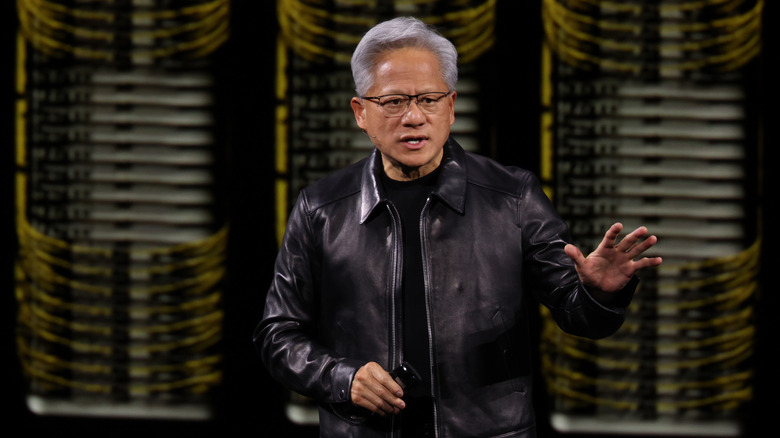
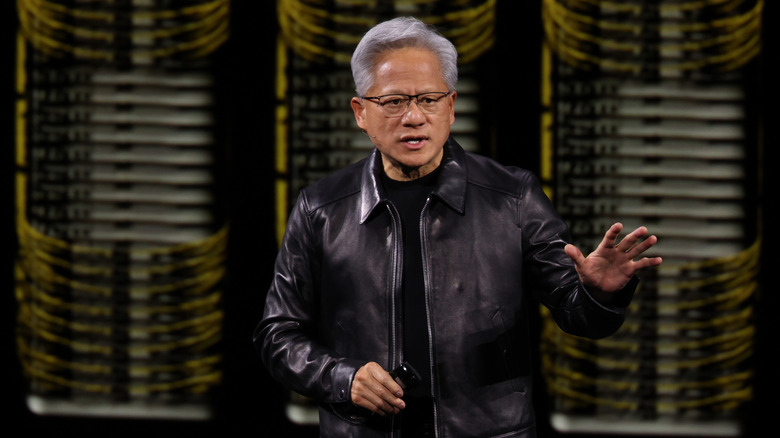
Nvidia CEO Jensen Huang pictured during a speaking event. Photo: Sean Gallup / Getty Images, via Engadget.
Nvidia Jensen Huang probe: what the board is investigating
Reports in The New York Times and the Financial Times said Huang had a relationship with Alice Huang, an executive at Megaspeed, a Singapore-based company that is a major buyer of Nvidia chips. The two are not related. According to the reports, US intelligence officials believe Alice Huang was recruited by China’s Ministry of State Security to gather intelligence, and that she targeted Jensen Huang.
Nvidia said on Sunday that a committee of its independent directors, working with outside independent counsel, would oversee the investigation. The board said it would examine all available information and that it regarded US national and economic security as paramount. It also said it had no reason to believe that national security or Nvidia’s secrets had been compromised.
The board’s statement, reported by Engadget’s report on the investigation, stressed that the inquiry would be thorough. That wording matters: it signals that the board is not treating the reports as a public-relations problem to be managed with a single denial, but as a governance matter that requires an independent look at the facts.
Who is Alice Huang, and what is she accused of?
Alice Huang is described in the reporting as an executive at Megaspeed, a Singapore company that buys Nvidia chips in large quantities. Singapore is a major hub for the trade in advanced semiconductors, and companies there sit at the intersection of US export controls, Chinese demand and the global AI supply chain.
The central allegation is that she was recruited by China’s Ministry of State Security — Beijing’s main civilian intelligence agency — to collect intelligence. US officials are said to believe she sought to cultivate a relationship with Jensen Huang. It is important to be clear about what has and has not been established: the reports describe an intelligence assessment and an allegation, not a criminal charge, and neither Nvidia nor the US government has publicly produced evidence that secrets changed hands.
That distinction is likely to shape the Nvidia Jensen Huang probe. The board’s inquiry will need to establish what contact took place, what information, if any, was shared, and whether any Nvidia material was exposed. Until that work is done, the affair itself and the alleged espionage are two separate questions, even though they are now unavoidably linked in public debate.
What Nvidia has said so far
Huang acknowledged the affair in a memo to staff on Sunday, according to Bloomberg, as Nvidia confirmed the investigation. In its statement, the board said: “Jensen fully supports the review and is committed to cooperating.” It added that the board had confidence in Huang and the company’s leadership team, and that it would provide further updates as appropriate.
Nvidia later published the email Huang sent to employees, in an update on November 8, 2026. The company’s public position, in short, is that the chief executive is cooperating, the board remains behind him, and the facts will be established by independent directors rather than by the executive team itself.
That structure is standard practice when a chief executive is personally involved in a matter under review, and the Nvidia Jensen Huang probe follows that pattern. An investigation led by independent directors, with outside counsel, is designed to give investors, regulators and employees confidence that the findings will not simply reflect the views of the person being investigated.
Why this matters for Nvidia, AI chips and US-China tech rivalry
Nvidia sits at the centre of the most sensitive technology rivalry in the world. Its graphics processors are the engines of modern AI, and Washington has spent years tightening export controls to limit China’s access to the most advanced chips. Any suggestion that a person close to Nvidia’s chief executive might have been acting for Beijing therefore lands in an already tense environment.
There are several reasons the story has drawn such a strong reaction:
- Access: A chief executive’s personal circle is, by definition, close to the company’s most sensitive decisions, from product roadmaps to customer relationships.
- Timing: Demand for AI chips is surging, and Nvidia’s commercial relationships — including with buyers in Asia — are under intense scrutiny. You can read more about the company’s expanding AI ambitions in our report on Nvidia’s talks to deepen its bet on AI startup Reflection AI.
- Trust: Customers and governments buy Nvidia technology partly on trust that its supply chain and its leadership are secure. An unresolved question about either can have commercial consequences.
- Precedent: How Nvidia handles this inquiry will be watched by other technology companies facing similar risks.
None of that means wrongdoing has been proved. But it explains why the board moved quickly to announce an independent investigation, rather than waiting for the reporting cycle to pass, and why the Nvidia Jensen Huang probe is being watched so closely.
What happens next
The Nvidia Jensen Huang probe is now in the hands of the committee of independent directors and its outside lawyers. They will gather documents, interview relevant people and assess whether any Nvidia information was compromised. Nvidia has said it will provide further updates as appropriate, which suggests the company does not expect to resolve the matter with a single statement.
Investors will be watching for three things: whether the inquiry finds any evidence that secrets were shared, whether it uncovers any wider security weaknesses at the company, and whether the board’s confidence in Huang survives the findings. Regulators in Washington may also take an interest, given the national-security dimension of the claims.
For Huang personally, the episode is already a serious reputational test. He built Nvidia from a graphics-chip maker into the world’s most valuable AI company, and his public image — the leather jacket, the keynote stages, the unmistakable presence — has become inseparable from the brand. An affair is a private matter; an affair with a person suspected of working for a foreign intelligence service is, in the board’s judgement, a matter for formal investigation.
The bottom line
The Nvidia Jensen Huang probe is at an early stage, and the most important facts are still unknown. What is known is that the board has taken the reports seriously enough to launch an independent investigation, that Huang has acknowledged the relationship and promised to cooperate, and that the company says it has no evidence so far of compromised secrets.
Until the independent directors report back, the story should be read with care: the allegations are serious, the evidence is still being examined, and the outcome will matter not only for Nvidia and its chief executive, but for confidence in the security of the technology at the centre of the AI age.