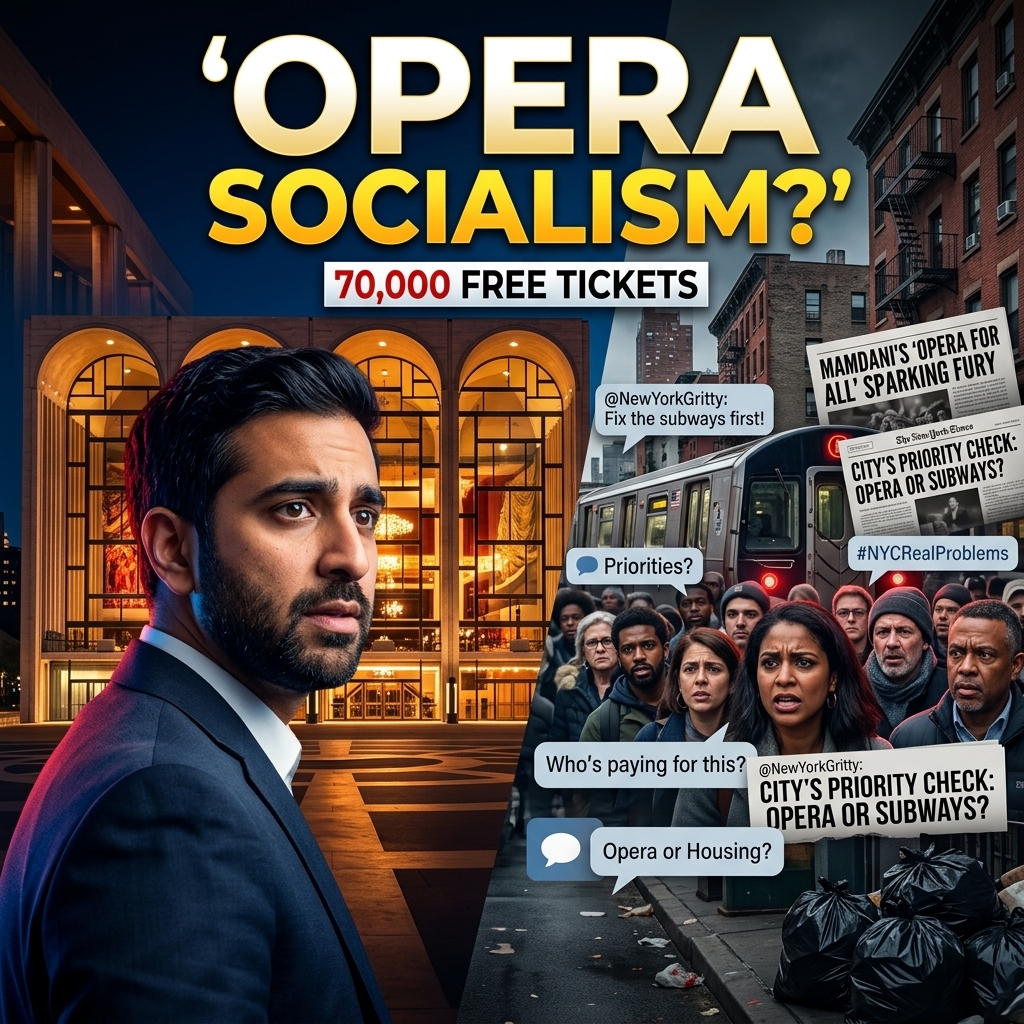
Mamdani Opera Socialism Sparks Online Fury Over NYC Priorities
Mamdani opera socialism became the latest lightning rod in New York City political discourse following Mayor Zohran Mamdani’s launch of “Opera for All,” a municipal program delivering 70,000 free Metropolitan Opera tickets to city residents throughout the 2026–27 season. Unveiled directly from the iconic stage of Lincoln Center alongside the cast of La Bohème, the initiative promises to distribute 10,000 tickets each month through a public lottery system. While city hall framed the giveaway as a landmark triumph for cultural equity and economic democracy, the announcement ignited immediate fury online. Critics, civic watchdog groups, and working-class residents quickly seized on the phrase “opera socialism” to mock what they view as a deeply out-of-touch administration handing out highbrow entertainment while fundamental municipal services continue to struggle under systemic pressure.
Also Read:
AI Boom Inflation: Why It Makes Price Stability Harder to Tame
The “Opera for All” Plan: What the City Announced
The “Opera for All” program represents an unprecedented municipal partnership between the City of New York and the Metropolitan Opera, allocating approximately 10 percent of the house’s total season inventory to everyday New Yorkers. Under the structure outlined by the Mayor’s Office, tickets will span every section of the Met, from the family circle to orchestra seats, for world-class productions such as Macbeth, La Bohème, and Lincoln in the Bardo.
To ensure the tickets reach residents outside typical opera-going demographics, eligibility is restricted to New Yorkers who have not purchased a Met Opera ticket since 2019. Distribution channels leverage key city agencies, including:
The New York City Housing Authority (NYCHA) for residents in public housing developments
The City University of New York (CUNY) for undergraduate and graduate students
NYC Public Schools for students, families, and educators
The Department for the Aging & Department of Social Services for senior citizens and low-income families
The New York Public Library system for neighborhood lottery access
“Opera is one of the greatest art forms we have, and there is no better place to experience it than the Metropolitan Opera House,” Mayor Zohran Mamdani stated during the press conference. “But art should not be reserved for those who can afford it. Economic justice means access to the things that make a city worth living in. Every New Yorker should have the opportunity to sit in these seats, hear these voices, and experience this stage, no matter what’s in their bank account.”
Online Backlash: Critics Rip “Opera Socialism” and City Priorities
Despite the administration’s lofty framing, social media platforms erupted in swift condemnation within hours of the announcement. Critics across the political spectrum questioned why the city leadership was prioritizing high-culture subsidies when daily life in New York remains plagued by pressing logistical and financial strains.
The term Mamdani opera socialism began trending on X (formerly Twitter) and Facebook as commenters weaponized the program to highlight the stark contrast between public giveaways and urban decay. Opponents argued that high-art patronage is a luxury the city cannot afford when core infrastructure demands urgent attention.
Primary Points of Public Criticism:
Misallocated Municipal Focus: Critics pointed out that while working New Yorkers face rising housing costs, subway delays, public safety concerns, and underfunded classrooms, the administration appears focused on providing free access to 19th-century European art forms.
Taxpayer and Fiscal Transparency: Questions quickly surfaced regarding municipal funding, administrative overhead, and city agency resources diverted to manage a 70,000-ticket lottery logistics engine.
Sarcastic Public Reaction: Commenters poured cold water on the initiative, leaving viral responses such as:
“I’m sure an evening at the opera will really boost reading scores in failing public schools.”
“Is high opera supposed to fix transit delays and clean up street trash?”
“At whose expense is this ‘freebie’ being delivered?”
Conservative commentators and political rivals seized on the giveaway as emblematic of broader democratic socialist governance, arguing that the administration favors performative “free stuff” over the rigorous, unglamorous work of running an efficient city government.
Defense of the Program: Cultural Equity and Civic Enrichment
In response to the mounting digital backlash, supporters of Mayor Mamdani and cultural advocacy groups mounted a vigorous defense of the initiative. Advocates argued that working-class New Yorkers deserve more than mere baseline survival; they deserve access to the rich cultural heritage that makes New York City a global cultural capital.
Cultural Affairs Commissioner Diya Vij emphasized that Lincoln Center has historically felt geographically and economically inaccessible to millions of residents living just a subway ride away. Supporters noted that cultural institutions located on city-owned land or receiving municipal support carry a civic obligation to serve the entirety of the populace, not merely wealthy patrons and tourist demographics.
Furthermore, administration allies pointed out that similar low-cost or free access initiatives already exist across museums, parks, and athletic events in major cities worldwide, arguing that extending this paradigm to grand opera breaks down historic class barriers.
Side-by-Side Comparison: Perspectives on “Opera for All”
| Issue Dimension | Critics’ Perspective (“Opera Socialism”) | Administration & Supporters’ Perspective |
| Primary City Focus | Basic services (sanitation, public safety, transit, housing) are neglected. | Cities must offer both functional infrastructure and cultural enrichment. |
| Fiscal Impact | Diverts agency resources and public attention from pressing budget deficits. | Expands access through public-private cultural partnerships without extra tax hikes. |
| Target Audience | Low demand among working-class families compared to immediate cost-of-living relief. | Democratizes elite spaces for 70,000 residents previously priced out. |
| Civic Value | Viewed as a performative policy distraction (“bread and circus”). | Viewed as a tangible step toward cultural democracy and economic justice. |
The Broader Political Implications for Mayor Mamdani
The debate over Mamdani opera socialism underscores a deeper ideological divide in New York City politics. For Mayor Mamdani’s base, policies that redistribute access to elite spaces represent the fulfillment of campaign promises centered on universal public goods. For opponents, however, the initiative reinforces narrative attacks that socialist policy priorities place ideological symbolism above practical municipal management.
As the first monthly ticket lottery approaches, all eyes remain on whether New Yorkers embrace the ticket giveaway or if the political fallout will continue to cloud the administration’s broader legislative agenda.
Frequently Asked Questions (FAQs)
What is the central controversy surrounding Mamdani’s “Opera for All” program?
The controversy stems from Mayor Zohran Mamdani’s decision to launch a program giving away 70,000 free Metropolitan Opera tickets. Critics condemn the effort as “opera socialism,” arguing that the city administration should focus on basic infrastructure, public safety, and public education rather than subsidizing high culture.
How does the Metropolitan Opera ticket lottery work?
The city will release 10,000 free tickets per month via a public lottery system for the 2026–27 season. Tickets cover every section of the house and are distributed through partnerships with public agencies like NYCHA, CUNY, NYC Public Schools, and the New York Public Library.
Who is eligible to receive free opera tickets under the initiative?
The program specifically targets New York City residents who have not purchased a ticket to the Metropolitan Opera since 2019, prioritizing first-time and working-class attendees.
Disclaimer
This article is intended solely for news reporting, commentary, and informational purposes based on public announcements and online responses. It does not reflect financial or legal advice.