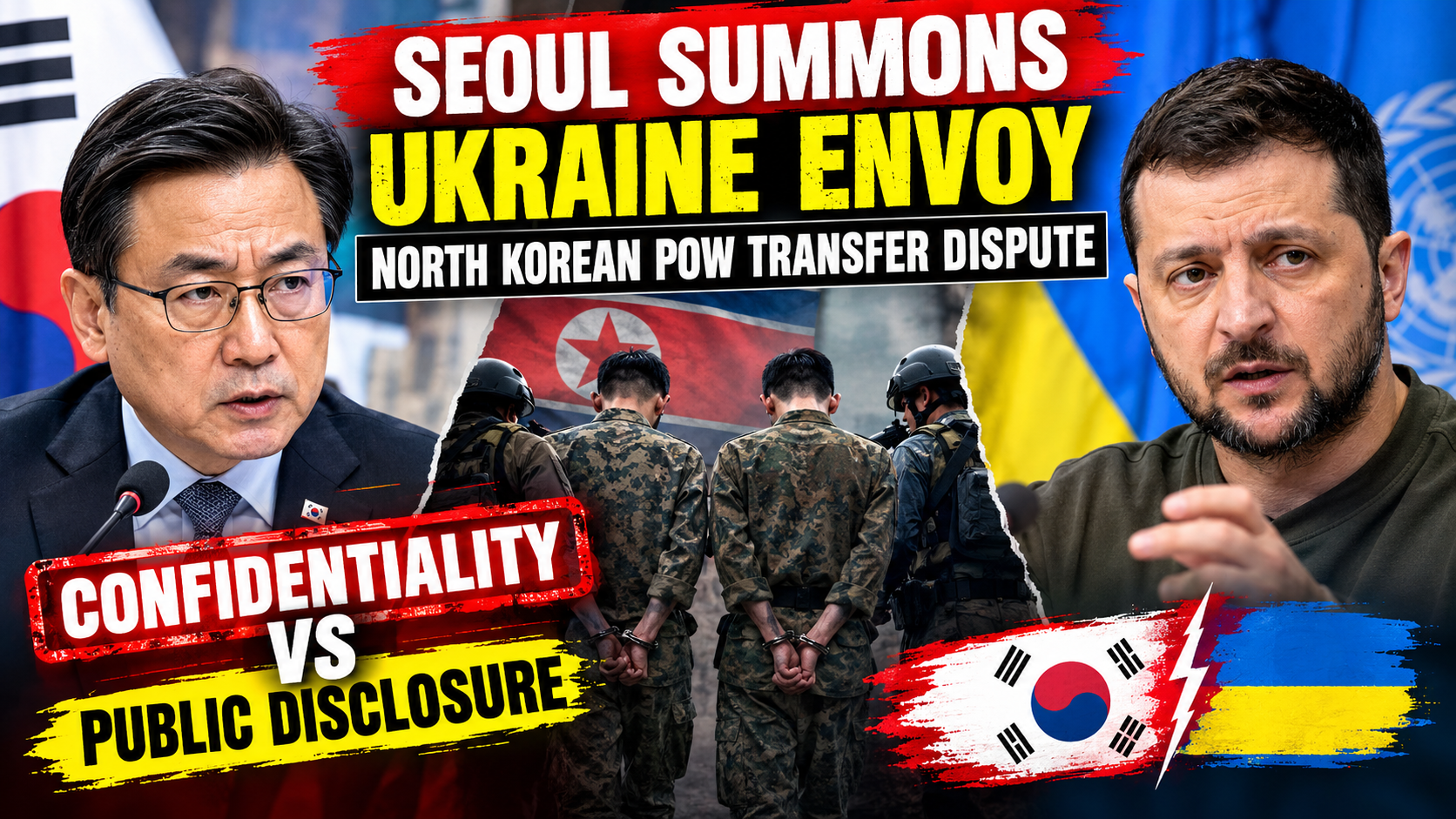
Seoul Summons Ukraine Envoy North Korean POW Transfer Dispute
The diplomatic rift between South Korea and Ukraine widened significantly as Seoul summons Ukraine envoy North Korean POW intelligence disputes to the forefront of international diplomacy. The South Korean Ministry of Foreign Affairs called in Kyiv’s acting ambassador, demanding a formal explanation and an official apology following Ukrainian President Volodymyr Zelenskyy’s public revelation that two captured North Korean soldiers had been transferred to South Korea.
The dispute centers on what South Korean officials assert was a strict, bilateral confidentiality agreement intended to protect sensitive intelligence channels, ensure operational security, and safeguard the physical safety of the transferred combatants. The sudden public disclosure at the United Nations General Assembly has triggered severe friction between two nations that had previously maintained quiet strategic alignment against Russia’s war effort.
Also read:
Trump Proposed Space Academy Astronauts Engineers Framework: Full Analysis
1. The Core Dispute: Confidentiality vs. Public Disclosure
According to statements released by South Korea’s Foreign Ministry, First Vice Foreign Minister Park Yoon-joo delivered a stern protest to Ukrainian Acting Ambassador Andrii Vieshkin in Seoul. South Korea contends that both governments had explicitly agreed to keep the custodial transfer of the two North Korean soldiers entirely confidential.
             [ Capture of DPRK Troops on Eastern Front in Ukraine ]
                                       |
                                       v
             [ Bilateral Agreement: Custodial Transfer to Seoul ]
                   (South Korea Asserts Non-Disclosure NDA)
                                       |
         +-----------------------------+-----------------------------+
         |                                                           |
         v                                                           v
[ Kyiv's UN Speeches & Statements ]             [ Seoul's Confidentiality Stance ]
* Public disclosure by President Zelenskyy       * Protection of POW family safety in DPRK
* Public denial of NDA existence by Kyiv         * Intelligence security & defector protocol
         |                                                           |
         +-----------------------------+-----------------------------+
                                       |
                                       v
               [ Escalation: Diplomatic Summons & Apology Demand ]
               * First Vice Foreign Minister Park Yoon-joo summons
                 Acting Ambassador Andrii Vieshkin in Seoul
The friction was compounded when Ukrainian presidential aides publicly denied the existence of any formal non-disclosure agreement regarding the transfer. South Korean diplomats emphasized that Kyiv’s public denial undermines mutual trust and directly threatens ongoing bilateral security cooperation.
2. Comparative Stances: South Korea vs. Ukraine
The divergence in national priorities highlights differing strategic imperatives in handling North Korean combatants captured on Ukrainian battlefields.
| Dimension | South Korea (Rationals & Demands) | Ukraine (Actions & Responses) |
| Confidentiality Protocol | Insists a binding non-disclosure agreement was established prior to the transfer. | Denies entering into a formal secrecy pledge regarding the handover. |
| Primary Motivation | Operational security, legal processing, and protecting defectors’ families in Pyongyang. | Demonstrating Russian reliance on foreign troops to international bodies (UN). |
| Official Reaction | Summoned acting ambassador; demanded a formal apology and official explanation. | Promised to convey Seoul’s concerns to top officials in Kyiv. |
| Strategic Concern | Compromised intelligence debriefings and heightened DPRK-Russia military hostility. | Securing global support and spotlighting multilateral defense ties. |
3. Intelligence Debriefing and Constitutional Jurisdiction
Under the Constitution of the Republic of Korea (ROK), all individuals originating from the Korean Peninsula—including citizens of North Korea—are recognized as legal citizens of South Korea. Consequently, when North Korean military personnel express a desire to defect or relocate to the South upon capture, Seoul views their intake as a matter of constitutional duty and domestic law.
However, publicizing these transfers introduces severe complications:
Retaliatory Risks: Public identification of North Korean prisoners risks immediate state-sponsored reprisal against their remaining family members in North Korea.
Intelligence Exposure: Premature disclosures disrupt ongoing interrogations regarding North Korean tactics, radio protocols, and military integration within Russian command structures.
Precedent for Future Captives: Future North Korean soldiers captured in Europe may hesitate to surrender or request transfer if non-disclosure cannot be guaranteed.
4. Broader Geopolitical Impact on Defense and Aid Policy
This diplomatic impasse arrives at a delicate moment in South Korea’s foreign policy calculations. While Washington and NATO allies have encouraged Seoul to expand its indirect and direct military assistance to Ukraine, South Korea has maintained a cautious approach governed by domestic legal constraints and diplomatic considerations regarding Moscow.
  Jan - Aug 2026            Mid-Sept 2026              Sept 28, 2026             Future Outlook
+-----------------+      +-----------------+      +-----------------+      +-----------------+
| Capture of DPRK |  ->  | UN General      |  ->  | Formal MFA      |  ->  | Intelligence    |
| Soldiers in     |      | Assembly Address|      | Summons of      |      | Protocol Review |
| Ukraine         |      | by Zelenskyy    |      | Ukrainian Envoy |      | & Aid Assessment|
+-----------------+      +-----------------+      +-----------------+      +-----------------+
By publicly broadcasting the handover during a high-profile international forum, Kyiv sought to emphasize the expanding international footprint of the conflict. Conversely, South Korea views the uncoordinated announcement as a breach of diplomatic etiquette that complicates its intelligence operations and domestic security posture.
5. Strategic Outlook for Bilateral Relations
While both nations share a strategic interest in countering North Korean military deployment in Eastern Europe, restoring diplomatic alignment will require careful working-level negotiation. South Korea’s Foreign Ministry has indicated that further measures could be evaluated depending on Kyiv’s formal response to the demand for an apology.
For intelligence sharing to continue smoothly, future agreements regarding captured foreign combatants will likely require stricter verification protocols, clear written intelligence-handling guidelines, and explicit consensus before any public disclosures.
Frequently Asked Questions (FAQs)
Why did South Korea summon Ukraine’s acting ambassador?
South Korea summoned Ukraine’s top diplomat in Seoul after Ukrainian President Volodymyr Zelenskyy disclosed at the UN that Ukraine had handed over two captured North Korean soldiers to South Korea, breaching an alleged non-disclosure agreement.
What is South Korea’s stance on North Korean POWs?
Under South Korea’s constitution, North Koreans are recognized as citizens of the Republic of Korea. When captured North Korean soldiers indicate a desire to resettle in South Korea, Seoul processes them through legal and intelligence channels while seeking secrecy to protect their families in North Korea.
Did Ukraine admit to breaking a secrecy agreement?
No. Ukrainian officials denied the existence of a formal confidentiality agreement regarding the transfer, leading South Korea to accuse Kyiv of making misleading statements that damage mutual trust.
What has South Korea demanded from Ukraine?
First Vice Foreign Minister Park Yoon-joo demanded a formal explanation, an official apology, and measures to ensure that similar uncoordinated disclosures do not recur.
Disclaimer
This article is an independent geopolitical analysis compiled from official diplomatic statements, foreign ministry readouts, and international news briefings. It is published strictly for educational, informational, and analytical purposes.