The Great US Fall Weather Split: Crisp Northern Breezes Face Off Against Lingering Southern Heatwaves
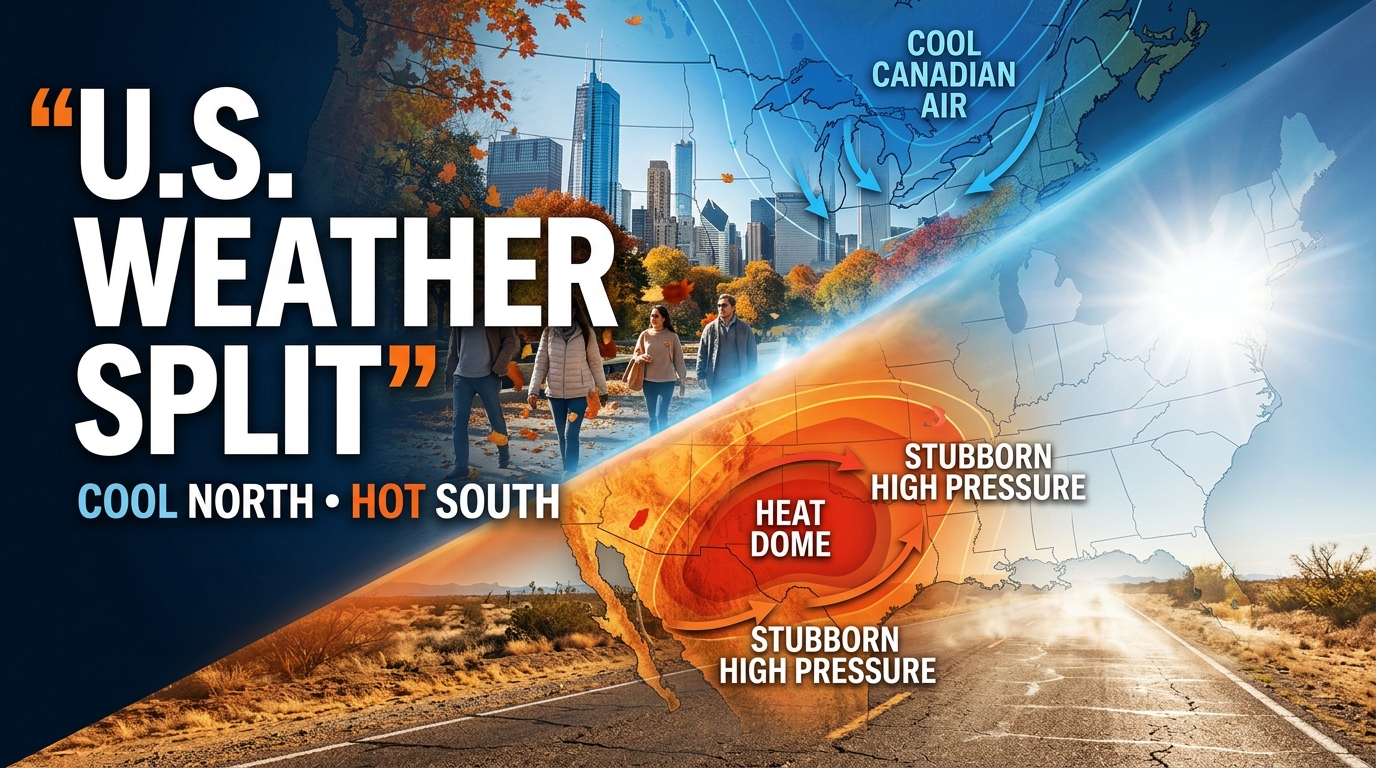
The US fall weather split has officially taken center stage as the country transitions into autumn, presenting a dramatic meteorological tug-of-war. While residents in northern and eastern metropolitan hubs are breaking out light jackets and enjoying comfortable, crisp days, populations across the South and Southwest are continuing to sweat through stubborn, late-summer heatwaves. This stark geographical divide highlights an increasingly complex transition season driven by shifting atmospheric jet streams, persistent high-pressure ridges, and regional climate patterns that define modern autumns.
Also read:
Congressional Control Debates & Cost-of-Living Focus: Midterm Battlegrounds
The Northern and Eastern Relief: Crisp Air and Comfortable 60s
In northern and eastern corridors—stretching from the bustling streets of New York City to the windy expanses of Chicago—the arrival of autumn has felt textbook. Temperatures have comfortably settled into the crisp 60s, offering a welcome respite from the humid dog days of August and September.
The Science Behind the Chill: Cooler Canadian air masses are beginning to push southward, displacing stagnant summer humidity and establishing a stable, refreshing atmosphere.
Lifestyle Shifts: Outdoor dining, apple picking, and early foliage viewing are in full swing as communities embrace the refreshing drop in humidity and pleasant daylight hours.
Energy Impact: Residential cooling demands have plummeted across the Northeast and Midwest, providing immediate relief to local power grids and household utility bills.
The Southern and Southwestern Crucible: Summer Refuses to Yield
Conversely, the story is entirely different south of the Mason-Dixon line and across the arid desert landscapes. States like Texas and major metropolitan areas like Phoenix are enduring prolonged heatwaves, with afternoon thermometers regularly surging well into the 90s.
Persistent Ridging: High-pressure atmospheric domes continue to trap hot air over the South and Southwest, effectively blocking incoming cold fronts and precipitation.
Health and Safety: Cities remain under heat advisories, emphasizing hydration, shade seeking, and energy conservation as air conditioning units run nonstop to combat the relentless warmth.
Agricultural Strain: Prolonged warmth coupled with lingering dry conditions continues to stress local agriculture, livestock, and critical water reservoirs throughout the region.
Looking Ahead: What to Expect Next
Meteorologists note that this transitional split is characteristic of early-stage seasonal shifts, but transitioning climate dynamics signal eventual changes. As October progresses, long-range models suggest that the intense battle between northern chill and southern warmth will gradually give way to broader atmospheric shifts, potentially paving the way for a more unified weather pattern heading toward winter. Understanding the mechanics of the US fall weather split helps communities prepare for rapid fluctuations in temperature and regional climate anomalies.
Frequently Asked Questions
Why is there such a big temperature difference across the US right now? Strong high-pressure ridges are locking heat over the South and Southwest, while early cold fronts from the north are successfully penetrating the Great Lakes and Northeast.
When will the heatwave end in Texas and Phoenix? Relief usually arrives later in October as upper-level atmospheric troughs begin breaking down the stubborn southern ridge systems.
Is this weather split normal for autumn? While regional variations always exist, climate persistence and extended drought dynamics have amplified these extreme contrasts in recent years.
Conclusion
The current US fall weather split serves as a vivid reminder of the vast and diverse geographic microclimates found across the United States. Whether you are sipping hot cider in a brisk northern breeze or running the air conditioner under a blazing southern sun, tracking these shifts remains essential for daily planning and long-term climate awareness.
Official Sources & Trust Links: