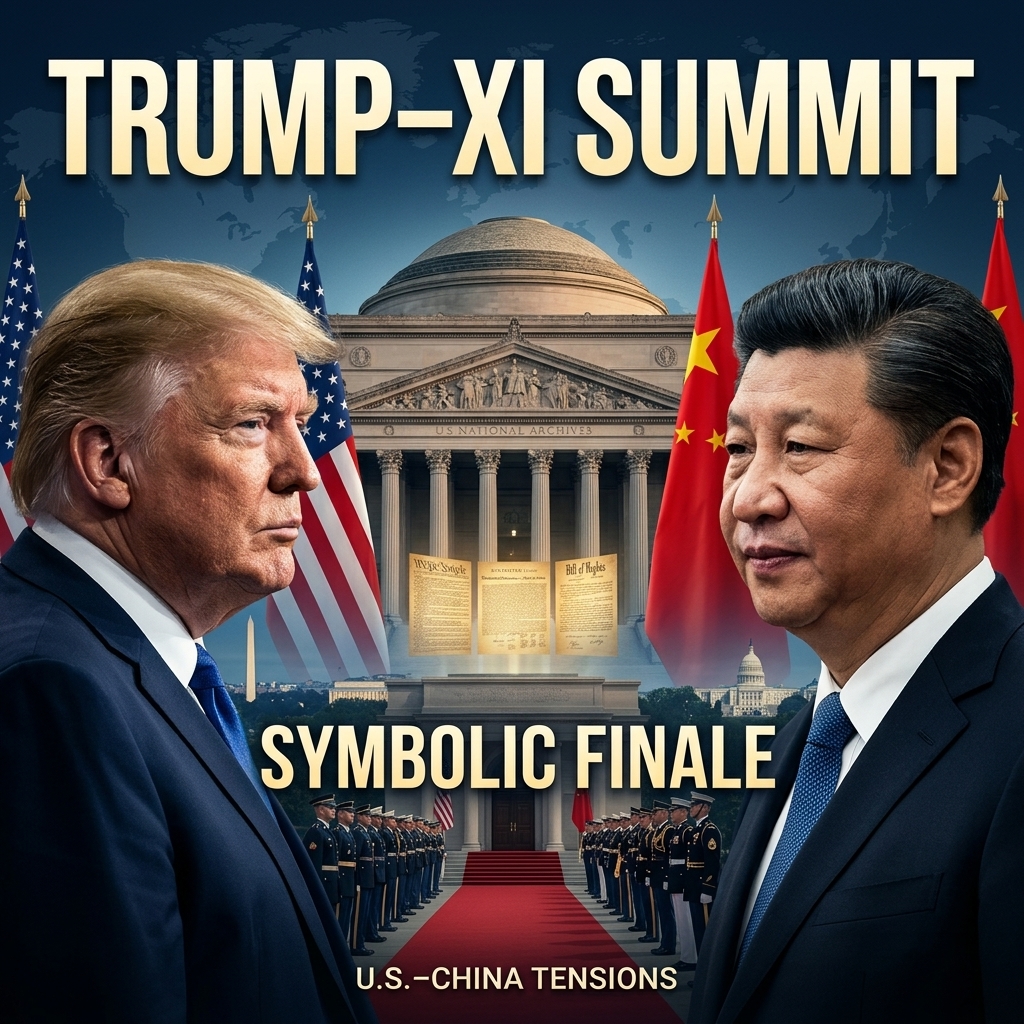
Xi Caps Trump State Visit with Symbolic Stop at National Archives
In a carefully stage-managed conclusion to three days of high-stakes diplomacy, Chinese President Xi Jinping and U.S. President Donald Trump capped their Washington summit with a visit to the National Archives. As Xi caps Trump state visit with symbolic stop among America’s foundational texts, both leaders sought to project an image of strategic stability despite fundamental disagreements over trade, artificial intelligence, and regional security.
The state visit—marking Xi’s first return to the U.S. capital in over a decade—was defined by lavish hospitality, military pageantry, and symbolic gestures aimed at softening the tone between the world’s two largest economies. However, beneath the ceremonial warmth lay a summit characterized by firm strategic boundaries and an absence of major policy breakthroughs.
Also Read:
US Fall Weather Split 2026: Northern Crisp Air vs. Southern Heatwaves
1. The Finale: Viewing Founding Charters at the National Archives
Before departing Joint Base Andrews, President Xi joined President Trump and First Lady Melania Trump for a private viewing of America’s most historic documents. Hosted at the National Archives, the tour highlighted “The American Story” exhibit, organized as part of the country’s 250th anniversary celebrations.
The two heads of state inspected original drafts of the Declaration of Independence, the U.S. Constitution, and the Bill of Rights. Trump also highlighted early artifacts documenting initial maritime trade and diplomatic contacts between the United States and Qing-dynasty China dating back to the late 18th century.
Symbolic Alignment: Trump emphasized historical commercial ties, noting that early maritime merchants set a precedent for modern economic exchange between the two nations.
Diplomatic Messaging: Chinese officials viewed the historic display as a recognition of mutual respect and long-term historical symmetry.
Final Send-Off: The archives tour followed an intimate tea hosted by Donald and Melania Trump at the White House for Xi and his wife, Peng Liyuan, prior to their official airport departure.
2. Summit Overview: Pomp vs. Policy Substance
Throughout the summit, the Trump administration extended a grand welcome. President Trump personally greeted Xi on the tarmac at Joint Base Andrews—a gesture not extended to a foreign head of state by an American president at the base since John F. Kennedy met British Prime Minister Harold Macmillan in 1962.
| Summit Event | Key Highlights | Strategic Purpose |
| Airport Arrival (Joint Base Andrews) | 21-gun salute, red carpet, military flyovers, personal greeting by President Trump. | Display maximum personal respect and reciprocate Xi’s prior hospitality in Beijing. |
| White House Arrival & Bilateral Talks | Guard of honor review in Rose Garden, 90-minute closed-door summit meeting. | Direct discussion on AI governance, trade tariffs, Taiwan, and foreign conflicts. |
| Black-Tie State Dinner | Attended by top American tech CEOs (Elon Musk, Tim Cook, Sam Altman, Jensen Huang, Jeff Bezos, Sundar Pichai). | Highlight U.S. private sector engagement and global technology supply chains. |
| National Archives Tour | Private viewing of U.S. founding documents and early Sino-American trade artifacts. | Symbolic closure emphasizing historical stability and bilateral heritage. |
3. Core Friction Points: AI, Trade, and Red Lines
While both leaders repeatedly reaffirmed their commitment to avoiding military confrontation, private sessions revealed persistent fault lines.
                    [ 2026 Trump-Xi Washington Summit ]
                                     |
         +---------------------------+---------------------------+
         |                                                       |
         v                                                       v
[ Public Optics & Pomp ]                          [ Strategic Friction Points ]
* Airport Tarmac Greeting                         * AI & "Super Intelligence" Controls
* Tech CEO State Dinner                           * Taiwan Strait Red Lines
* National Archives Tour                          * Tariff & Trade Mechanism Deficits
         |                                                       |
         +---------------------------+---------------------------+
                                     |
                                     v
                 [ Shared Commitment to Avoid Conflict ]
Artificial Intelligence & “Super Intelligence”
President Trump framed artificial intelligence—which he referred to as “Super Intelligence” (SI)—as a critical domain for potential bilateral cooperation. Conversely, President Xi drew a firm line, insisting that advanced AI systems must remain “always under human control” and urging guardrails against destabilizing military deployment.
Taiwan and Regional Security
During the closed-door bilateral meetings, President Xi reiterated Beijing’s stance on Taiwan, urging Washington to adhere strictly to existing agreements and firmly oppose Taiwanese independence. While the White House maintained its traditional policy framework, no formal joint communique was issued.
Trade Mechanism and Tariffs
Although President Trump touted progress under bilateral trade mechanisms and cited expanding market access for American agricultural exporters, no definitive deal was signed regarding sweeping tariff reductions. Discussions centered instead on establishing predictable communication channels to manage economic friction.
4. Global Takeaways and the Road Ahead
The Washington summit demonstrated that while the United States and China remain fierce economic and technological competitors, both leaderships recognize the necessity of top-level dialogue. By focusing heavily on personal diplomacy and shared historical references, the meeting established a baseline for managing bilateral tensions over the coming years.
As President Xi’s aircraft departed for Beijing, diplomats noted that the true test of the summit will depend on whether working-level groups can turn high-level goodwill into actionable agreements on technology standards, trade flows, and regional security protocols.
Frequently Asked Questions (FAQs)
Why did President Xi visit the National Archives before leaving Washington?
President Xi visited the National Archives alongside President Trump to view foundational U.S. documents and historical artifacts showcasing early Sino-American trade ties, serving as a symbolic finale to his state visit.
What were the primary outcomes of the summit?
The summit focused primarily on establishing personal rapport, managing competition, and preventing conflict. While both leaders discussed trade, AI governance, and geopolitical crises, the meetings ended without major formal breakthroughs.
Which technology leaders attended the White House state dinner?
The state dinner included prominent technology leaders such as Apple Chairman Tim Cook, OpenAI CEO Sam Altman, Nvidia CEO Jensen Huang, Tesla/SpaceX CEO Elon Musk, Amazon founder Jeff Bezos, and Google CEO Sundar Pichai.
How did President Trump welcome President Xi to the United States?
President Trump provided an airport welcome at Joint Base Andrews, featuring a 21-gun salute, military honor guards, B-1 bomber flyovers, and a personal tarmac greeting.
Disclaimer
This article is an independent news report compiled from public diplomatic readouts, verified media briefings, and open-source press reporting. It is intended strictly for educational, informational, and journalistic purposes.