
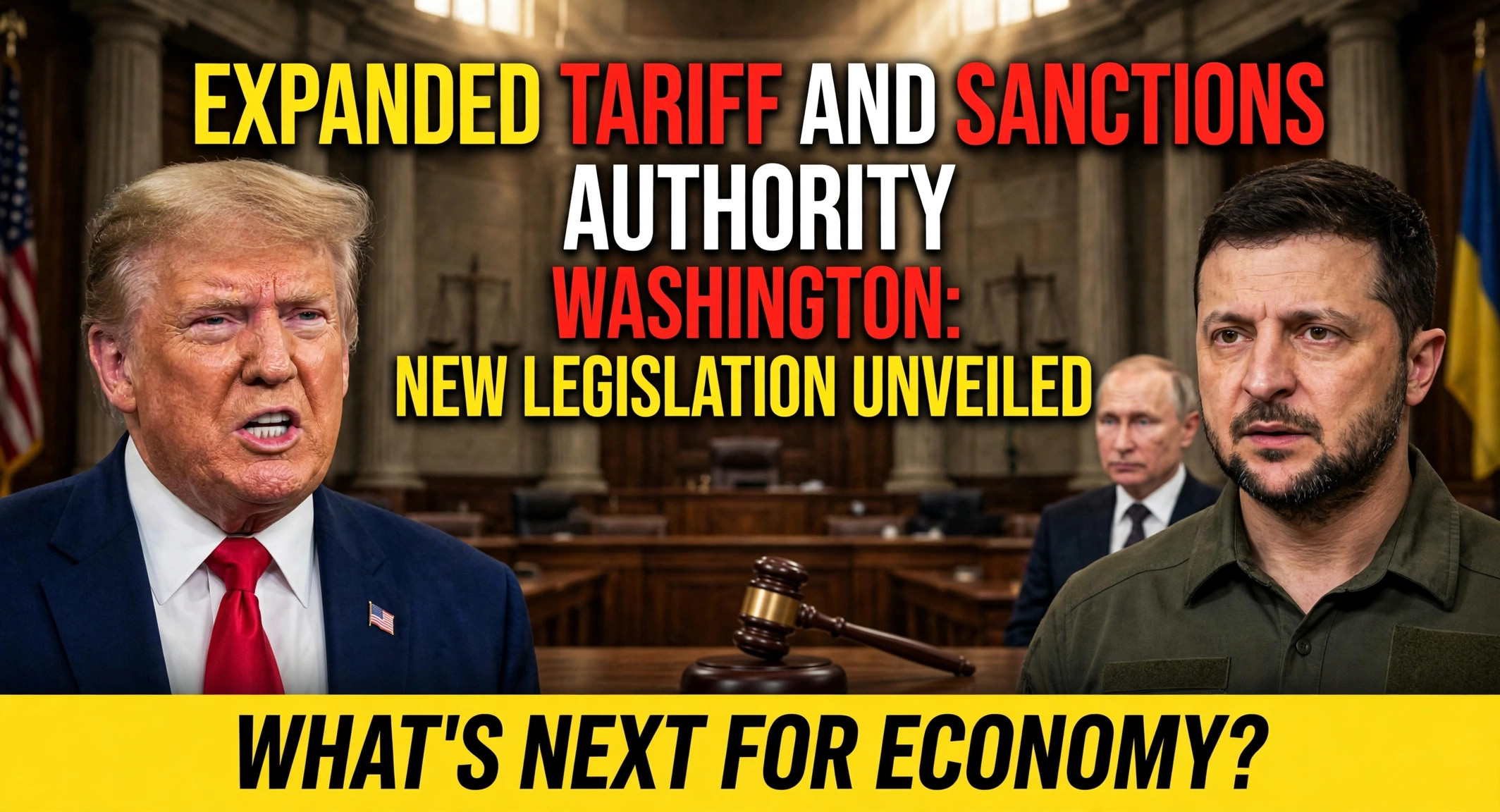
Expanded Tariff and Sanctions Authority Washington: New Legislation Unveiled
Washington has just dramatically reshaped its economic arsenal. President Donald Trump signed the Lindsey O. Graham Sanctioning Russia and Iran Act of 2026 — a bipartisan bill that grants expanded tariff and sanctions authority to the White House. The law introduces sweeping financial measures and gives the president discretionary power to levy tariffs of up to 100% on third-party nations buying Russian energy.
Also read:
Treasury Yield Surge: What the 5% Rate Means for Your Portfolio & Loans
This guide breaks down what the new legislation contains, why it was passed, how it hits global economies, and what critics and supporters are saying about this sharp turn in American trade power.
Inside the Legislation: Key Pillars of the 2026 Act
Named in honor of the late Senator Lindsey Graham — who spent his final months championing the measure — the law builds enforcement machinery to isolate Moscow financially while extending restrictions on Tehran.
- Expanded Sanctions on Russia: The act targets high-ranking Russian officials, critical banking systems, and the financial institutions aiding the Kremlin.
- The “Shadow Fleet” Crackdown: It introduces explicit penalties aimed at the illicit network of oil tankers Russia uses to dodge Western export caps.
- Extended Iran Sanctions: To secure broader political alignment during negotiations, the bill extends the Iran Sanctions Act through 2031, targeting its energy and weapons sectors.
- Discretionary Tariff Power: The executive branch gains statutory authority to impose tariffs of up to 100% on goods from the top five global importers of Russian crude oil or natural gas.
Global Repercussions: Who Is Affected?
The core intent is to punish Moscow for its ongoing war in Ukraine — but the fallout stretches across international waters. Major economies that kept buying Russian energy, most notably China and India, now sit directly in the crosshairs of potential American trade action.
- Energy Security vs. Trade Retaliation: Nations like India have consistently defended their energy buying as vital to protecting domestic populations from volatile global energy markets.
- The Threat of 100% Tariffs: The law doesn’t trigger maximum tariffs automatically, but it hands the White House an enormous regulatory stick. Trade analysts warn the tool could steer bilateral negotiations and reshape global supply chains.
- Exemptions: The text carves out countries whose Russian natural gas imports account for less than 15% of total exports — provided they’ve taken significant steps to reduce that dependence.
Domestic Political Debate and Bipartisan Tensions
Getting the bill passed wasn’t easy. It moved through the Senate comfortably enough, but the House vote exposed deep partisan divisions over handing this much economic power to one office.
Supporters championed the bill as an indispensable weapon to financially choke the Russian war machine. Ukrainian leadership praised it as an exceptionally powerful tool for accountability.
Democratic opponents, meanwhile, sounded alarms over the expanded executive authority. Handing the White House unchecked tariff powers, they argue, bypasses congressional oversight — and risks pushing inflationary pressure onto ordinary American households already absorbing cumulative tariff costs.
Frequently Asked Questions (FAQs)
1. What is the official name of the new legislation?
It’s officially titled the Lindsey O. Graham Sanctioning Russia and Iran Act of 2026.
2. Does the bill automatically impose a 100% tariff on countries buying Russian oil?
No — nothing is automatic. The legislation grants the executive branch the statutory authority and discretion to apply tariffs of up to 100% on the top five importers of Russian crude oil or natural gas.
3. Which countries are most vulnerable to these new tariff provisions?
The big importers of Russian petroleum and gas — prominently China and India — face the highest exposure under the legislation’s target parameters.
4. Are there any exemptions included in the law?
Yes. Nations importing less than 15% of their natural gas from Russia, and actively working to cut those volumes, can qualify for exemptions.
5. What are the domestic criticisms of the bill?
Critics say expanding executive tariff powers without firm congressional guardrails concentrates too much economic control in the White House — and could ultimately raise costs for American consumers.
Conclusion
The Lindsey O. Graham Sanctioning Russia and Iran Act of 2026 is a decisive turning point in Washington’s economic statecraft. By fusing foreign policy sanctions with aggressive secondary tariff authority, the U.S. government has raised the stakes for every global trade partner. Whether the law changes foreign behavior or mainly sparks fresh diplomatic friction comes down to one thing: how cautiously — or aggressively — the executive branch wields its new powers.
1 thought on “Expanded Tariff and Sanctions Authority Washington: New Legislation Unveiled”