
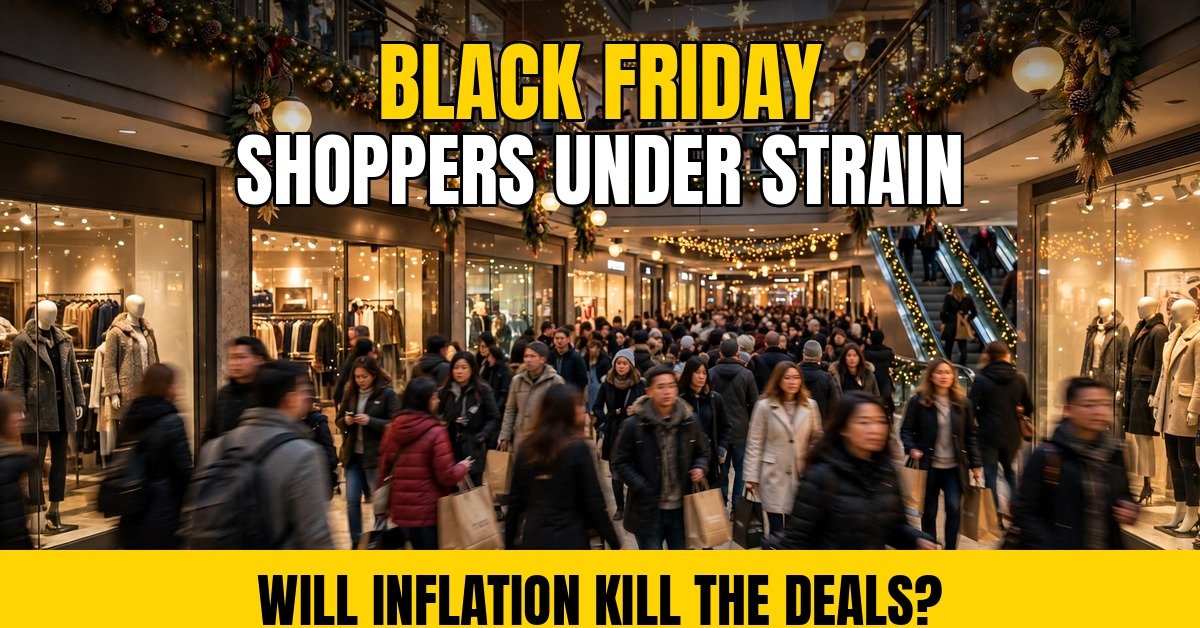
Black Friday shoppers are heading into the biggest shopping weekend of the year with a mix of determination and worry. Neither high fuel prices nor stubborn inflation are expected to stop Americans from spending robustly on Black Friday, according to several economic forecasts. But much of the expected sales growth this year is not people buying more stuff. It is people paying more for the same stuff.
Holiday spending is seen topping last year’s figures by 4%-6%, several forecasts show. Most of that gain, though, will be attributable to inflation, which is running at 3.8% — about a percentage point higher than in each of the last two years.
- Black Friday shoppers face a pricier holiday season
- Shoppers are cutting back on extras, not on gifts
- Most Americans still plan to take part
- A stock market wobble could cool the top end
- Toy prices jump as parents hunt for deals
- AI could change when the best deals land
- Sources and Resources
- Frequently Asked Questions
- Conclusion
Black Friday shoppers face a pricier holiday season
The National Retail Federation sees November-December holiday retail sales rising 4.2% year-over-year, to just above $1 trillion. The Mastercard Economics Institute and EY Parthenon each forecast sales to rise more than 5%. And final results often beat pre-holiday estimates, as shoppers who hold back early tend to open their wallets as Christmas gets closer.
Still, the backdrop is far from comfortable. Consumer sentiment remains shaky. A November survey by the National Retail Federation found 82% of consumers are taking steps to manage holiday costs, like buying less expensive gifts.
The politics of the cost of living have already had consequences. This month, voters punished US President Donald Trump for an Iran War that has pushed the cost of living higher, handing Democrats sweeping electoral victories.
Shoppers are cutting back on extras, not on gifts
Los Angeles resident Felicia Cox, 50, a sales representative, said her holiday spending will be roughly stable — but inflation is changing how she thinks about every gift. “I want to get more gifts that people will actually use or need,” said Cox, while browsing in an L.A. Marshalls last week. “I feel like people aren’t able to afford as much stuff.”
She is far from alone. Black Friday shoppers in middle- and lower-income households — who have been trading down for months — were more likely than wealthy ones to spend less, according to the Kearney survey. The split between households that can absorb higher prices and those that cannot is shaping this season more than any single deal.
“People like to spend during the holidays,” said Katie Thomas, who leads the Kearney Consumer Institute, even when there is a “persisting undercurrent of stress.” That tension — wanting to celebrate properly while watching every dollar — is the story of this Black Friday.
Most Americans still plan to take part
Despite the strain, participation is expected to be strong: some 87% of 1,200 consumers surveyed by Deloitte in October planned to take part in the five-day shopping period from Thanksgiving through Cyber Monday, November 30 — the highest in a decade.
That figure suggests Black Friday shoppers are not staying home. They are showing up, but shopping differently: hunting deals earlier, comparing prices, and swapping big-ticket gifts for smaller, practical ones. The crowds may look familiar to Black Friday shoppers who have done this for years. The receipts underneath them will look different.
Retailers have noticed the shift. Target, Dollar Tree and Kohl’s have all pointed to belt-tightening during recent earnings calls. Kohl’s CEO Michael Bender on Tuesday cited an “increasingly choiceful” consumer that is “looking to stretch every dollar.”
A stock market wobble could cool the top end
One more cloud hangs over the wealthiest shoppers: holiday forecasts mostly predated the recent stock market correction that followed the midterms, turmoil at chipmaker Nvidia, and mounting concerns around an AI bubble. The decline could dampen the wealth effect that has seen affluent shoppers splurge on gadgets and accessories, UBS analysts said in a note on Tuesday.
High earners have carried a large share of recent retail growth, spending freely on electronics, accessories and premium goods while lower-income households tightened their belts. A weaker market could narrow that gap from the top down, leaving retailers leaning harder on discounts — which could hand Black Friday shoppers better deals late in the season.
Toy prices jump as parents hunt for deals
Nowhere is the price squeeze clearer for Black Friday shoppers than in the toy aisle. Toy prices have risen 13.2% since the start of the year, driven by higher input costs, particularly from petrol derivatives like plastic. The jump has pushed Barbie maker Mattel this month to cut its annual forecast as consumers balk at higher costs.
Squishy NeeDoh toys were selling for $24.99 on Amazon in October, nearly triple the price a year earlier on hot demand, according to e-commerce marketing platform Omnisend. Trading cards are an unlikely bright spot: Best Buy and Target have both flagged cards — including Pokemon and Magic: The Gathering products — as a key growth driver.
Toy maker Learning Resources Inc — a plaintiff in lawsuits that overturned Trump’s tariffs — is seeing demand roughly flat, said CEO Rick Woldenberg, though he added it is hard to predict demand before Black Friday. “People can’t shop until they have their turkey,” Woldenberg said.
AI could change when the best deals land
AI could also scramble the year’s shopping dynamics. As shoppers use AI to find bargains or even complete purchases, and retailers become increasingly adept at altering price quickly through AI, the deepest discounts could come closer to Christmas.
That changes the old Black Friday playbook: buy on the day, or miss out. This year, patience may pay. “My advice to shoppers is to be patient. Don’t jump on the first deal you see,” said Ryan Orabone, a consultant at Spaulding Ridge.
For Black Friday shoppers, the message is mixed but clear enough. The deals are real and spending will likely beat last year on paper. But with inflation at 3.8% and budgets under pressure, the smartest move this weekend may be Cox’s: buy less, buy useful, and make every dollar count.
Sources and Resources
- Reuters: Cautious consumers gear up for Black Friday as inflation woes bite — https://www.reuters.com/business/retail-consumer/cautious-consumers-gear-up-black-friday-inflation-woes-bite-2026-11-27/
- National Retail Federation — holiday retail sales forecast and consumer survey
- Deloitte — holiday shopping survey (October 2026)
Frequently Asked Questions
Will Black Friday shoppers spend more this year?
Yes, on paper. Black Friday shoppers are forecast to lift holiday sales 4%-6% over last year, with the National Retail Federation predicting a 4.2% rise to just above $1 trillion. But most of that growth comes from higher prices, not from people buying more, since inflation is running at 3.8%.
How much have prices risen for holiday gifts?
Toys are a sharp example: prices have risen 13.2% since the start of the year, driven by higher input costs, particularly petrol derivatives like plastic. Some hot items have jumped far more — Squishy NeeDoh toys sold for $24.99 on Amazon in October, nearly triple the price a year earlier.
Are most people still shopping on Black Friday?
Yes. Black Friday shoppers are turning out in force: some 87% of 1,200 consumers surveyed by Deloitte in October planned to take part in the five-day shopping period from Thanksgiving through Cyber Monday, November 30 — the highest in a decade. The difference is how people shop: 82% told the National Retail Federation they are taking steps to manage holiday costs, like buying less expensive gifts.
Why are toy prices so high this year?
Higher input costs are the main driver, particularly petrol derivatives like plastic, which feed into manufacturing. The increases have been steep enough that Barbie maker Mattel cut its annual forecast this month as consumers balked at higher costs.
Should I wait for better deals closer to Christmas?
It may be worth waiting. As shoppers use AI to find bargains and retailers get better at changing prices quickly through AI, the deepest discounts could come closer to Christmas. Consultant Ryan Orabone’s advice: be patient and don’t jump on the first deal you see.
Conclusion
This Black Friday will look busy, and sales totals will probably beat last year. But behind the headline figures, inflation at 3.8% is doing much of the heavy lifting, and 82% of consumers are already trimming their gift lists. The season’s real winners will be the Black Friday shoppers who plan carefully, compare prices, and wait for the right deal — because this year, spending smart matters more than spending big.