
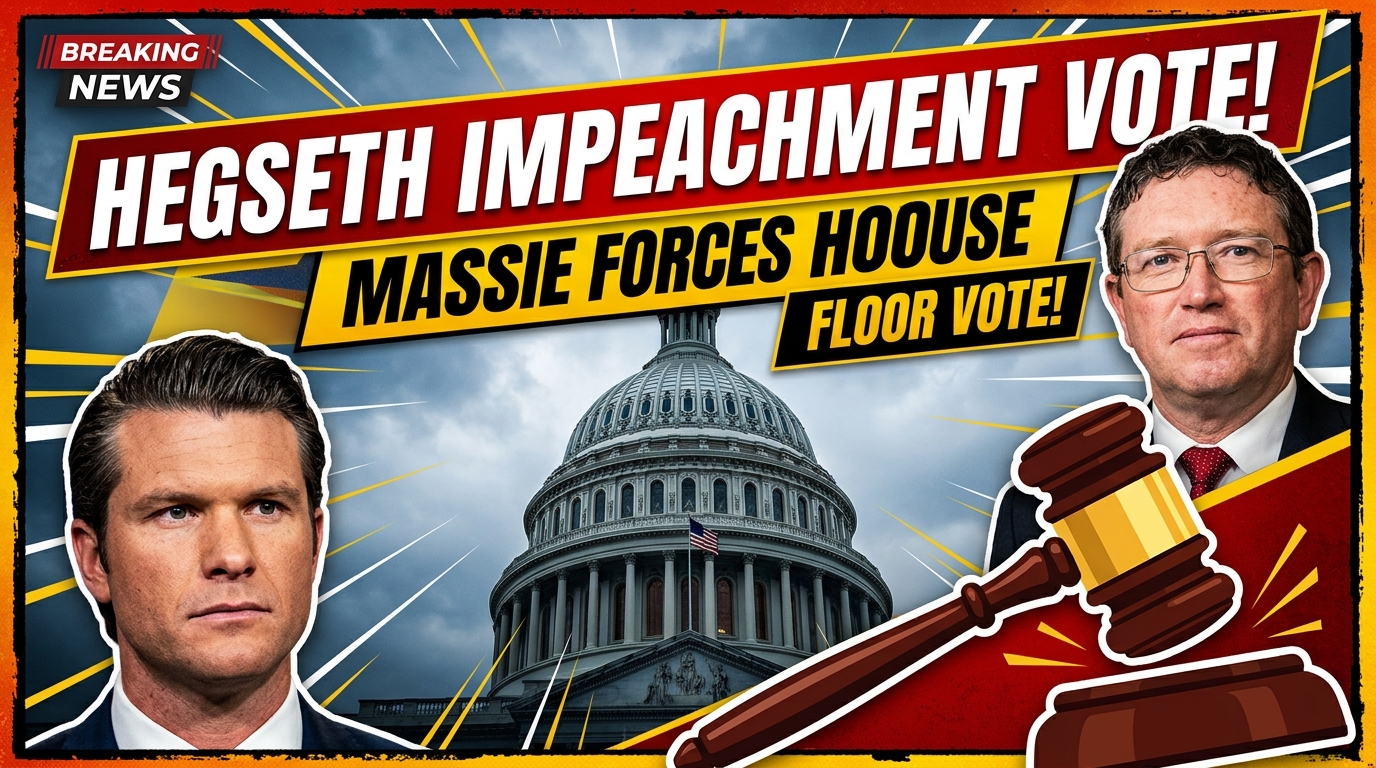
Massie Forces a House Vote on Eight Hegseth Impeachment Articles by Wednesday
Capitol Hill faced an immediate constitutional showdown after Massie forces a House vote on eight Hegseth impeachment articles by Wednesday by introducing a privileged resolution on the House floor. Representative Thomas Massie (R-KY), a prominent libertarian-leaning Republican, triggered the mandatory legislative clock requiring the full House of Representatives to act within two legislative days.
The eight articles of impeachment filed against Defense Secretary Pete Hegseth focus on accusations of unauthorized military actions, violations of the War Powers Resolution of 1973, and unconstitutional command decisions. The action places intense pressure on House GOP leadership as lawmakers navigate the political aftermath of the 2026 midterm elections.
Also Read:
China’s trade surplus tops $1 trillion in 10 months on AI export boom
                 [ HOUSE IMPEACHMENT RESOLUTION TIMELINE ]
                                     │
             ┌───────────────────────┴───────────────────────┐
             ▼                                               ▼
  [ PRIVILEGED RESOLUTION FILED ]                 [ STATUTORY MANDATED VOTE ]
   • Rep. Thomas Massie Triggers Motion            • 48-Hour Constitutional Clock Triggered
   • 8 Articles of Impeachment Introduced           • House Vote Required by Wednesday
   • Focus on War Powers & Authority              • Leadership Floor Strategy Decisions
             │                                               │
             └───────────────────────┬───────────────────────┘
                                     ▼
                     [ PENTAGON & CONGRESSIONAL PROCEEDINGS ]
1. Statutory Mechanics: The Privileged Motion Procedure
By introducing the impeachment resolution as a privileged measure, Representative Massie bypassed traditional committee delays to compel a direct vote of the full House:
  Privileged Resolution Filed     Mandatory 48-Hour Clock        House Floor Action Window
+-----------------------------+  +---------------------------+  +----------------------------+
| Rep. Thomas Massie Floor    |->| Privileged Motion Triggers|->| House Vote Required On or  |
| Motion Under House Rules    |  | Two-Legislative-Day Window|  | Before Wednesday Session   |
+-----------------------------+  +---------------------------+  +----------------------------+
|                **Status: Floor Motions & Tabling Votes Pending**                          |
+-------------------------------------------------------------------------------------------+
Key Drivers Behind the Filing
War Powers Resolution Claims: The articles allege that Defense Secretary Hegseth directed military operations without prior authorization from Congress, breaching Article I statutory bounds.
Post-Midterm Realignment: The resolution comes amid intense intra-party debates over national security oversight following recent congressional election results.
Bipartisan Floor Tension: House leadership must decide whether to bring the articles directly to a vote, offer a motion to table the resolution, or refer the matter to the House Judiciary Committee.
2. Breakdown of the Eight Articles of Impeachment
The formal resolution outlines eight distinct counts regarding executive military authority and statutory compliance:
| Article Count | Legal / Statutory Core | Alleged Operational Misconduct |
| Articles I – III | War Powers Resolution Violation | Executing military strikes without 60-day congressional authorization |
| Articles IV – V | Article I Constitutional Bypass | Committing federal defense resources without statutory funding approval |
| Articles VI – VII | Departmental Oversight Non-Compliance | Failure to submit mandated statutory notifications to House defense committees |
| Article VIII | Breach of Official Trust | Misleading congressional oversight panels regarding force deployments |
3. Political and Floor Dynamics in the House
The privileged resolution creates significant procedural and tactical hurdles for both parties:
                              [ HOUSE LEGISLATIVE MATRIX ]
                                             │
             ┌───────────────────────────────┴───────────────────────────────┐
             ▼                                                               ▼
  [ MOTION TO TABLE VOTE ]                                      [ DIRECT IMPEACHMENT VOTE ]
   • Requires Simple Majority to Dismiss                         • Requires Simple Majority to Adopt
   • Protects Members from Direct Record Vote                     • Would Advance Articles to Senate Trial
             │                                                               │
             └───────────────────────────────┬───────────────────────────────┘
                                             ▼
                             [ SENATE TRIAL OR PROCEDURAL DISMISSAL ]
Strategic Takeaways
Procedural Motion to Table: House leadership may attempt to offer a motion to table the resolution, which requires a simple majority vote to dispose of the measure without taking a direct vote on the underlying impeachment articles.
Recorded Roll-Call Pressure: Lawmakers face a recorded vote that will highlight internal party divisions over foreign policy, military engagements, and executive privilege.
Technical Conclusion
The moment Massie forces a House vote on eight Hegseth impeachment articles by Wednesday sets off a critical procedural test inside the Capitol. As the 48-hour statutory deadline approaches, the House of Representatives must vote on whether to dismiss the resolution or proceed with formal impeachment proceedings against the Secretary of Defense.
Frequently Asked Questions (FAQs)
What happened when Massie forced a House vote on eight Hegseth impeachment articles by Wednesday?
Representative Thomas Massie introduced a privileged resolution containing eight articles of impeachment against Defense Secretary Pete Hegseth, forcing a mandatory House vote within two legislative days under House rules.
What are the main charges in the eight articles of impeachment?
The articles focus on alleged violations of the War Powers Resolution of 1973, unauthorized military operations, and failure to provide required statutory disclosures to congressional oversight committees.
How can the House dispose of a privileged impeachment resolution?
The House can vote directly on the articles, vote on a motion to table the resolution to dismiss it immediately, or vote to refer the resolution to the House Judiciary Committee.
What happens if the House votes to impeach Defense Secretary Hegseth?
If a simple majority of the House votes to approve any of the impeachment articles, the matter advances to the United States Senate for a formal impeachment trial.
Disclaimer
This article is provided strictly for educational, informational, and news analytical purposes. Congressional proceedings, legislative filings, and parliamentary procedures reflect public records and official statements at the time of publication.