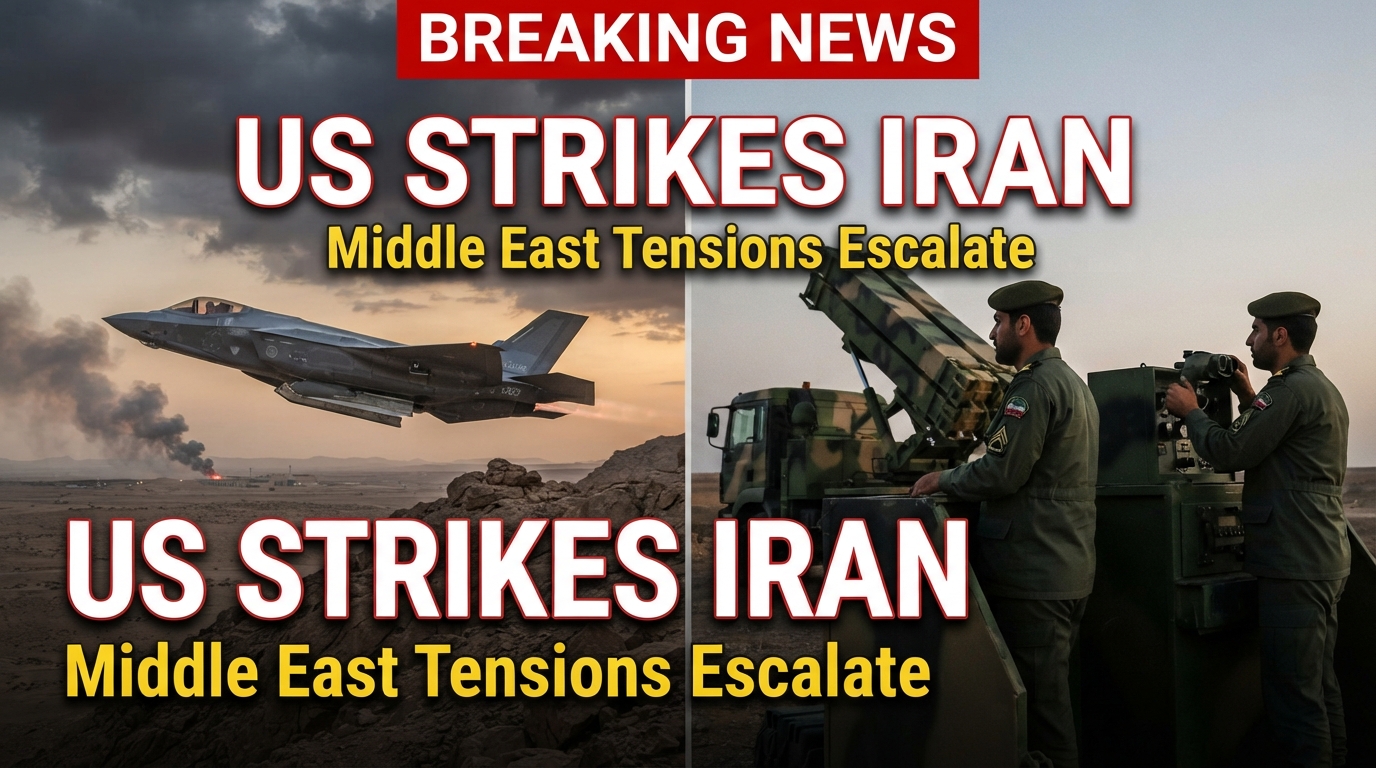
US Military Launches Retaliatory Strikes Against Iran After Alleged Surprise Attack on American Forces
US military strikes against Iran have begun after American officials said Iran attempted a surprise attack on U.S. forces in the Middle East. The retaliatory operation marks one of the most significant military escalations between the two countries in recent years. U.S. military officials stated that the strikes targeted military infrastructure linked to the alleged attack while emphasizing efforts to avoid civilian casualties.
Also read:
Hundreds of jobs pledged by Ocado over new base
According to the U.S. military, Iranian forces attempted to target American personnel and military facilities in the region. U.S. officials stated that the attack was intercepted and that American forces remained operational. In response, the United States initiated precision military strikes targeting locations it identified as being connected to Iran’s military operations.
What Happened?
U.S. Central Command (CENTCOM) reported that American forces detected an attempted missile attack against U.S. military positions in the Middle East. Military officials described the incident as an unprovoked action that threatened American personnel and regional security.
Following the attempted attack, U.S. military commanders authorized retaliatory operations targeting military infrastructure believed to be associated with the planning and execution of the attack.
Targets of the U.S. Operation
According to official military statements, the strikes focused on military-related targets rather than civilian infrastructure. Reported targets included:
- Missile launch facilities
- Drone operation centers
- Military command and control locations
- Intelligence and surveillance facilities
- Other strategic military assets linked to Iranian operations
Officials stated that the objective was to reduce the capability of future attacks against U.S. personnel while limiting broader damage.
Why Did the United States Respond?
The U.S. government said the military action was carried out in self-defense following the attempted attack on American forces.
Military officials argued that failing to respond could encourage additional attacks against U.S. personnel stationed throughout the Middle East.
The United States maintains thousands of military personnel across several Middle Eastern countries to support regional security operations, counterterrorism efforts, and partnerships with allied nations.
Iran’s Position
Iran has frequently criticized the U.S. military presence in the Middle East and has accused Washington of contributing to regional instability.
As tensions continue to rise, statements from Iranian officials and state media have emphasized Iran’s right to defend its interests while criticizing American military operations. The situation remains fluid, with diplomatic responses continuing to develop.
International Reaction
Governments around the world are closely monitoring the situation.
Several countries have urged both sides to exercise restraint and avoid further military escalation. International organizations and regional allies have expressed concern that continued retaliation could expand the conflict beyond Iran and the United States.
Diplomatic efforts aimed at reducing tensions are expected to continue in the coming days.
Impact on Global Markets
Military conflict involving major oil-producing regions often affects international markets.
Analysts warn that increased instability in the Middle East could influence:
- Global oil prices
- Shipping through strategic waterways
- Stock market volatility
- Energy supply chains
- International trade routes
Investors will continue monitoring military developments and official government statements for signs of either escalation or de-escalation.
Security Concerns Across the Region
Military experts believe American bases across the Middle East may remain on heightened alert following the incident.
Additional defensive measures could include:
- Enhanced air defense systems
- Increased surveillance
- Naval deployments
- Higher readiness levels for U.S. personnel
Regional governments are also reviewing their own security measures amid concerns that the conflict could spread.
What Could Happen Next?
Several possible scenarios are being discussed by security analysts:
- Continued military exchanges between the United States and Iran.
- Diplomatic negotiations aimed at reducing tensions.
- Additional sanctions or international pressure.
- Increased security cooperation among regional allies.
- Broader geopolitical consequences affecting energy markets and international relations.
While military operations have already begun, future developments will largely depend on political decisions made by both governments and ongoing diplomatic efforts.
Frequently Asked Questions (FAQs)
1. Why did the U.S. launch strikes against Iran?
The U.S. said the strikes were retaliation for an attempted surprise attack on American forces in the Middle East.
2. Who announced the military operation?
The announcement came from U.S. military officials through U.S. Central Command (CENTCOM).
3. What targets were reportedly struck?
Military officials said they targeted missile sites, drone facilities, command centers, and other military infrastructure.
4. Were civilians targeted?
U.S. officials stated that the operation focused on military targets.
5. How has Iran responded?
Iran has criticized the military action and continues to condemn U.S. operations in the region.
6. Could the conflict expand?
Analysts warn that additional retaliation could increase the risk of wider regional instability.
7. Will oil prices increase?
Energy markets may experience volatility due to uncertainty in the Middle East.
8. Are U.S. troops still deployed in the region?
Yes. The United States maintains military forces across several Middle Eastern countries.
9. Which military command is responsible for the operation?
The operation is being conducted under U.S. Central Command (CENTCOM).
10. Is the situation still developing?
Yes. Officials continue to monitor events, and new information may emerge as the situation evolves.
Conclusion
The latest military confrontation between the United States and Iran represents a significant escalation in an already tense regional environment. As both governments respond to rapidly changing events, the international community is urging restraint while monitoring developments closely. The coming days will be critical in determining whether diplomatic efforts can prevent a broader conflict or whether military tensions will continue to intensify.
Disclaimer
This article is based on publicly available official statements and credible news reporting available at the time of writing. Military situations can change rapidly, and readers should follow official government announcements and trusted news organizations for the latest verified updates.
1 thought on “US Military Strikes Against Iran: US Launches Retaliatory Attacks After Alleged Surprise Assault on American Forces”