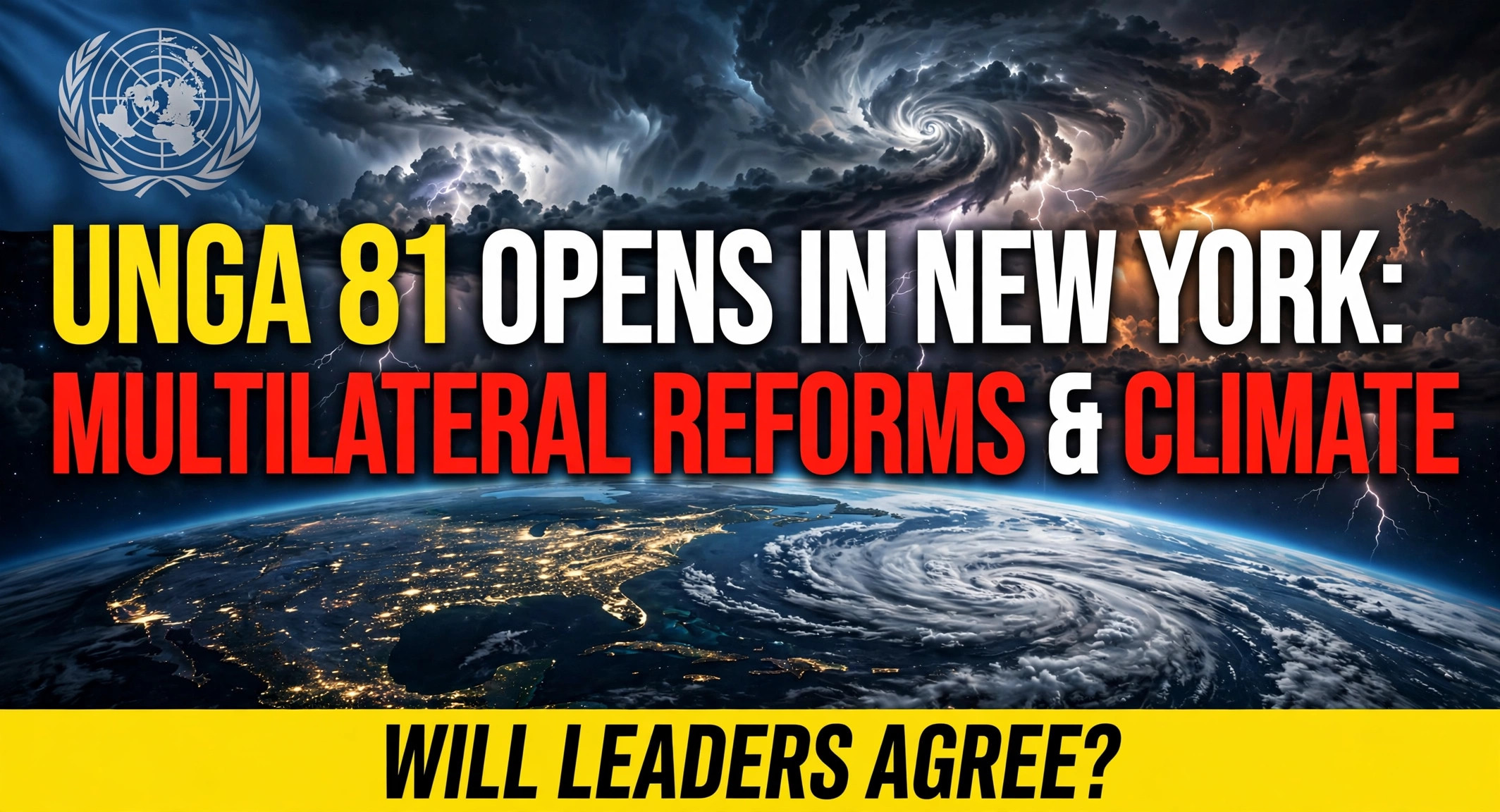
UNGA 81 Opens in New York: Multilateral Reforms, Climate Strategies, and Global Security Frameworks
The 81st session of the United Nations General Assembly (UNGA 81) has officially commenced at the United Nations Headquarters in New York, opening a high-stakes stage for international diplomacy. Centered on the theme “Restoring Trust, Managing Transformation: A United Nations That Delivers for All,” this year’s gathering brings together representatives from 193 Member States to confront escalating geopolitical friction, structural gaps in development financing, and accelerating environmental crises.
With the fallout of global conflicts still unfolding and Sustainable Development Goals (SDGs) deeply off-track, UNGA 81 is an essential litmus test for whether multilateralism still works.
Also read:
Philippine Ferry Fire: 5 Dead and 87 Missing Off Palawan Coast
Core Pillars of UNGA 81
1. Multilateral Reforms and Governance
Decades of institutional gridlock have put global governing bodies under intense pressure. At UNGA 81, member states are scrutinizing ongoing reform initiatives — building on the momentum of the landmark Pact for the Future — to make bodies like the UN Security Council and international financial frameworks more transparent, representative, and accountable. The focus: closing the gap between big institutional commitments and the hard realities facing vulnerable communities.
2. Climate Strategies and Just Transition
Climate change is intensifying and the threat of temperature overshoot is now very real — so environmental strategy takes center stage. A dedicated High-Level Event on Climate Action and the Just Transition brings together major economies, energy producers, and climate-vulnerable states. The conversation keeps circling one tension: accelerating emissions cuts while keeping the transition fair, so green policies don’t sideline developing nations or lower-income populations. Separate sessions tackle the existential threat of sea-level rise for small island developing states (SIDS).
3. Global Security and Peace Frameworks
Conflicts across Europe, the Middle East, and parts of Africa have severely tested collective security. World leaders are using the UNGA general debates to recalibrate peace enforcement, mediation structures, and nuclear non-proliferation frameworks. The underlying message is blunt — restoring global trust is impossible without concrete paths to durable peace and real adherence to international humanitarian law.
Frequently Asked Questions (FAQs)
What are the official dates for UNGA 81? The 81st session officially opened on September 8, 2026, with the high-level General Debate running from September 22 through September 28, 2026, at the UN Headquarters in New York.
What is the central theme of the 81st session of the UN General Assembly? The official theme is “Restoring Trust, Managing Transformation: A United Nations That Delivers for All,” a call to revitalize global cooperation and make the institution actually deliver.
Who presides over UNGA 81? The session is presided over by His Excellency Khalilur Rahman of Bangladesh, steering the assembly through its agenda on sustainable development, human rights, and security.
What are the major high-level meetings scheduled during the session? Key meetings include the annual SDG Moment, the High-Level Meeting on Climate Action and the Just Transition, sessions on sea-level rise, pandemic preparedness, and the 40th anniversary of the Declaration on the Right to Development.
Conclusion
The opening of UNGA 81 marks a defining moment for the international community. With global trust hanging in the balance, this session won’t be judged on diplomatic rhetoric — it’ll be judged on the tangible commitments member states make toward equitable development, climate resilience, and functional multilateral governance. The choices made in New York this September will shape global security and human well-being for decades.
1 thought on “UNGA 81 Opens in New York: Multilateral Reforms & Climate Strategies”