
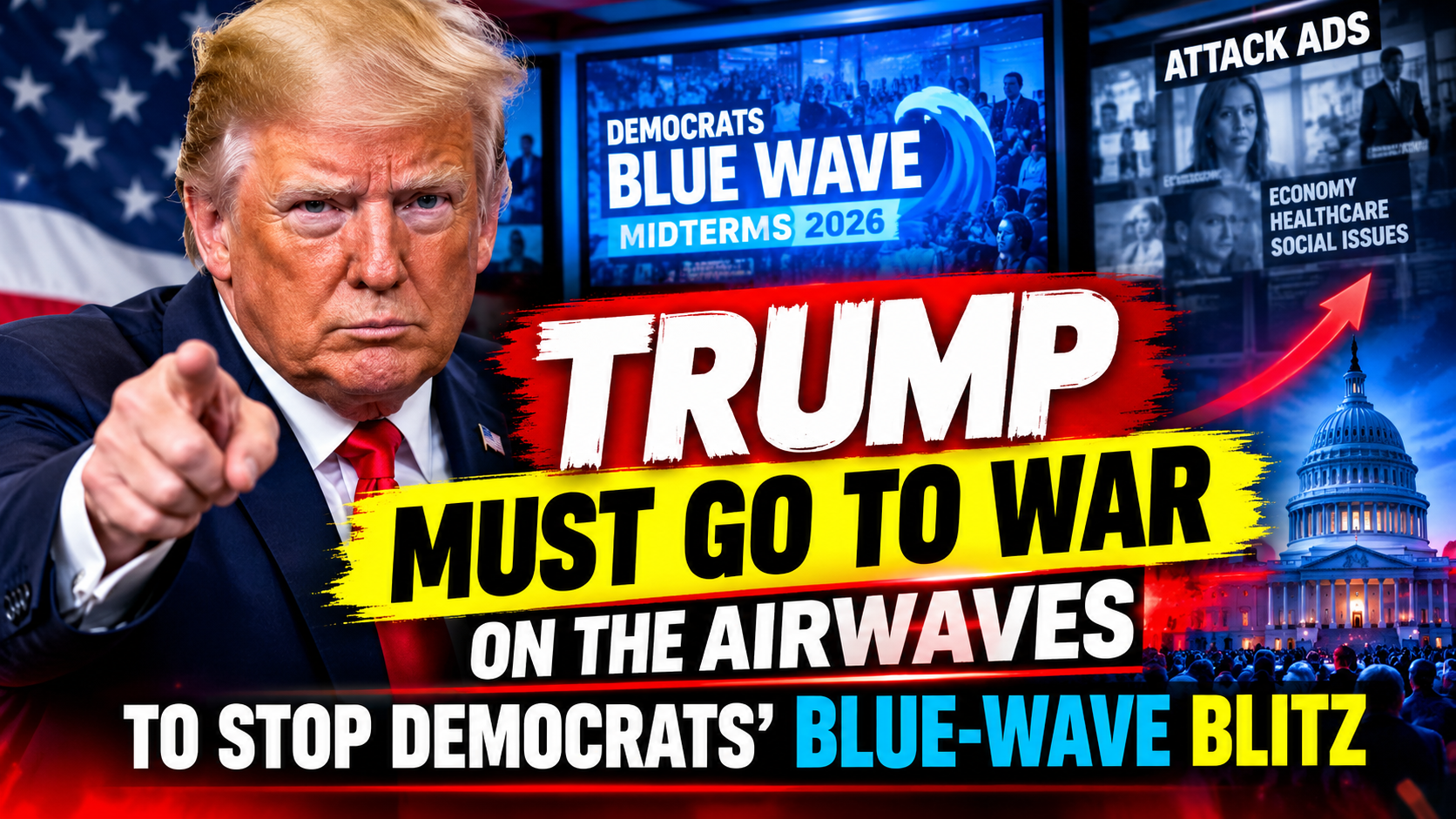
Trump Must Go to War on the Airwaves to Stop Democrats’ Blue-Wave Blitz
As the clock ticks down toward crucial midterm elections, conservative strategists and media commentators are delivering an urgent warning to the White House: Trump must go to war on the airwaves to stop Democrats’ blue-wave blitz. Facing aggressive advertising pushes, expanding battleground maps, and a surge in Democratic grassroots funding, Republicans are calling on the president to take direct control of the national narrative.
Political analysts argue that standard press briefings or traditional campaign rallies are no longer sufficient to counter the barrage of negative media buys launched by opposition groups. To preserve critical legislative majorities, protect policy initiatives, and energize base voters, conservatives urge the president to bypass traditional media filters and deliver a high-stakes, prime-time television address straight to the American people.
Also Read:
Obama and Amy Acton Slam Ramaswamy Attack Ad in Ohio Campaign
The Gathering Storm: Why the Airwaves Matter Now
Modern political campaigns are fought on split-second media cycles, where momentum can shift overnight. In the final stretch before Election Day, Democratic groups are flooding local and national airwaves with targeted ad buys focusing on economic pressure, social issues, and healthcare policies.
This saturation strategy—often dubbed the “blue-wave blitz”—is designed to define the election narrative early, sway undecided suburban voters, and suppress turnout among key conservative demographics.
Supporters argue that President Trump remains the Republican party’s most formidable messenger. His ability to command public attention and drive headlines gives him a unique tool to alter the trajectory of midterms. However, relying solely on local rallies only reaches voters already convinced. To push back against a coordinated media barrage, commentators insist Trump must go to war on the airwaves to stop Democrats’ blue-wave blitz by demanding prime-time network slots to outline the administration’s achievements and frame the explicit choice facing voters.
Lessons from History: Speeches vs. Press Conferences
Historical precedents demonstrate how presidential communication during midterm cycles can shape election outcomes:
+------------------+----------------------------------+-----------------------------------------+
| Historic Event   | Communication Format Used        | Election Outcome                        |
+------------------+----------------------------------+-----------------------------------------+
| 2006 Midterms    | Bush Press Conference            | GOP lost majorities ("thumped")        |
| 2022 Midterms    | Biden Targeted DNC Speeches      | Mitigated predicted "Red Wave"          |
| Current Cycle    | Proposed Prime-Time Trump Pitch  | Designed to rally base & halt momentum  |
+------------------+----------------------------------+-----------------------------------------+
When former President George W. Bush held an informal white house news conference weeks before the 2006 midterms, the format allowed reporters to control the topic agenda, contributing to significant Republican losses. Conversely, targeted, direct speeches—such as those delivered by President Joe Biden in late 2022—helped stall opposition momentum by speaking directly to core constituencies.
The message for the White House is clear: informal Q&A sessions or defensive press conferences often fail to set the agenda. A structured, prime-time national address forces television networks to carry a unified message, driving the news cycle for days afterward.
High Stakes for the Conservative Agenda
Why is a national media push so critical right now? The outcome of the upcoming elections carries immediate consequences for the administration’s broader policy agenda:
Legislative Priorities: A Democratic shift in the House or Senate would stall major legislative packages, including tax reform efforts, regulatory rollbacks, and defense spending initiatives.
Foreign Policy and Security: Key foreign policy initiatives—such as strategic defense postures, global trade policies, and counter-threat operations—face intense congressional oversight and potential budget caps if control flips.
Judicial Confirmations: Maintaining a Senate majority is critical for confirming federal judges and judicial appointments. A flip in Senate leadership effectively halts the pipeline of conservative judicial picks.
Because the stakes extend far beyond individual congressional seats, strategist arguments reinforce that Trump must go to war on the airwaves to stop Democrats’ blue-wave blitz to ensure these long-term priorities remain intact.
The Playbook for a Winning Airwaves Blitz
To turn the tide, political commentators outline a specific playbook the administration should adopt during the campaign’s closing days:
Secure Prime-Time Network Slots: Purchase or request national broadcast time across major networks to deliver a focused message directly to tens of millions of viewers.
Focus on Core Contrast Points: Clearly outline the stark policy differences on economic growth, border security, defense readiness, and inflation control.
Endorse Key Senate and House Candidates: Use the national platform to spotlight specific candidate races in battleground states like Pennsylvania, Ohio, Georgia, and Arizona.
Leverage Digital and Streaming Platforms: Simulcast broadcast addresses across social networks, podcasts, and digital streams to reach younger and independent voters who do not watch traditional television.
By cutting through mainstream media commentary and taking the case directly to working families, the campaign can reinvigorate grassroots enthusiasm before early voting periods end.
Conclusion: The Final Campaign Stretch
As Election Day approaches, the political landscape remains highly volatile. The battle for control of Congress will not be won through defensive maneuvers or passive campaign schedules.
Political observers agree that Trump must go to war on the airwaves to stop Democrats’ blue-wave blitz if Republicans hope to protect their legislative agenda and energize conservative voters across the nation. Whether the White House chooses to execute a full-scale media blitz in these final days will likely determine which party holds the gavel when the next Congress convenes.
Frequently Asked Questions (FAQs)
Why is it argued that Trump must go to war on the airwaves to stop Democrats’ blue-wave blitz?
Analysts argue that Trump must go to war on the airwaves to stop Democrats’ blue-wave blitz because opposition groups are spending heavily on media buys. A prime-time address allows Trump to use his strength as a communicator to rally his base and counter negative advertising directly.
What is the “blue-wave blitz”?
The “blue-wave blitz” refers to the aggressive, multi-platform media and advertising campaigns launched by Democratic candidates and political action committees (PACs) in the closing weeks of an election cycle to gain congressional majorities.
How does a formal prime-time address differ from campaign rallies?
While campaign rallies energize local base voters, a prime-time national address commands national network broadcast attention. This allows a leader to speak to millions of undecided or independent voters simultaneously across the country.
Disclaimer
Disclaimer: This article is an analytical and opinion-based review of political campaign strategies, media commentary, and midterm election coverage. Statements regarding candidates, political parties, and campaign strategies reflect public political discourse and news reporting.