
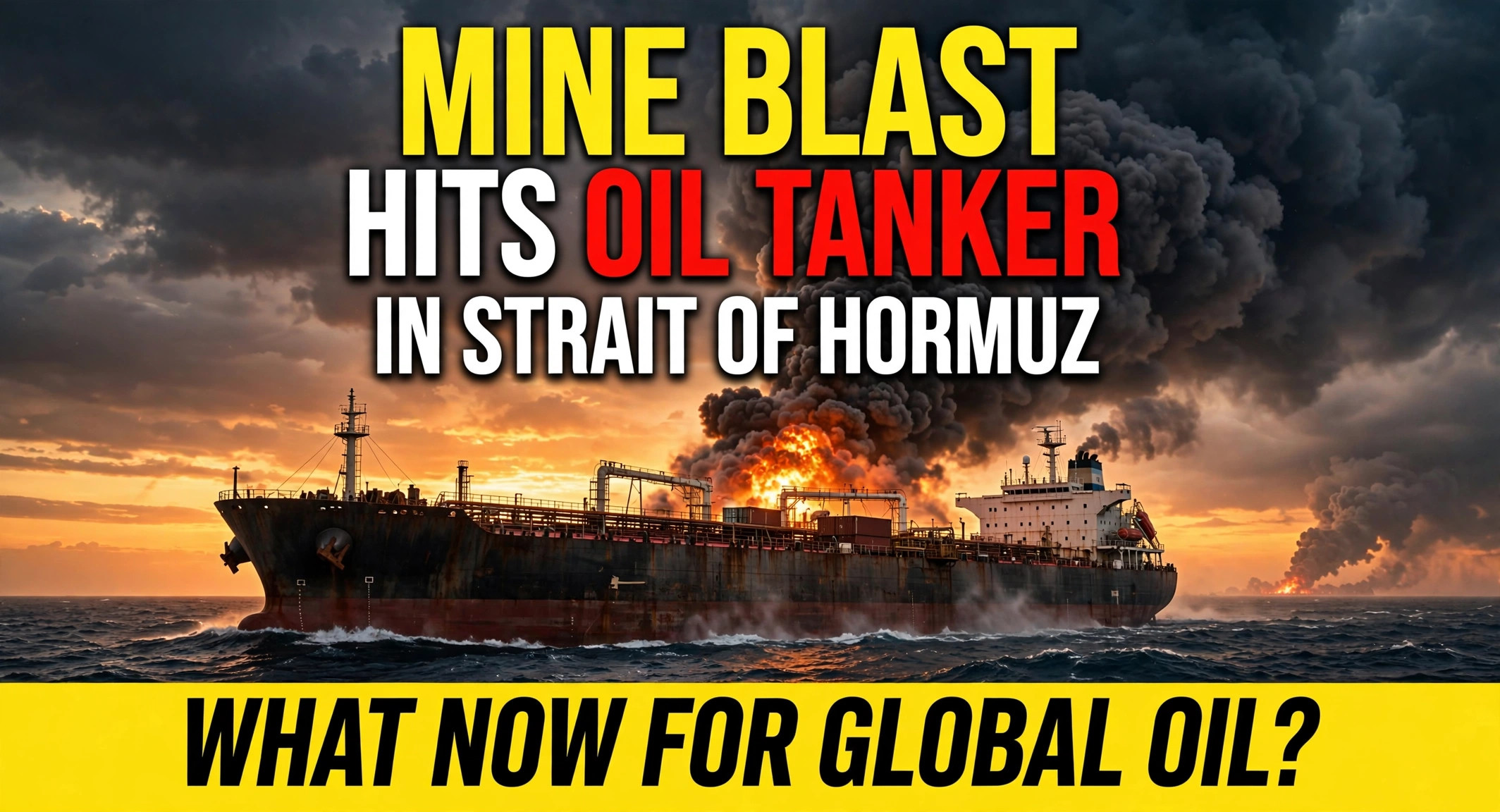
A Strait of Hormuz oil tanker attack has set nerves on edge across the world’s energy markets. Iran’s Revolutionary Guard Navy says an explosion ripped through the engine room of a supertanker capable of carrying 2 million barrels of crude in the narrow waterway on Monday, and Tehran blames a naval mine for the blast. The incident landed on top of a bruising weekend of strikes around the Arabian Peninsula, and traders wasted no time: oil prices shot higher within hours of the first reports.
Details are still thin. The Iranian account is the loudest version of events so far, and no independent inspection of the damage has been made public. But as reactions to the Strait of Hormuz oil tanker attack show, the timing could hardly be worse. The Persian Gulf has been on a knife’s edge for weeks, and anything that threatens the flow of crude through Hormuz — the single most important oil route on the planet — moves markets fast.
The Strait of Hormuz Oil Tanker Attack: What We Know So Far
The Revolutionary Guard Navy reported that the explosion hit the engine room of the vessel while it was transiting the strait. According to the Iranian account, a naval mine “struck the engine room” of the supertanker — a claim that, if accurate, would mean a live mine was placed in one of the busiest shipping lanes in the world.
Two million barrels. That’s roughly the amount of oil the vessel can carry, and it tells you the scale of what’s at stake. A single loaded supertanker of that size holds enough crude to supply the United States for about a day. We don’t yet know whether the ship was loaded at the time of the blast, how bad the damage is, or whether there were casualties among the crew. Iranian authorities have not released the vessel’s name or flag in the statements carried by regional media.
Other Gulf states and Western naval commands operating in the area had not publicly confirmed Iran’s version of events by Monday evening. That silence is normal in the first hours after a Strait of Hormuz oil tanker attack — and it means the mine claim should be treated as one side’s story until investigators or the ship’s operators say more.
Why Tehran Is Pointing at Sabotage
Iran calling this sabotage isn’t surprising. The Islamic Republic has a long history of treating explosions and disruptions in its waters as hostile acts, and the Revolutionary Guard Navy — which operates separately from Iran’s regular navy and is known for its aggressive posture in the Gulf — tends to reach that conclusion quickly.
A mine strike, if confirmed, would be a serious escalation. Mines are cheap, hard to trace, and terrifyingly effective in a narrow channel like Hormuz. Just the claim that a mine is loose in the waterway can force shipping companies to pause transits, raise insurance premiums overnight, and push prices up — regardless of what actually happened in that engine room.
Western officials have not yet weighed in. In past episodes, the United States and its Gulf allies have blamed Iran itself for attacks on shipping in and around Hormuz, while Tehran has blamed Israel or unspecified “foreign actors.” Expect that blame game to spin up fast once more capitals start talking.
A Violent Weekend Across the Peninsula
The blast didn’t happen in isolation. It capped a weekend that already had the region rattled. Yemen’s Houthi rebels struck again: a Saudi-led coalition reported a fresh strike that caused a fire at Riyadh airport — one day after an attack that killed 13 people.
The Houthis have also renewed their warnings about Saudi airports. Riyadh’s airport remains closed. For people watching the region, this is the pattern that matters: attacks on civilian infrastructure, threats against airports, and now an explosion in the world’s most watched shipping lane. Each one on its own is manageable. Stacked together, they tell a story of a region sliding toward something uglier.
Airports closed, tankers hit, warnings issued — the cumulative effect is a security picture that feels like it’s deteriorating by the day. Governments in the Gulf are in emergency-meeting mode, and foreign ministries around the world were already putting out travel cautions before news of the Strait of Hormuz oil tanker attack even broke.
Oil Markets React to the Strait of Hormuz Oil Tanker Attack
Traders didn’t wait for the details. Brent crude rose roughly 2 percent on Monday to around $106.75 a barrel. U.S. benchmark West Texas Intermediate climbed to about $93.84.
That’s a significant one-day move, and it shows you exactly how the market thinks about the Strait of Hormuz oil tanker attack. Oil traders have one reflex when it comes to Hormuz: buy first, ask questions later. The waterway carries around a fifth of the world’s oil consumption through a channel that is, at its narrowest, barely 21 miles wide. There is no realistic backup route for most of that crude.
Energy analysts were already warning that prices were fragile. Any prolonged disruption — a mine threat that shuts the strait for days, a retaliation cycle that draws in more players — could push Brent well past current levels and send gasoline prices higher for drivers in the U.S. and Europe. The U.S. Energy Information Administration tracks these flows closely, and its data consistently puts Hormuz at the top of the world’s oil chokepoints. A few cents at the pump now could turn into much more if the situation worsens.
Why This Strait of Hormuz Oil Tanker Attack Matters Beyond Oil
This isn’t only an energy story. The strait is also one of the most militarized patches of water on earth. U.S. warships, British and French vessels, Iranian patrol boats, and Gulf state navies all operate in the same tight space. One misread explosion — one captain who thinks his ship is under attack — is all it takes to turn an incident into a confrontation nobody planned.
That’s the real danger in this Strait of Hormuz oil tanker attack. Mines don’t announce who laid them. In a waterway this crowded, an unattributed attack gives every side room to assume the worst about the others. Diplomatic channels will be working overtime this week, because the alternative — a naval incident spiraling into open exchanges of fire — would make the oil market reaction look like a footnote.
Washington hasn’t made its position public yet, but the U.S. has historically treated threats to Hormuz shipping as a red line. Any confirmation that mines are in the water would almost certainly bring a heavier U.S. naval presence into the strait and a very public American response.
Sources and Resources
- The Express Tribune — World News section
- Investopedia — Stock Market Today (Oct 12, 2026)
- WORLD REACH DAILY — Home
Additional context: U.S. Energy Information Administration data on oil flows through the Strait of Hormuz; public statements from Iran’s Revolutionary Guard Navy as carried by regional media.
Frequently Asked Questions
What exactly happened to the oil tanker in the Strait of Hormuz?
According to Iran’s Revolutionary Guard Navy, an explosion hit the engine room of a supertanker — a vessel capable of carrying about 2 million barrels of oil — while it was moving through the strait on Monday. Tehran says a naval mine caused the blast. The ship’s name, flag, and the condition of its crew haven’t been released yet, and no other country has independently confirmed the Iranian account.
Why does the Strait of Hormuz oil tanker attack move oil prices so much?
Roughly a fifth of the world’s oil consumption passes through that narrow channel every day. There’s no easy alternative route for most of it, so any threat to the strait — even an unconfirmed one — makes traders worry about supply. On Monday, Brent crude jumped about 2% to around $106.75 a barrel and WTI hit roughly $93.84 almost as soon as the reports landed.
Is the mine claim confirmed?
No. So far it’s Iran’s version of events. No independent inspection, shipping company statement, or Western naval confirmation has been made public. Until investigators or the vessel’s operators speak, treat the mine claim as an allegation from one side — one that could still affect shipping decisions and prices on its own.
What’s the connection to the Houthi attacks this weekend?
The timing is what links them, not any confirmed coordination. A Saudi-led coalition reported a new strike that caused a fire at Riyadh airport — a day after an attack that killed 13 — and the Houthis have renewed warnings about Saudi airports. The airport stays closed. Together with Monday’s blast, the weekend paints a picture of a region where pressure is building on multiple fronts at once.
Could this turn into a bigger conflict?
Honestly, that’s the fear driving the market reaction. The strait is packed with warships from the U.S., Iran, and Gulf states, and mines are by nature unattributable — everyone can blame everyone. One misread explosion in that crowded waterway can escalate fast, which is why diplomats will be scrambling this week to keep things from spinning out of control.
Conclusion
The Strait of Hormuz oil tanker attack is, right now, one unconfirmed explosion with outsized consequences. Iran says a mine hit a 2-million-barrel supertanker. Oil markets have already priced in the fear. And it all comes on the heels of a weekend of strikes and airport closures that has the whole region on edge.
What happens next depends on two things: whether the mine claim gets confirmed, and how the region’s crowded navies react to it. If the blast turns out to be an accident or a contained incident, prices will probably settle back down. If it marks the start of a new round of shipping attacks, Monday’s 2% jump in Brent will look like the beginning of the story, not the end of it.
Energy desks will keep treating the Strait of Hormuz oil tanker attack as the week’s defining risk. Every fresh headline about the Strait of Hormuz oil tanker attack will feed straight into crude prices, and insurers are already repricing Gulf transits because of the Strait of Hormuz oil tanker attack. How governments respond to the Strait of Hormuz oil tanker attack — with naval escorts, sanctions, or diplomacy — will decide whether this Strait of Hormuz oil tanker attack fades into a one-day scare or becomes the Strait of Hormuz oil tanker attack that redrew the region’s security map.