
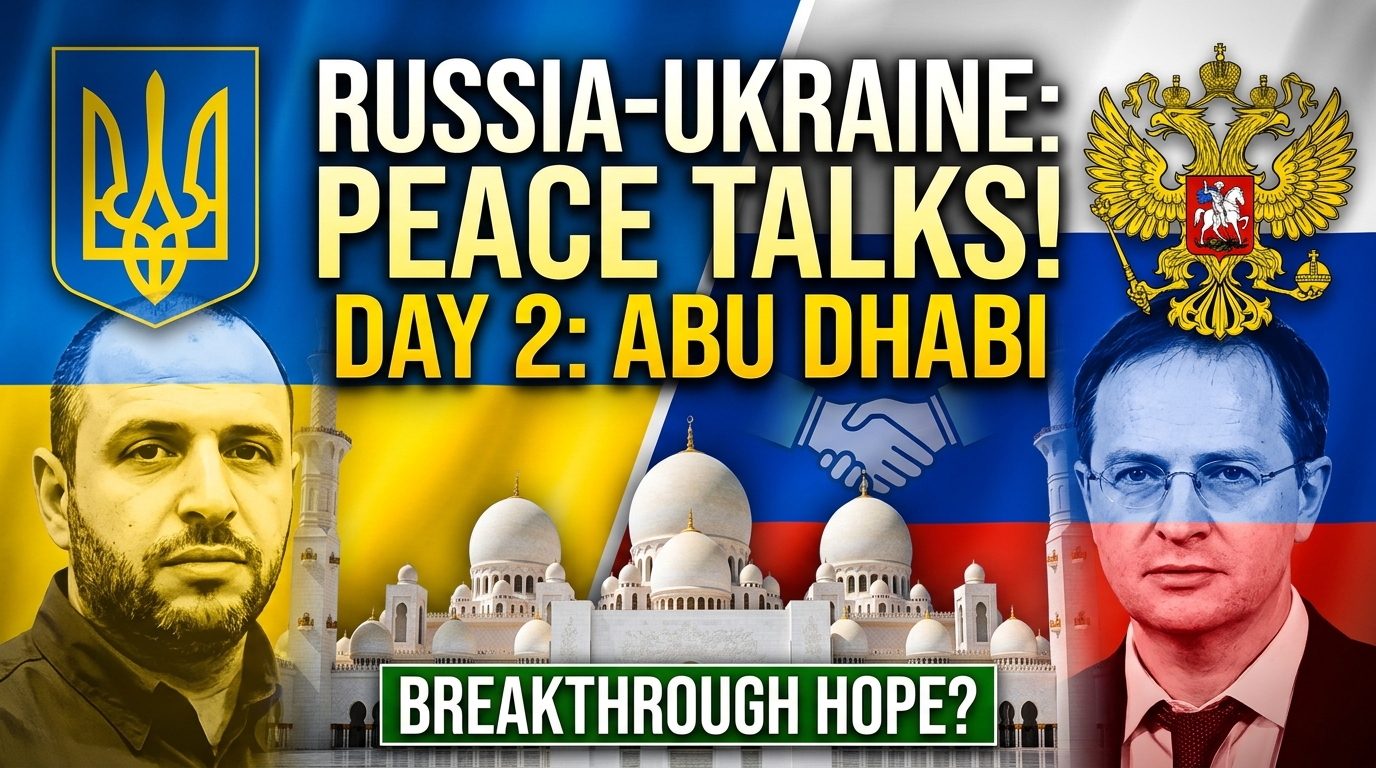
Critical Russia-Ukraine Peace Talks in Abu Dhabi Resume for High-Stakes Day Two
ABU DHABI, UAE – The eyes of the world remain fixed on the Emirati capital as Russia-Ukraine peace talks Abu Dhabi entered a critical second day. The high-stakes trilateral discussions, which are being heavily mediated by envoys from the United States, concluded with reports of continuing, albeit measured, constructive dialogue, providing a slender glimmer of hope for a potential breakthrough in the devastating conflict.
Following an intense opening session, negotiators from both Kyiv and Moscow rejoined their American counterparts to further explore pathways toward a de-escalation of the war, which has entered its fourth year.
Also Read:
Boebert Loses Reelection: Democrat Laubacher Flips Colorado’s 4th District
Mediation and Delegations
The talks, held at a secure diplomatic venue in Abu Dhabi, are the result of months of back-channel diplomacy aimed at bringing the warring parties to the table. The UAE, having maintained a position of strategic neutrality throughout the conflict, was selected as the host nation.
The American delegation, leading the meditation efforts, is composed of senior officials who have been granted a mandate from the Trump administration to pursue a diplomatic solution. U.S. representatives include Jared Kushner and Steve Witkoff.
At the Table:
Ukraine Delegation: Led by Rustem Umerov, Head of Ukraine’s Foreign Intelligence Service. Key priorities: immediate ceasefire, total withdrawal of Russian forces, security guarantees, and restoration of territorial integrity.
Russia Delegation: Led by Vladimir Medinsky, Presidential Assistant. Key priorities: neutrality, recognition of territorial annexations, demilitarization, and denazification.
U.S. Mediation Team: Tasked with bridging the massive gap between the two sides, focusing on building a new framework of understanding and durable security mechanisms.
Day 2 Focus: Security, Ceasefire, and Territories
While official details regarding the specific content of the sessions remain scarce, sources close to the negotiations indicated that Day 2 discussions dug deeper into the most contentious aspects of any potential peace agreement.
The primary focus areas of the second day of the Russia-Ukraine peace talks Abu Dhabi reportedly included:
1. Framework for a Ceasefire
A significant portion of the day was dedicated to negotiating the parameters of a potential ceasefire. This included debates over the separation of forces, the timeline for implementation, and the creation of effective verification mechanisms, potentially involving international monitors.
2. Territorial Integrity vs. Neutrality
The core, long-standing conflict remains. Ukraine continues to reject any deal requiring it to formally cede territory, including regions illegally annexed by Russia in 2022. Russia remains firm in its demand that Ukraine accept the “new territorial reality.” Mediation efforts are focused on creating flexible, potentially multi-staged frameworks for these discussions.
3. Security Guarantees
Ukraine has made it clear that any agreement must be underpinned by strong, binding security guarantees from major international powers to prevent a resurgence of conflict. Russia, conversely, demands guarantees that Ukraine will not join NATO or house foreign military bases. U.S. mediators are reportedly exploring novel frameworks for multinational security assurances that satisfy both parties.
Measured Optimism and Caution
The fact that the talks have proceeded to a second, more detailed day is widely viewed as a positive signal. Unlike previous rounds of negotiations that collapsed early on, the Russia-Ukraine peace talks Abu Dhabi have been described by the Ukrainian delegation as “productive” and “substantive,” while the Russian delegation has expressed hope that the meetings will allow advancement “on the path towards peace.”
A U.S. delegation source commented, “We are under no illusions about the immense difficulty of the path ahead, but the conversation today was constructive. Both sides are engaging, and the United States remains committed to doing everything possible to facilitate a lasting peace.”
However, seasoned diplomatic observers urge caution. Significant obstacles remain, not least of which is the massive gap in core demands. In Ukraine, President Volodymyr Zelenskyy faces immense pressure to reject any compromise that undermines national sovereignty. In Russia, President Vladimir Putin remains focused on achieving his primary geopolitical objectives.
Future Rounds and Next Steps
The conclusion of Day 2 is not the end of the diplomatic push. Following the session, U.S. mediators are scheduled to travel to Moscow and Kyiv for separate meetings with Presidents Putin and Zelenskyy to relay the progress and discuss potential next steps.
Whether this round in Abu Dhabi will lead to a new series of talks, a temporary truce, or another breakdown in diplomacy remains uncertain. The world watches with bated breath, hoping that the small steps taken today will one day lead to a giant leap for peace in Eastern Europe.
Frequently Asked Questions (FAQs)
What is the status of the current Russia-Ukraine peace talks in Abu Dhabi? As of the conclusion of Day 2, the Russia-Ukraine peace talks Abu Dhabi have finished. The discussions are described by mediators as constructive, though no final breakthrough has been achieved. US envoys are now traveling to Moscow and Kyiv for separate leadership meetings.
Why are the peace talks happening in Abu Dhabi? Abu Dhabi, the capital of the United Arab Emirates (UAE), is the host because the UAE has maintained a position of neutrality throughout the war, making it an acceptable neutral venue for both Ukraine and Russia.
What are the primary obstacles in the Russia-Ukraine peace negotiations? The main obstacles remain the fundamental disagreement over territory (with Ukraine demanding full sovereignty and Russia demanding recognition of its annexations) and security (with Ukraine seeking strong, binding guarantees against future invasions, and Russia demanding Ukrainian neutrality).
Disclaimer: The content of this article is based on information available at the time of publication and does not reflect official declarations or final agreement details unless explicitly stated. Diplomatic negotiations are inherently volatile, and details are subject to change.