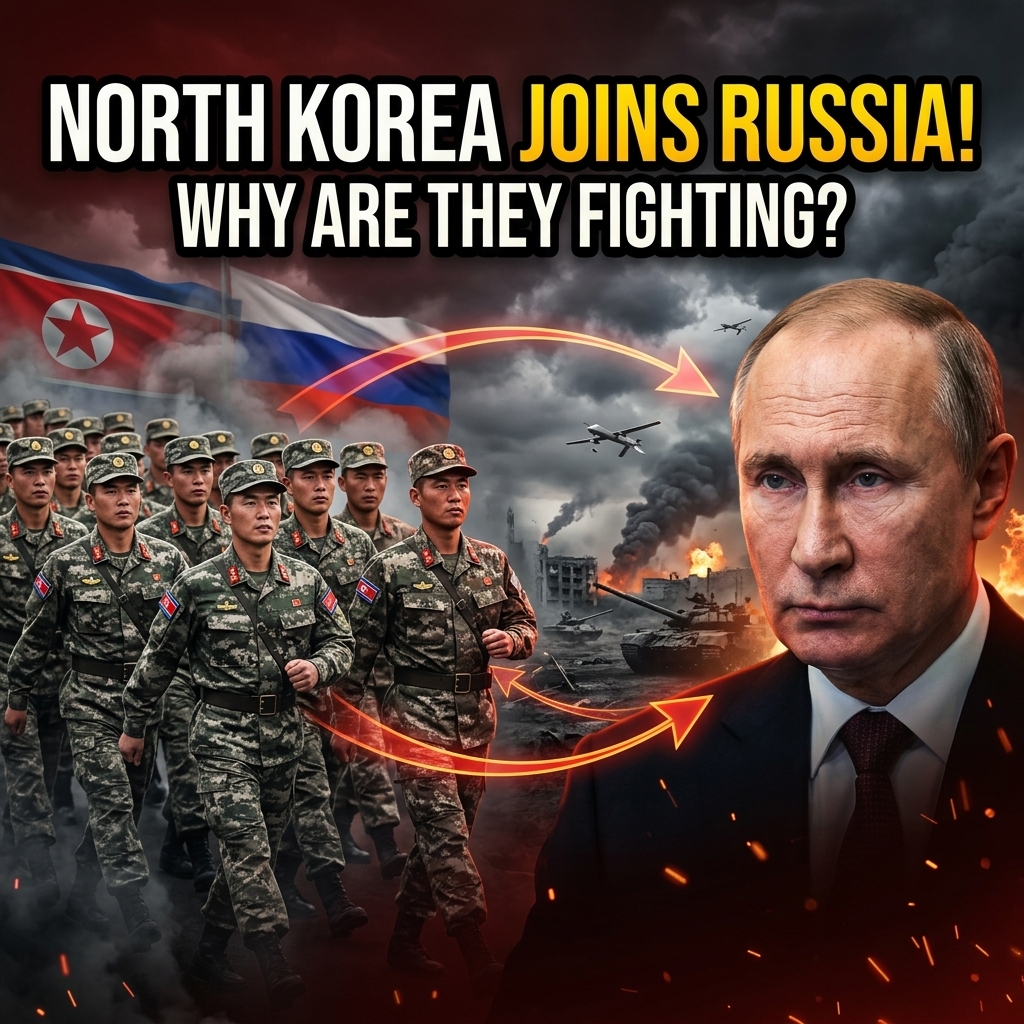
North Korean Soldiers in Russia Ukraine War: Why They Are Joining
Reports from international intelligence agencies and defense ministries indicate an unprecedented military escalation: the deployment of North Korean troops to aid Moscow’s military campaign in Ukraine. This development marks one of the most significant foreign military interventions in European warfare in decades, cementing a deepening axis between Pyongyang and Moscow.
Understanding why Kim Jong Un is sending soldiers to fight in a conflict thousands of miles away—and why Vladimir Putin is eager to accept them—requires analyzing military necessity, strategic agreements, and mutual geopolitical leverage.
Also Read:
AI Guardrails Clash: Tech Leaders and Politicians Battle Over Speed
1. Russia’s Severe Manpower Shortages and Attrition Rates
The primary driver behind Moscow’s request for foreign troops is the sheer rate of attrition suffered by the Russian military in Ukraine.
High Casualty Rates: Prolonged high-intensity combat, particularly in eastern Ukraine and counter-offensives in regions like Kursk, has depleted Russian infantry reserves.
Avoiding Domestic Mobilization: Mass mobilization within major Russian cities like Moscow and Saint Petersburg poses significant political risks for the Kremlin. Utilizing foreign troops allows Russia to sustain front-line personnel levels without triggering domestic discontent.
Infantry “Cannon Fodder”: Foreign military deployments, particularly tightly controlled North Korean personnel, offer infantry units that can be integrated into high-risk assault operations or rear-guard defensive positions.
2. The Mutual Defense Treaty: A Binding Strategic Partnership
In June 2024, Russian President Vladimir Putin and North Korean leader Kim Jong Un signed the Comprehensive Strategic Partnership Treaty in Pyongyang. A core element of this pact includes a mutual defense clause requiring either nation to provide immediate military assistance if attacked.
| Key Aspect | Strategic Mutual Benefit |
| Legal Justification | Moscow frames troop deployments in areas like Kursk as defense of sovereign territory under the pact. |
| Reciprocal Obligations | North Korea gains guaranteed Russian military intervention in the event of a conflict on the Korean Peninsula. |
| Diplomatic Alignment | Both nations form a united front against U.S.-led Western sanctions and diplomatic isolation. |
3. What North Korea Gains from the Conflict
Kim Jong Un’s decision to deploy military forces is driven by major strategic, technological, and economic incentives offered by Moscow.
Real-World Combat Experience
The Korean People’s Army (KPA) has not fought in a major conflict since the 1953 armistice ending the Korean War. Deploying troops alongside modern Russian forces provides invaluable modern battlefield experience, particularly regarding:
Drone warfare and anti-drone defenses
Electronic warfare and modern artillery coordination
Combined-arms urban and trench warfare tactical execution
Advanced Military Technology Transfer
In exchange for manpower and artillery supplies, North Korea is seeking sophisticated Russian military technology, including:
Intercontinental Ballistic Missile (ICBM) re-entry technologies
Advanced air defense and fighter aircraft systems
Satellite and nuclear submarine propulsion assistance
Economic Aid and Energy Supplies
Operating under severe international sanctions, Pyongyang relies heavily on Russian shipments of crude oil, refined petroleum, food supplies, and direct financial transfers to stabilize its domestic economy and fund state programs.
4. Global Security Implications and Western Responses
The inclusion of North Korean troops in European warfare fundamentally changes the dynamic of the Russia-Ukraine conflict, turning it into a globalized confrontation.
       [ North Korea ]                      [ Russia ]
  (Manpower, Munitions, Troops)  --->  (Sanctions Relief, Tech, Fuel)
               \                            /
                \                          /
                 v                        v
            [ Operational Escalation in Ukraine ]
                          |
                          v
        [ Heightened Asian & Global Security Risks ]
Indo-Pacific and European Conflict Integration: The operational link between Pyongyang and Moscow merges security dynamics in Europe with those in Northeast Asia.
Potential South Korean Response: South Korea, traditionally reluctant to provide lethal weaponry directly to Ukraine due to legislative restrictions, has signaled a potential shift to supply offensive weaponry directly to Kyiv if North Korean troop involvement expands.
NATO and U.S. Counter-Measures: Western nations are facing pressure to lift range restrictions on Western-supplied long-range weapons, allowing Ukrainian forces to strike military staging grounds inside Russia where foreign forces assemble.
Frequently Asked Questions (FAQs)
Why is North Korea sending troops to Russia?
North Korea is sending troops to receive advanced Russian missile and space technology, financial support, energy resources, and real-world combat experience for its military, backed by a mutual defense treaty signed in 2024.
Are North Korean troops fighting on the frontlines in Ukraine?
Intelligence reports indicate that North Korean forces are deployed in combat roles and support positions, notably in contested zones such as Russia’s Kursk region and supporting logistics near the Ukrainian front.
How has South Korea responded to North Korea’s military deployment?
South Korea has strongly condemned the deployment, calling it a direct threat to international security. Seoul has warned that it may reconsider its policy against sending direct lethal weapon support to Ukraine.
What risks do North Korean troops face in Ukraine?
North Korean troops face language barriers, unfamiliarity with modern drone and electronic warfare tactics, integration challenges within Russian command structures, and exposure to intense high-precision artillery fire.
Disclaimer
This article is for informational and educational purposes only, compiled from open-source military intelligence, diplomatic reports, and geopolitical analysis. Situations involving ongoing military conflicts evolve rapidly, and official reports remain subject to confirmation by intelligence agencies and international defense bodies.