
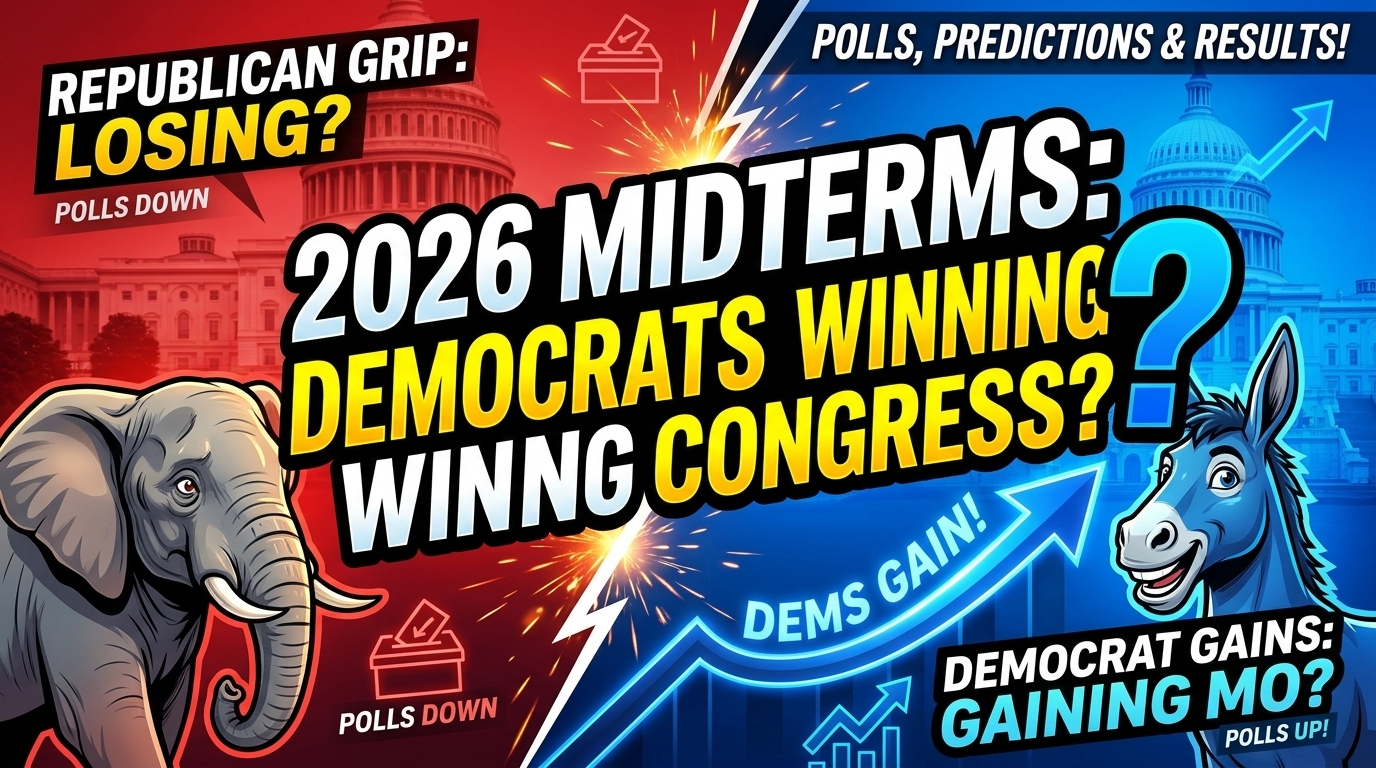
Are Democrats Winning the Midterms? 2026 Midterm Election Polls, Predictions, and Control of Congress
Introduction and National Political Landscape
As the nation approaches a critical election cycle, political analysts, pollsters, and voters alike are hyper-focused on a central question: Which party will control Congress? Current 2026 midterm election polls predictions suggest significant momentum for the Democratic Party, driven by shifting public sentiment on economic pressures, healthcare, and legislative check-and-balances.
With all 435 seats in the U.S. House of Representatives and a crucial third of the U.S. Senate up for grabs, both major political parties are making their final pushes. Key battlegrounds—ranging from suburban districts in New Jersey to statewide Senate showdowns across the country—will ultimately decide the balance of power in Washington.
Also Read:
Russia Fires Nuclear-Capable Bulava Missile After Putin Talks With NATO Leaders
House and Senate Forecasts: What the Data Shows
Recent aggregate polling and forecasting models indicate a strong competitive advantage for Democrats as election day draws near. According to models from outlets like Decision Desk HQ (DDHQ) and prediction trackers, the political map favors potential legislative shifts.
The U.S. House Outlook: Forecasters currently give Democrats a strong probability of reclaiming the House majority, fueled by competitive open seats and tight races in suburban congressional districts.
The U.S. Senate Battle: Control of the upper chamber remains a tighter contest, though recent shifts in public opinion and state-level polling have given Democrats a narrow edge in retaining or expanding key seats.
Key Battleground Dynamics: Regional contests—such as New Jersey’s 7th Congressional District featuring Rep. Thomas Kean Jr. and challenger Rebecca Bennett—symbolize the fierce local fights determining national outcomes.
[National Generic Ballot Polling] ---> [Key Suburban Battlegrounds] ---> [State Senate Toss-Ups] ---> [Final Control of Congress]
Economic Factors and Voter Sentiment
Voter priorities heading into the ballot box are heavily influenced by cost-of-living concerns, inflation metrics, and economic anxiety.
Cost of Living Pressures: Persistent inflation and fluctuating energy expenses have weighed heavily on ordinary households, historically creating headwinds for the party in power.
Divergent Economic Indicators: While corporate equities have shown resilience, ordinary voters frequently evaluate the economy through day-to-day expenses at the grocery store and the fuel pump, translating into mixed approval ratings for federal leadership.
Turnout and Enthusiasm: Grassroots mobilization has intensified across urban and suburban enclaves, with both parties targeting undecided moderates and independent voters in high-stakes districts.
| Legislative Body | Current Control / Status | Projected Competitive Outlook | Primary Determinant |
| U.S. House | Narrow Republican Majority | Leaning Democratic | Suburban swing districts & local turnout |
| U.S. Senate | Narrow Republican Majority | Toss-up / Slight Democratic Edge | State-specific candidate strength & economy |
Frequently Asked Questions (FAQs)
Q1: What do the latest 2026 midterm election polls predictions indicate about control of Congress?
A: Current data and forecasting models show Democrats holding a strong advantage in capturing the House of Representatives, alongside a tightly contested battle for the U.S. Senate.
Q2: Why are economic issues playing such a major role in the midterms?
A: Voters are navigating persistent cost-of-living pressures and inflation, which heavily influence public sentiment and voter behavior at the ballot box.
Q3: How many seats are up for election in the House and Senate?
A: All 435 seats in the U.S. House of Representatives are up for election, alongside approximately one-third of the U.S. Senate seats.
Q4: Where can voters track live election results?
A: Live tracking, precinct reporting, and real-time analytical breakdowns are available through major national news networks and official state election portal updates.
Disclaimer
Disclaimer: This article provides a general overview of current political polling, forecasts, and public election analysis as of October 2026. Electoral dynamics and voter sentiment change rapidly; readers should consult official election authorities for certified vote counts and final results.