
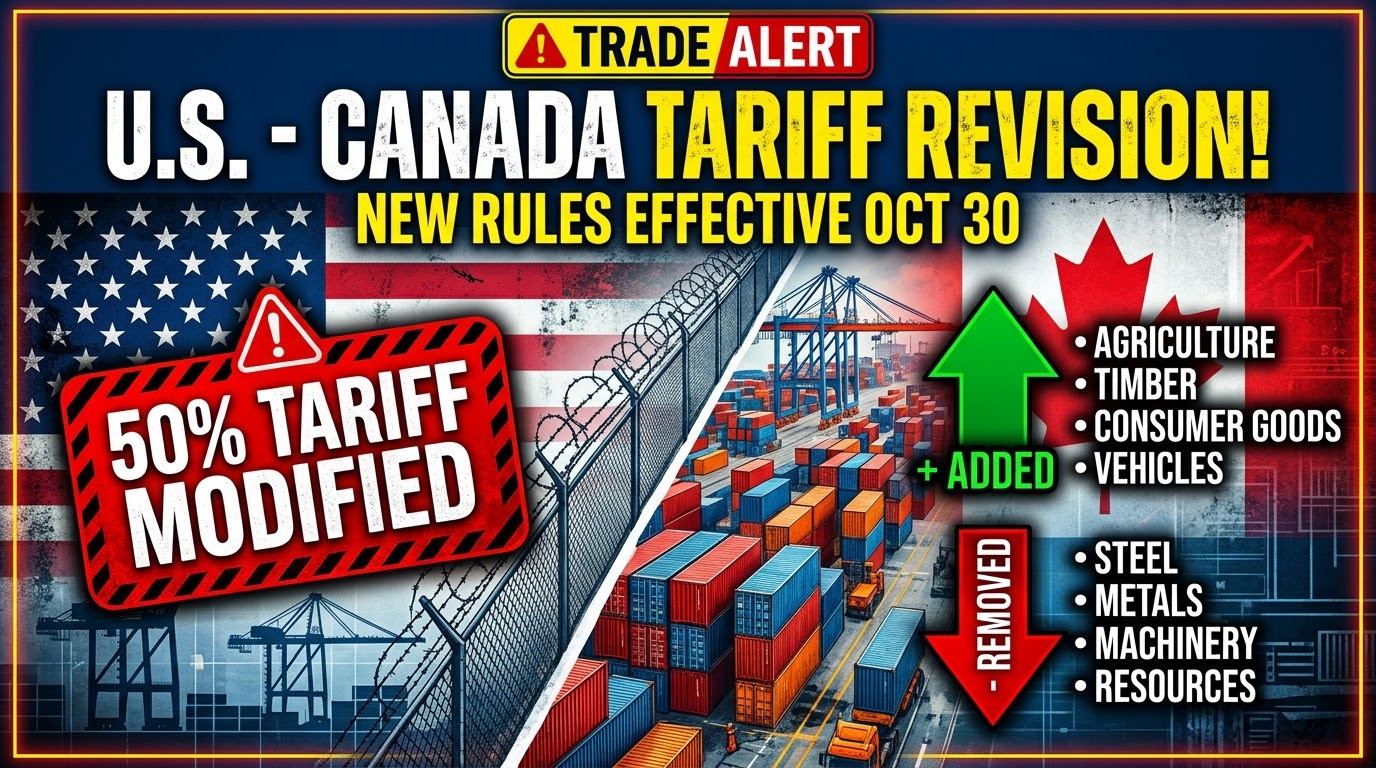
Revised US Tariffs on Canadian Goods Take Effect on October 30: Impact and Product List Breakdown
Introduction: A Major Shift in Cross-Border Trade Policy
The trade landscape between the United States and Canada experienced another significant realignment as revised US tariffs on Canadian goods take effect on October 30. Following an executive action issued by President Donald Trump under Section 338 of the Tariff Act of 1930, federal customs authorities modified the broad 50% ad valorem tariffs imposed on cross-border imports. The new adjustment reshuffles approximately $20 billion in annual cross-border trade, adding roughly 100 new product classifications while removing duties from several key agricultural, industrial, and raw material sectors.
This latest policy shift comes amid heightened political scrutiny, supply chain adjustments, and ongoing bilateral negotiations leading up to the November 2026 U.S. midterm elections. While the White House framing emphasizes defending domestic industries against alleged trade imbalances, business leaders and supply chain logistics managers across North America are adjusting operations to accommodate the updated Harmonized Tariff Schedule (HTSUS) classifications.
Also Read:
US Weekly Jobless Claims Fall to 194,000, Hovering Near 57-Year Lows
Key Policy Modifications: Additions and Removals
The October 30 revisions alter the scope of products subject to the punitive 50% tariff rate. According to implementation directives issued by U.S. Customs and Border Protection (CBP), duties apply based on the official entry date of goods into the United States.
Key Product Removals (Tariff Relief): Under the revised guidelines, 22 HTSUS classifications were granted relief. Products removed from the 50% tariff list include plywood sheets, specific paper and cardboard packaging products, certain industrial refrigeration equipment, agricultural harvesting machinery, packaging crates, and selected algae and seaweed harvested for human consumption.
New Product Additions: Conversely, 100 HTSUS product categories were added to the 50% duty roster. These newly targeted goods include industrial valves, carpets and textile floor coverings, selected waste products, window air conditioning units, cocoa powder products, personal care items, and specialized medical equipment.
USMCA Preferential Exemption Status: Crucially, CBP guidance clarifies that Section 338 duties apply to covered items regardless of whether the products qualify for duty-free status under the United States-Mexico-Canada Agreement (USMCA).
[October 23 Proclamation] ---> [CBP Classification Guidance] ---> [October 30 Effective Date] ---> [50% Duty Applied Upon Entry]
Economic Impact and Supply Chain Considerations
The sudden reshuffling of trade duties presents operational hurdles for cross-border logistics networks, manufacturers, and retail distributors reliant on North American supply integration.
1. Costs for US Importers and Consumers
Because Section 338 duties represent an additional ad valorem tax on top of standard customs tariffs, companies importing newly added goods face immediate 50% cost increases at ports of entry. Industry groups warn that these cost spikes may trickle down to consumer pricing for household goods, flooring materials, and personal care products.
2. Relief for Construction and Agricultural Sectors
Conversely, removing tariffs from plywood sheets, cardboard packaging, and agricultural machinery offers targeted cost relief to homebuilding, farming, and logistics operations that struggled under previous duty burdens.
3. Strategic Realignment and Canadian Countermeasures
The Canadian government previously instituted retaliatory tariffs on roughly C$27.6 billion worth of American imports, targeting U.S. steel, appliances, and dairy products. While bilateral diplomatic talks have shown signs of thawing, trade analysts anticipate that Canadian officials will continue monitoring the modified U.S. lists to evaluate further reciprocal action.
| Tariff Action Category | Key Included Products & Classifications | Operational Impact on Trade |
| Removed Goods (Duties Lifted) | Plywood, paper/packaging crates, refrigeration tools, agricultural machinery | Lower cost burdens for U.S. builders and agricultural operators |
| Added Goods (50% Tariff Applied) | Industrial valves, carpets, personal care goods, cocoa powder, medical devices | Increases customs duties for U.S. importers of record |
| Enforcement Framework | Section 338 Tariff Act of 1930 / Administered by CBP | Overrides USMCA preferential treatment rules |
Regulatory Compliance and Next Steps for Importers
Trade attorneys and compliance specialists recommend that businesses trading across the U.S.-Canada border take immediate steps to audit their inventory schedules and customs filing documentation:
Audit HTSUS Classifications: Re-screen all Canadian product HTSUS codes against the updated Annexes published by the U.S. Trade Representative and CBP to identify newly affected or newly exempt items.
Review Entry Dates: Confirm the exact arrival and consumption entry dates for goods, as duty liability is determined by when goods enter U.S. customs territory.
Assess Supply Chain Sourcing: Explore alternative sourcing routes or legal customs valuation methods to mitigate unexpected tariff expenses.
Frequently Asked Questions (FAQs)
Q1: When did the revised US tariffs on Canadian goods take effect?
A: The revised tariffs officially took effect on October 30, 2026, modifying the existing Section 338 duty lists.
Q2: What products were removed from the 50% tariff list?
A: Products granted relief include plywood sheets, cardboard packaging crates, agricultural machinery, industrial refrigeration tools, and certain seaweed products.
Q3: What new items were added to the Canadian tariff list on October 30?
A: Newly added items include industrial valves, carpets and textile floor coverings, personal care products, cocoa powder, window air conditioning units, and selected medical equipment.
Q4: Does USMCA protect Canadian imports from these Section 338 tariffs?
A: No. U.S. Customs and Border Protection confirmed that Section 338 tariffs apply to all covered goods regardless of whether they qualify for USMCA preferential origin.
Disclaimer
Disclaimer: This article synthesizes trade policy updates, legal notices, and official government announcements regarding U.S.-Canada tariffs as of late October 2026. Import regulations and tariff schedules are subject to ongoing administrative and diplomatic updates.