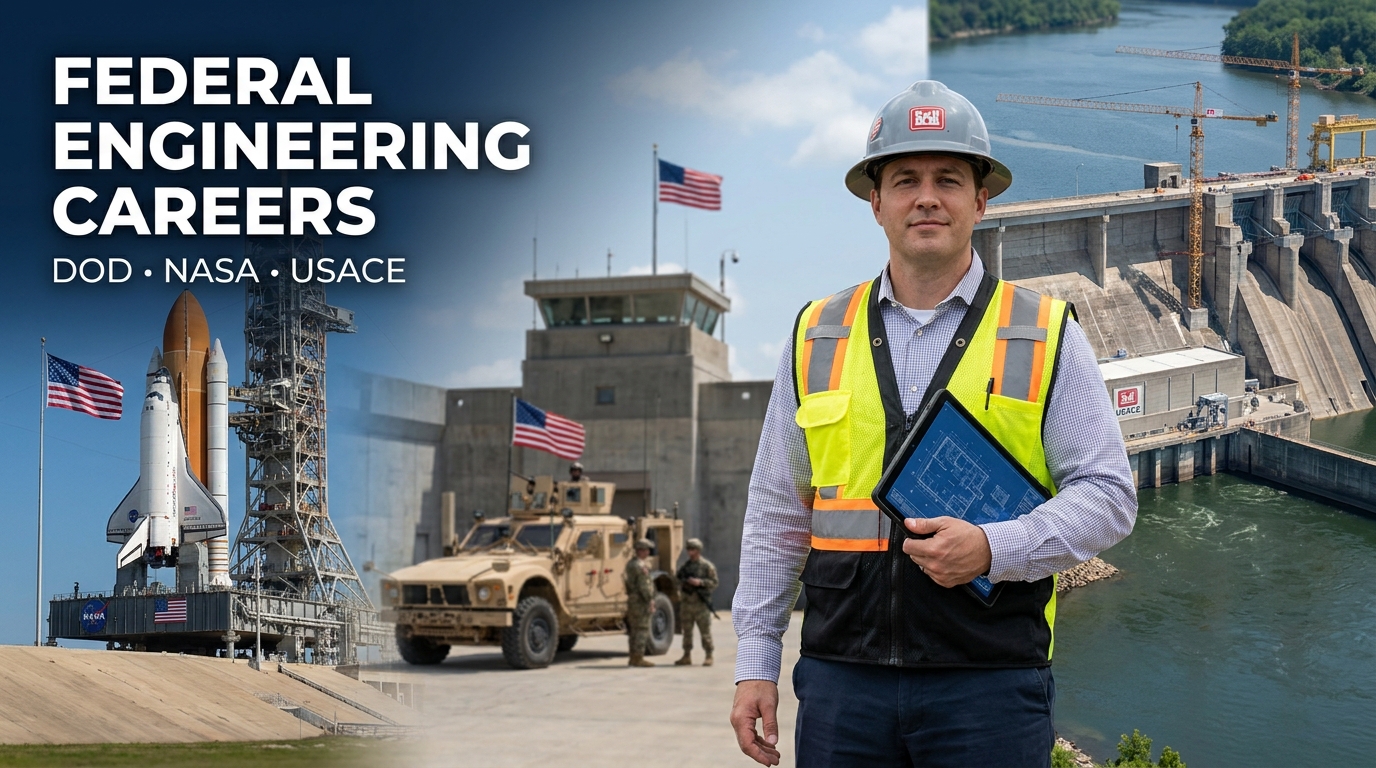
Federal Engineering Careers Across the DOD, NASA, and Army Corps of Engineers: Shaping the Future of Innovation and Infrastructure
Pursuing federal engineering careers opens the door to some of the most dynamic, high-impact opportunities available for civil, mechanical, and electrical engineers. Engineering is the backbone of modern technological advancement, national security, and public infrastructure. For professionals looking for career paths that transcend traditional corporate boundaries, government service offers unmatched scale and purpose.
Also read:
Super El Niño 2026: Forecast, US Winter Impacts & NOAA Updates
Across the Department of Defense (DOD), the National Aeronautics and Space Administration (NASA), and the U.S. Army Corps of Engineers (USACE), engineers are tasked with projects of unprecedented magnitude. From designing next-generation aerospace vehicles and securing national defense infrastructure to managing critical water resources and public works, federal engineering careers offer robust job stability, competitive compensation, and the chance to work on projects that directly benefit society.
Navigating these opportunities can feel overwhelming, but official portals like USAJOBS serve as the primary gateway to securing these coveted positions. This guide explores what it means to enter federal engineering careers within these premier agencies, what to expect, and how to land a role.
1. The Role of Civil, Mechanical, and Electrical Engineers in Federal Service
Federal engineering is rarely business-as-usual. Professionals tackling federal engineering careers face complex multi-disciplinary challenges that require technical precision, innovative problem-solving, and leadership.
Civil Engineers: Primarily focused on the design, construction, and maintenance of physical and naturally built environments. In federal service, civil engineers design military bases, oversee flood risk management systems, build navigation locks and dams, and manage large-scale structural projects.
Mechanical Engineers: Responsible for analyzing forces, thermal systems, and mechanical devices. Within federal agencies, mechanical engineers design aerospace propulsion systems, weapon defense mechanisms, robotics, HVAC systems for specialized facilities, and heavy equipment.
Electrical Engineers: Specialize in the study and application of electricity, electronics, and electromagnetism. Federal electrical engineers power naval vessels, design avionics and satellite communication networks, manage smart-grid energy systems for military installations, and ensure robust cybersecurity for critical infrastructure.
2. Spotlight on Key Federal Agencies
The Department of Defense (DOD)
As the largest employer in the United States, the DOD requires a massive cadre of engineers to maintain technological superiority and operational readiness. Professionals pursuing federal engineering careers within the DOD work in research laboratories, logistics commands, and field installations globally. Whether upgrading combat vehicle systems, designing secure communications, or modernizing military housing and bases, DOD engineers ensure that service members have the tools and infrastructure needed to succeed.
National Aeronautics and Space Administration (NASA)
For engineers driven by exploration and discovery, NASA represents the pinnacle of achievement. Civil, mechanical, and electrical engineers building federal engineering careers at NASA work on deep-space exploration, planetary rovers, aeronautics research, and the Artemis lunar missions. Working at NASA means pushing the boundaries of physics and materials science, designing spacecraft that withstand extreme thermal conditions, and managing complex electrical architectures for orbital stations.
U.S. Army Corps of Engineers (USACE)
USACE is unique in its dual mission: supporting national security by constructing military facilities and managing civil works projects that protect the nation’s water resources. Civil and environmental engineers here build levees, dredge federal waterways, manage emergency responses to natural disasters, and construct public infrastructure that safeguards communities across the country.
3. Benefits of Working in Federal Engineering Careers
Choosing federal engineering careers comes with distinct advantages that set them apart from the private sector:
Job Security and Stability: Federal civil service positions offer strong job security, robust civil service protections, and predictable career progression through the General Schedule (GS) pay scale system.
Comprehensive Benefits: Engineers receive competitive federal healthcare packages, robust dental and vision options, and participation in the Federal Employees Retirement System (FERS), which includes a Thrift Savings Plan (TSP) with government matching akin to a 401(k).
Work-Life Balance: Generous paid annual leave, sick leave, federal holidays, and modern options for alternative work schedules (AWS) and telework/remote flexibility make federal employment attractive.
Continuous Learning and Professional Development: Agencies frequently sponsor continuing education, professional engineering (PE) license acquisition, certifications, and advanced degrees.
4. Frequently Asked Questions (FAQs)
Q1: Do I need a Professional Engineer (PE) license to secure federal engineering careers? A: While a PE license is not always mandatory for entry-level positions, it is highly valued and often required for career advancement, supervisory roles, or specific civil engineering design responsibilities. Many agencies actively support employees in obtaining their PE credentials.
Q2: Are U.S. citizenship and security clearances required? A: Yes. Because these agencies deal with national security, defense technology, and sensitive infrastructure, applicants are almost universally required to be U.S. citizens. Depending on the specific project or agency (particularly within the DOD and NASA), you may also need to obtain and maintain a Secret or Top Secret security clearance.
Q3: How do I apply for engineering positions in these agencies? A: Almost all federal engineering vacancies are advertised on the official platform, USAJOBS. Candidates must create a comprehensive federal resume, upload transcripts, and tailor their application materials to the specific qualifications outlined in the job announcement.
Q4: Are there opportunities for recent graduates and students? A: Absolutely. Agencies like NASA and USACE heavily recruit through the Pathways Programs, offering specialized internships and recent graduate tracks designed to transition students directly into permanent, full-time federal careers.
5. Conclusion
Entering federal engineering careers offers a profound sense of purpose. Whether you want to build resilient flood-protection systems with the Army Corps of Engineers, design components for deep space flight with NASA, or fortify technological infrastructure within the DOD, your work directly protects and advances the nation. By leveraging official federal hiring platforms, qualified civil, mechanical, and electrical engineers can unlock rewarding, long-term careers defined by innovation, leadership, and public service.
Official News Links & Trusted Resources
Explore Open Engineering Positions: USAJOBS Search Portal
U.S. Army Corps of Engineers Career Portal: USACE Careers
NASA Official Careers Information: NASA Careers and How to Apply