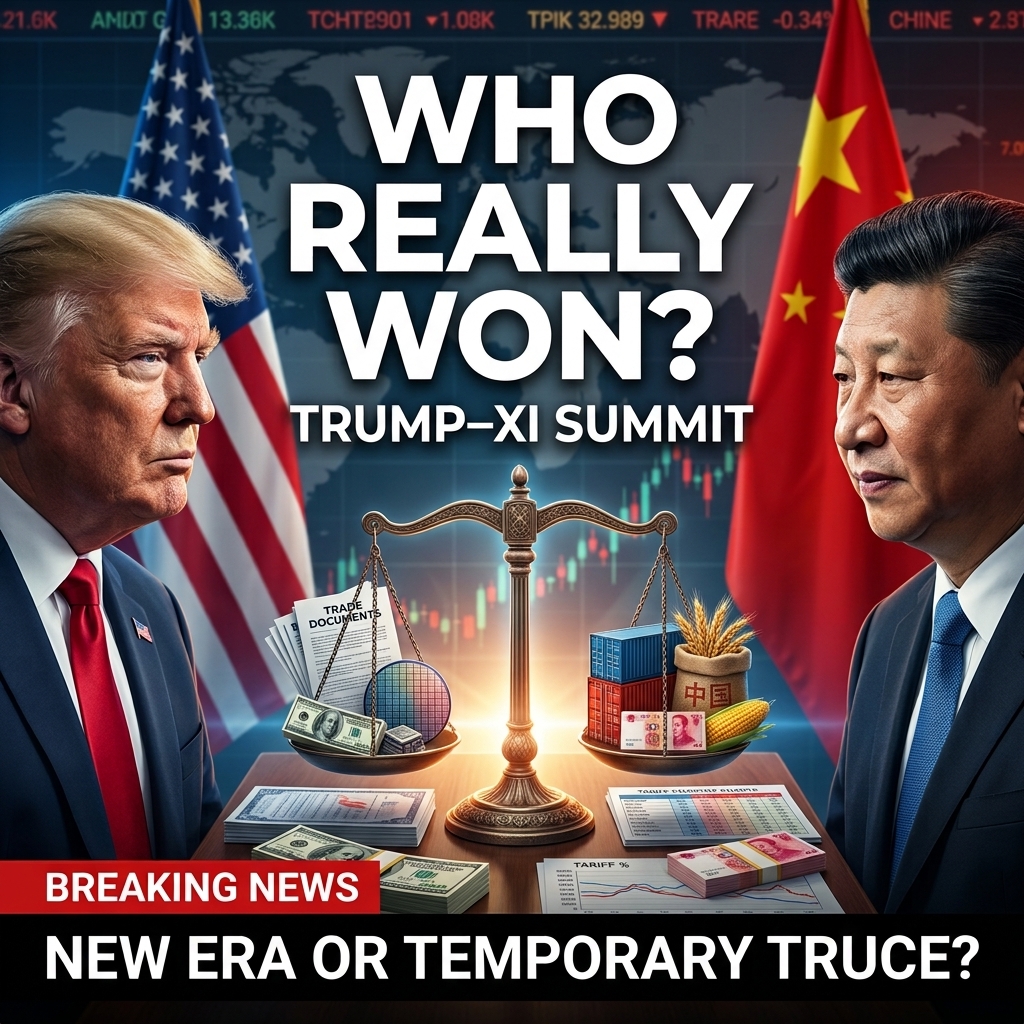
Real Winner of Xi Summit Revealed as Trump Looks to Usher in New Era
Identifying the Xi summit real winner has become the central focus of global foreign policy analysts as Donald Trump signals a desire to usher in a brand-new diplomatic era with China. Following days of intense closed-door negotiations, high-profile state banquets, and carefully scripted photo opportunities, both Washington and Beijing claimed significant victories. However, peeling back the official rhetoric reveals a complex balance of tactical trade concessions, strategic pauses, and long-term geopolitical repositioning.
As the two economic superpowers seek to stabilize volatile markets and avoid an outright economic decoupling, determining who truly held the upper hand requires evaluating the tangible deliverables each leader brought home to their domestic audiences.
Also Read:
Why Trump Weapons Offer to China Claims Have Shocked Foreign Policy Experts
The High-Stakes Backdrop of the Trump-Xi Summit
The meeting took place against a backdrop of escalating tariff threats, tech export restrictions, and growing military posturing in the South China Sea. Donald Trump entered the summit emphasizing a desire to reset bilateral relations on terms that favor American manufacturing, agricultural exports, and intellectual property protection.
For Beijing, the primary objective was securing economic stability. Facing internal demographic headwinds, real estate sector adjustments, and slowing domestic growth, President Xi Jinping sought a predictable international backdrop to safeguard Chinese manufacturing exports.
The stakes could not have been higher. Global supply chains, financial markets, and allied nations across the Indo-Pacific watched closely to see whether the meeting would produce a lasting framework for co-existence or merely a temporary truce in an ongoing economic rivalry.
Economic Concessions vs. Strategic Gains: Who Came Out Ahead?
To determine the true victor, observers must contrast short-term transactional commitments against long-term strategic positioning.
What Washington Secured:
Agricultural Commitments: China agreed to resume large-scale purchases of American soybeans, corn, and sorghum, delivering a direct win for US agricultural producers in key Midwest states.
Fentanyl Precursor Crackdowns: Beijing pledged tighter regulatory oversight and law enforcement coordination on chemical export channels used to manufacture synthetic opioids.
Intellectual Property Dialogues: The establishment of new bilateral working groups aimed at addressing forced technology transfers and corporate cyber espionage.
What Beijing Secured:
Tariff Relief and Delays: Xi successfully negotiated a pause on planned incremental tariffs, protecting Chinese exporters from immediate margin compression.
Validation of Parity: By engaging in a summit structured around peer-to-peer deference, Beijing reinforced its narrative that China stands as an equal global power alongside the United States.
Strategic Breathing Room: Securing a predictable trade environment allows Chinese policymakers to focus resources on domestic economic stimulus and high-tech self-reliance without facing simultaneous trade shocks.
Comparing the Summit Deliverables
| Key Policy Area | United States Deliverables | China Deliverables |
| Trade & Tariffs | Secured agricultural purchase commitments and targeted trade enforcement talks. | Averted new tariff hikes and preserved critical export access to US consumer markets. |
| National Security | Maintained existing semiconductor export controls and military deterrence frameworks. | Obtained assurances against sudden economic isolation or secondary sanction expansions. |
| Diplomatic Optics | Projected decisive negotiation strength to domestic voters and business leaders. | Established formal peer-to-peer parity and stabilized international market sentiment. |
| Supply Chain Dynamics | Encouraged near-shoring and supply chain diversification among US firms. | Protected domestic manufacturing bases while building time for internal tech autonomy. |
Why Analysts Point to Beijing as the Strategic Beneficiary
While Donald Trump secured marketable headline wins—such as farm purchase guarantees that resonate strongly with his political base—many foreign policy scholars argue that the Xi summit real winner is ultimately Beijing from a structural standpoint.
By avoiding immediate tariff escalations without making major structural changes to state-subsidized industrial policies, China effectively bought valuable time. Beijing’s long-term economic strategy relies on advancing its leadership in green energy, electric vehicles, telecommunications, and artificial intelligence. A diplomatic pause prevents severe disruptions during a delicate period of industrial transformation.
Furthermore, Chinese negotiators managed to keep sensitive core issues—such as state subsidies for domestic tech firms and long-term sovereignty claims in the South China Sea—largely off the immediate bargaining table, framing them as non-negotiable internal matters.
The Geopolitical Impact on Taiwan and Indo-Pacific Allies
The summit’s outcomes extend far beyond bilateral trade figures. Regional allies across East Asia watched the proceedings to assess the firmness of American commitments.
Taiwan Strait Dynamics: While Washington reiterated its commitment to existing security frameworks, the focus on trade deals generated quiet concern among regional strategists who fear that broader geopolitical postures could become transactional bargaining chips.
Allied Coordination: Nations like Japan, South Korea, and Australia continue to balance their security reliance on Washington with their heavy trade dependence on Beijing. A stable, predictable US-China baseline provides welcomed short-term relief for regional markets, even as fundamental strategic rivalries persist beneath the surface.
Long-Term Outlook: A Permanent Reset or Temporary Respite?
While both leaders framed the gathering as the start of a constructive new chapter, history suggests that bilateral agreements between Washington and Beijing are often subject to swift revisions. Tactical trade truces frequently face strain when enforcement mechanisms encounter real-world friction.
As implementation begins, monitoring whether China fulfills purchase quotas and whether the US maintains tech export guardrails will determine if this summit marked a genuine structural pivot or simply a tactical pause in an enduring superpower competition.
Frequently Asked Questions (FAQs)
Who is considered the Xi summit real winner by international observers?
While Washington gained immediate commitments on agricultural purchases and fentanyl precursor crackdowns, many analysts view Beijing as the strategic winner for securing tariff delays and preserving its domestic industrial policies without making fundamental structural concessions.
What were the main economic agreements reached at the summit?
The summit produced agreements on large-scale Chinese purchases of American agricultural products, enhanced cooperation on fentanyl export controls, a temporary freeze on new US tariffs, and the creation of working groups on intellectual property enforcement.
How does this summit affect long-term US-China relations?
The summit establishes a temporary stabilization in bilateral relations, reducing immediate market uncertainty. However, underlying strategic competition regarding technology leadership, regional security, and trade balances remains unresolved.
Disclaimer
This article is provided for informational, analytical, and news reporting purposes based on official diplomatic disclosures, public press conferences, and foreign policy summaries. It does not constitute formal political or investment advice.